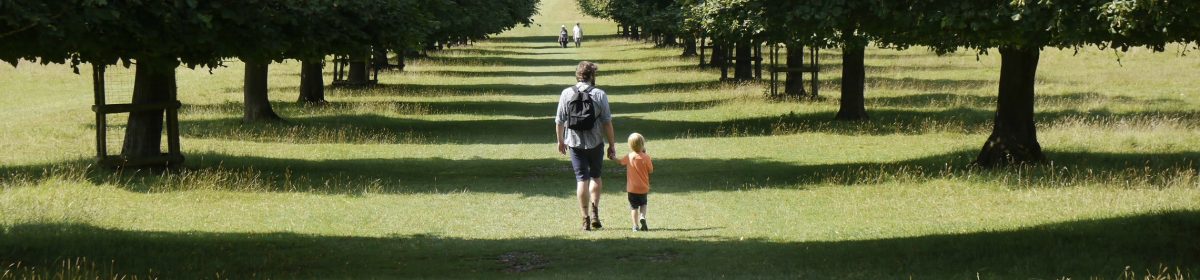


Generally speaking I prefer not to go back – it tends to leave me feeling a bit disarticulated; but this week, at Madame’s suggestion, we took our youngest son for a walk around the district surrounding our old Art School, and even went to see the cottage we lived in over fifty years ago. In a sense nothing had changed and yet everything had changed. We lived then on a 400 acre dairy farm which is now a 400 acre beef farm growing cereals rather than hay. The geography never changes, of course. The farm is still perched at the upper edge of a steep Cotswold valley; the brook still flows along the bottom and new trees, now the elms are all gone, have seized the opportunity to fill the gaps.

But the brook is looking a bit polluted and eutrophic, the cereal crop has been infiltrated by Black Grass which, because of its capacity for carrying ergot, is needing constant attention and spraying – one of the unforeseen side effects of warm and wet winters. A serious infestation can reduce the crop by up to 70%. There were no grazing cattle to be seen anywhere, nor any pigs or hens. The traditional mixed farm is gone; the dairy where we went every day to collect warm raw milk, has been repurposed as holiday rentals and the place where a barn once stood is now a storage area for caravans. The little terrier who once attacked anything that moved is a just memory and the matriarch of the family who we’d often see sitting outside on wooden chair plucking a chicken to the accompaniment of many growls from the dog is a memory too.
As for the Art School, most of the modern buildings we used have been demolished and the traditional 17th century stone ones mainly converted into flats. The lane which we walked down every day is infilled with tastefully modern houses, but the farm is still run by the next generation of the same family, the farmhouse is run as a bed and breakfast. Being there, in the place we spent three years, felt both familiar and yet remote – but more than any built features it was the silence that struck us. There was nothing louder than the rustling of leaves.
After our visit we went down to Corsham Court, which was closed to visitors and then on to look for a pub. The local, once called The Packhorse, has been renamed The Flemish Weaver as a nod to the refugees who brought their 17th century skills to the village and influenced the design of the tall houses in the High Street; but that was one place I didn’t particularly want to go back into. I prefer the memory of the awful rough cider and its drinkers who mostly got the shakes after about six months on the stuff – oh and the dangerous yellow ceiling that dripped liquid nicotine on the floor on the busy nights when heat and human sweat combined. We once took an American visitor there and after a few pints of scrumpy we missed him for a while and found him clinging to the lamp post outside.
But Wiltshire is an exquisitely beautiful county and so then we went off in search of another pub whose location I had misremembered; and we took to some fantastically narrow lanes and found Slaughterford again – who could resist such a name – but then had to drive on to the next village through an even narrower lane with no possibility of passing an oncoming vehicle and driving through deep potholes which threatened to smash the suspension. All very pioneering stuff.


Having finally reached the tiny hamlet we found the pub sitting next to the brook and looking for all the world as if it was auditioning for the part of the Potwell Inn – except for the fact (?) that the Potwell Inn is never that busy in my imagination and the real landlady isn’t nearly as well upholstered as the fat lady in the novel and didn’t seem at all likely to form a warm relationship with a wandering tramp like Alfred Polly. The food was good, though and our son seemed delighted with the two eye-catching young bar staff. I, obviously paid no attention to them all. Really!
The photos here were taken with a new camera with large numbers of options hiding behind the knobs. It’s ultra strong, waterproof and will take excellent macro photographs using focus stacking as soon as I can afford a suitable low level tripod. This was just a practice run but we’re soon off to Pembrokeshire where I’ll be able to give it a proper workout.