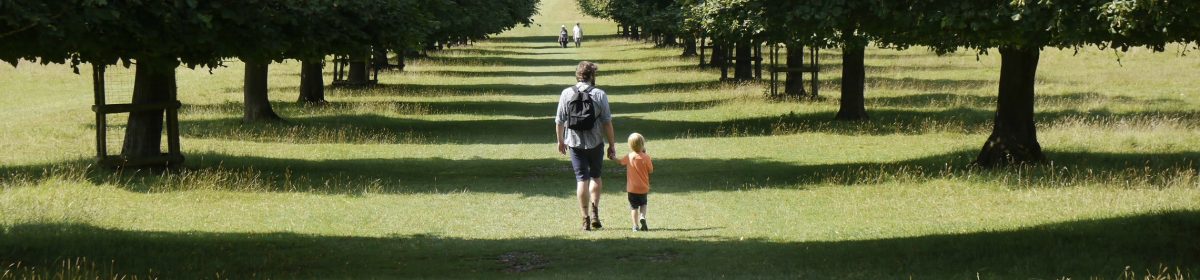

Looking for a photo to kick this post off I did a search and was astounded at the hundreds of pictures I’ve taken in Welsh landscapes over the years but this one fell into my lap, walking along the Kennet and Avon canal in central Bath. There’s a bigger frame of reference than English can express and it coalesces around a wonderful Welsh idea; the concept of “hiraeth”. I hesitate to call it a word because its reach extends far beyond its seven letters.
Derived from hir (long) and aeth (grief/sorrow), it combines nostalgia with a sense of grief or longing and it is considered a cornerstone of Welsh identity, reflecting a longing for lost traditions, language, or landscape. It refers to a deep, often melancholy longing for a home or time that cannot be revisited. (Google Gemini search)
I must add at the outset that I have a very limited knowledge of the Welsh language, but I learned to pronounce Welsh place-names when I was helping to run some worker-writer’s workshops in the valley towns several decades ago. Neither Ian, my co-worker or I had a car and so we did all our travelling by train and bus and to avoid entertaining the other passengers I managed to learn how to learn to pronounce Welsh place-names properly. When confronted with a destination like Ystradgynlais it paid dividends to know how to pronounce it – even if the rest of the conversation was in English. I was once even congratulated on my pronunciation by a Welsh speaking farmers wife on Lleyn and I long for the day when I’ll be brave enough to wish the shopkeeper good morning in Welsh somewhere in North Wales without the paralysing fear of being replied to in the same language. My old Greek tutor Gerry Angel always said there were only two languages in the world worth learning – Greek and Welsh – and I’ve never had enough time to learn Welsh until (perhaps) now. I eventually passed the (New Testament) Greek exam.
A language is the matrix in which the culture of a country and its people is contained, and it follows that there are certain ideas, emotions and concepts that can’t be translated except by severing them from their context, history and memory. It also follows that there are things that can be said in Welsh that can’t be said in English. Learning Welsh, it seems to me, would entail embedding myself in the whole history and culture of the land rather than mastering the superficial meaning of even a few thousand words.
I’m familiar with this in my own experience because my native English tongue is from Gloucestershire where – as a child – we still used “thee, you and thou” – a habit that the teachers did their best to beat out of us. Anyway, they’re a most useful set of words because they convey degrees of familiarity Like the French vou and tu leaving “you” with an association of hostility and suspicion. When I first went to work as a labourer in a steel erecting firm, I was always (young, dumb and hairy) addressed as “you”. We also had a version of what the linguists call a soft mutation which is very common in Welsh. For us, the tram roads carrying coal from Coalpit Heath were always known as “dram roads”. If you were encouraging someone from the sidelines it would be “go ‘ee’ – a shortened form of “thee”. You don’t learn any of these informal grammar rules through books, you learn them from use. I’ve told this story before, but I buy all our rough sawn wood for the allotment from a timberyard near where I was born. Just talking to the counter staff there is to be transported back to my own history and sense of place, so – going back to the beginning of that long excursus, “hiraeth” is the perfect word to describe that sense of loss. The thousands of acres of farmland I walked over and played on as a child are all built over. My childhood territory is dissected by a ring road and a motorway and the brickworks and pitheads have all, bar a few crumbling walls, disappeared along with out unique dialect and the last few miners have died. The abundant methodist chapels are gone or converted into fashionable homes for incomers. The railway lines have become cyclepaths – a muggers’ paradise; predators on unwary cyclists and walkers. The Pines Express no longer thunders through the triangular junction. There’s no way back. Without land, language, culture or memories we are adrift without even our own word to describe the melancholy of it.
I’ve just started reading a marvellous book by Carwyn Graves (grovelling apologies for getting both his name and gender wrong yesterday) – entitled “Tir” – the Welsh word embodying the associated meanings of land types within Wales. I’ve got both of his previous two books, “Welsh Food Stories” and “Apples of Wales” and they both approach their subjects through the prism of Welsh history and culture. “Tir” casts a ray of light on all sorts of puzzling phenomena around landscapes – for instance – why are so many Welsh farmers deeply suspicious of the idea of rewilding? The answer is compelling and fascinating and would serve admirably as a push-back against rewilding as an abandonment of thousands of years of farming history. I’ve still got some way to go before finishing reading about all seven types of landscape – each expressed in a different word. It’s a marvellous book and I can’t recommend it too highly. It’s sent me back to the maps and dictionaries I’ve bought over the years but never fully understood and it’s also sent me back to seriously considering learning the language.
After ten years of complaining to our landlord about damp and black mould in our concrete building they’ve finally agreed to start doing the remedial work; installing ventilation extractor fans and mould proofing the walls as well as making good the botched plastering in a couple of rooms. The work is going to take a week so we’re moving out and we’ve rented a cottage high up in the Bannau Brycheiniog near the top of the next valley along from the photo. It looks like absolute paradise – the long road up leads past an abandoned asylum and a nature reserve and sits below the highest peak in the Eastern range. We’ve walked it before and it’s not in the least pretty – a big bog with a stone in the middle – but there’s a walk leading down from it to the main road that’s absolutely breathtaking. I’ve already got my plant lists ready and organised thanks to Notebook LM which happily did the work of processing a heap of data. When in despair, make a list, learn a language, read a book. It works for me!

