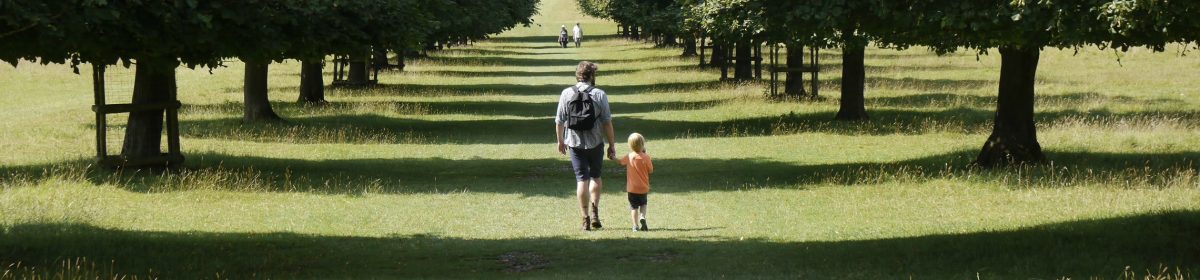


It’s like being stood-up. The Potwell Inn allotment would be completely parched if it weren’t for the hand watering, and we’ve been quivering with excitment at the prospect of a week’s decent rain – supposedly beginning today. So we woke early, sniffed the air like badgers emerging from their holt, but there was none of what my promiscuous reading revealed last week as – “petrichor” – the smell of rain on hot earth. Plenty of other smells around though, not least from the kitchen which smelt almost Corsican first thing. In fact the whole flat is infused with the scent of basil – which we grow a continuous supply of – tomato plants waiting for a break in the heat, and elderflowers. If you chucked in a couple of mouldy melons we’d be back on Cap Corse.
Three hours later at around noon, it started at last, thank goodness, but the weather chart shows the weather front moving northwards with us right on the edge. No downpours here, sadly.
So the principal work of the morning was turning the infusion of elderflower, oranges and lemons into elderflower cordial. I salute those who’ve absorbed the lore of collecting the flowers and managed to find a nanosecond when all the necessities line up like bullet points in a presentation. We just pick when we can. The last batch was made from the ordinary common and/or garden version of elderflower, the weed. This time we spotted a heavily laden tree on the allotment and picked an organic cotton bag full. Actually it was a plastic bag but the organic cottton sounds less likely to excite our friends, one of whom noisily unpacked my (first time in six months) plastic in a crowded supermarket while upbraiding me for destroying the earth. A small crowd looked on while she left the unpacked bag on the side, presumably to be thrown into landfill anyway. Two days later an organic cotton bag arrived in the post and my humiliation was complete.
Anyway this tree was the most delightful mixture of purple leaves and pink flowers. Last year I stumbled on a fashion shoot in front of the very tree I’m writing about. The model, who was very pretty, was dressed in such similar colours – purple and pink – that she looked rather like the cheshire cat, appearing and disappearing in front of the blossoms. She was surrounded by an impausibly large number of assistants, dressers, people holding large reflectors and photographers with their retinue. One of the throng asked me where the toilets were and I was delighted to be able to offer her our bucket, which she refused.
The pink blossoms smelt quite as good as the mongrel white ones and so we picked and infused them for 24 hours. The only difference in the way I produced the cordial was to bring the sugary mixture to 80C rather than boiling it which I think destroyed some of the flavour. The results (with a bottle of the first batch for comparison) looked lovely and tasted excellent.
As I write, the rain has stopped again but we’ll stick with plan A and go to get vine-eyes from the garden centre. More later.


 At what point do you admit to yourself that you’ve got a bit of a problem? Not, I hasten to add, some sort of dreadful problem like drinking too much, after all who doesn’t enjoy a top ranking landlord’s breakfast like gin and cornflakes? No, this problem is to do with never knowing when to stop trying to identify a flower when you’ve got the family and most of the name. but you want to know the species, or even sub species as well.
 This one’s been bugging me since we first started the allotment because it’s just so prolific, and I’ve tried a dozen times to run it down. I thought it might be a Corydalis because it looks a bit like that, but after my close encounter with a similar plant to the one on the allotment at St Davids last week, I did a bit of detective work and discovered that Corydalis has not been seen in the Bristol region for decades so I discarded that in favour of Fumaria – I’ve already written about this – and plodded on with magnifier, steel ruler and multiple floras – up to and including Stace. The problem is that there are so many criteria for sorting them out that you just have to get close-up and personal. And so here’s my idea of close-up and personal:

 So above, here’s my Panasonic Lumix GH2 – old but lovely – and a 45mm Leica Macro -Elmarit lens, mounted on a Manfrotto tripod and ball head, and to the left there’s a photo of the fruit which shows that it’s smooth. That’s an important diagnostic. And so the unexpected ID seems to be that this is Fumaria muralis, the common ramping fumaria (and I can vouch for the ‘ramping’ bit!) and the reason that this is a surprise is that it’s quite unusual in Bath or indeed in the whole Bristol region. In case there are any proper botanists out there, the flower length is on the high side at around 15mm, but the sepals are spot on. The overall height is a bit high as well, but Stace says it’s very variable so I’ll go with the smooth fruit which is a clincher.

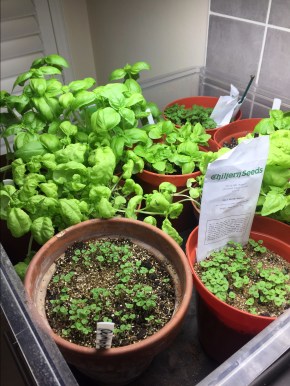 Summer is as much a smell as anything more meteorological. Yesterday evening we were sitting in the living room when Madame said, “I can smell chewing gum”. I wrinkled my nose up in mimed solidarity and it was true but it wasn’t chewing gum it was cats’ pee. It was the smell of summer. There were the elderflowers infusing on the stove, and several different kinds of basil gently sunning itself in the propagator, along with a sink full of fresh spinach and a salad spinner loaded with newly picked lettuce. Oh yes summer is good.


 I learned to love the names of common wildflowers from my mother who never used anything else. I totally understand why having three plants with the same name and one plant with ten names drives proper field botanists mad, but there’s so much pleasure to be got from the English names which frequently point to a medicinal use like, for instance, fleabane, or refer to an immediately recognisable characteristic. They can even be downright funny. Check out Arum maculatum for raunchy English names like ‘lords and ladies’ ‘cuckoo pint’ where the second word is, or should be pronounced to rhyme with mint and refers to a pintle which is the shaft on which the rudder of a boat is fitted. Cuckoo, as in ‘cuckoo in the nest’ needs no further explanation I hope. A supremely naughty plant whose latin name merely tells us what it is.


