Sunny day kitchen rituals

One of the most frustrating things  found when I was learning to cook was that so many recipes depended either on specialised bits of kit that I didn’t have and couldn’t afford to buy, or on the immediate availability of things like “a light chicken  stock” or “a tablespoon of pesto”.  This could turn what was billed as a ‘quickly prepared light supper” into a prolongued campaign spread over several days and involving a great deal of improvisation. There were no glossy photographs to show what the dish was meant to look like and so there was always an element of doubt as to whether I’d nailed it or failed it. Well-travelled friends always seemed to know what to do with a scallop or what ‘al dente’ meant, but being entirely self taught was fraught with dangers. With Elizabeth David’s recipes for instance all you had to go on was a rough guide of the ingredients and method accompanied by a wonderfully evocative John Minton line drawing which, taken together, made you feel as if you were sitting on a shady terrace in Avignon. When, decades later, we could finally afford to get there we disovered that French cafes were a very mixed bag indeed, and that often the dishes I’d improvised at home were rather better.  There’s an ocean of difference betwen a cook and a chef.

That said, I remained faithful to Miss David and her ‘battery de cuisine’ and over fifty years I’ve managed to acquire most of the really useful bits of kit, and by buying the best quality I can afford, they’ll mostly see me out. Knives are one exception to the rule that you get what you pay for.  You can spend an absolute fortune on them, but I’ve discovered that the top of the range cooks knives sold by Ikea are more than equal to some fancy knives sold at ten times the price.

As for staples, having the allotment is obviously the best way of growing exactly what you need and cooking it at peak freshness – it really does make a perceptible difference. The stock has evolved over the decades but there’s always some in the fridge, condensed down so that a tablespoon will transform a litre of water and a teaspoon will lift an ordinary dish into something special. Cooking is an act of love and skimping on the ingredients sends a message to to those you cook for, that you don’t care very much about them. And reading that sentence back to myself, I can say that very few people – in fact only the ones who should really matter – will appreciate the care you’ve put in and reciprocate the feelings.

So there are mornings when I wake up and go into the kitchen and I know there are routine but essential jobs that have to be done.  Check the stock in the fridge – is there enough or is it time to make more? Does it need simmering for five minutes to make sure it doesn’t go off? – it doesn’t keep for ever! How about the sourdough starter? does it need feeding? Is there bread or should I bake more?  In an emergency I can bake some Scottish morning rolls and get them on the table in 90 minutes, but if it’s sourdough then it will need 24 hours at least. Check the fridge – it isn’t just professional kitchens that need to keep an eye out for the mouldy monsters lurking at the back. Make a list of ingredients in the cupboards that need replacing- there’s nothing more frustrating than going for the plain flour and realizing there’s none left.

Then, this is the month when the jamming, pickling and preserving move to the top of the agenda. Last year’s experiments with dill pickles were a bit of a mixed bag.  Although nothing went off, some of the textures and flavours left a lot to be desired and so this year we’ve grown  special variety of gherkins intended for pickling.  The three plants are incredibly prolific, why wouldn’t they be? they’re growing on the remains of the hotbed and they’ve got their roots into about 300lbs of horse manure! So the sheer quantity makes more experiments possible.  Of the recipes we tried last year the most successful – ie the ones we ate – came from Diana Henrys book “Salt, Sugar, Smoke” – so this morning I sorted a pile of similar sized gherkins and once we’ve been up to the allotment to dig some horseradish and collect dill – lots of it –  we’ll start this year’s pickles.  It’s all too easy with preserving to make much more than you’re ever likely to need, and we give lots away to our hungry and delightfully greedy family.  This is an area of preserving I’m not very familiar with, but for sure you need lots of flavour, lots of herbs and such like.  Rather like making pâté it seems that what feels like overseasoning works best.

I think there must be something in the air because today I had my very first thoughts about Christmas: must be those Boxing Day pickles! Autumn is around the corner and we’re feasting now.  My head is full of thoughts of pâtés and confits and now the potatoes are in full spate I might have a go at aligot again. We first came cross it at a summer fête in South East France.  People were queueing for dollops of almost indecently rich potatoes creamed with cheese, butter cream and garlic served with a lump of sausage. It was clearly a local favourite but a single plateful was probably a day’s worth of calories for anyone except a manual labourer. I cooked it years ago for our son and his girlfriend who was obviously more figure concious than any of us. She ate one delicate mouthful and pushed the plate away – too rich!

I know I ‘go on’ a bit but this blog is all about being human and although I range over a lot of topics, I keep coming back to the fact that growing food, cooking and eating it is at the very heart of the Potwell Inn philosophy. Gathering, sharing, eating, talking, having fun, telling stories, sharing troubles aren’t luxuries or extras, they’re it, they’re the point of being human.


More weeds


The family land holding just increased by 135 square metres, although when I say “holding” I mean rental because our middle son has just taken on a somewhat neglected allotment about 8 miles away from us. We spent Sunday morning there together with a 100 metre tape and some wooden pegs marking out where the beds would go and sampling the soil, the aspect and generally establishing some kind of route from where he is to where he wants to be. I’m immensely proud, but mindful of the huge effort of balancing his working hours as a chef with his family life with his partner and their three children, as well as growing an allotment. But ironically I was also a bit envious because the work of breaking an allotment and bringing its soil up to scratch is so rewarding. The pioneer days have their charms. His main challenge is the covering of rampant Blackberries across the whole plot.  Even no-dig demands at least one season of the usual hard work to clear the soil of the worst of the noxious weeds.

But following on from Sunday’s posting, I’ve been thinking a lot about weeds and I went back to the bookshelf to re-read Richard Mabey’s book – “Weeds- the story of outlaw plants”  It’s an absolutely lovely book from a writer who’s hardly written a dud word in his life and it’s definitely one for the Potwell Inn library. You’ll look at weeds differently once you’ve read it, and I realized, as I turned the pages, how much of his book had soaked into my memory and formed my own attitude.  The history of weeds often includes periods when they were immmensely valuable as medicinal herbs, and if you read the labels of many beauty products you’ll see that they’re still in use today. My favourite discovery is that a well-known brand of natural fibre sold as a laxative, uses the seeds gathered from a member of the Plantago family.  The plantains still have their uses, and instead of composting them I’m now inclined to let them fatten up and then harvest them as I might harvest  any other useful food plant. Quite apart from their use to us, weeds are of the utmost importance to many of our moths, butterflies and other insects, and a large part of the ecological crisis that’s unfolding is the result of the chemical war on weeds. We should love them for all their irrepressible vulgarity and powers of survival.

Back in the Potwell Inn kitchen, the incoming vegetables – particularly the unstoppable flow of courgettes and gherkins is testing our ingenuity.  I confess I’ve never been a fan of ratatouille – it’s a reaction to being force fed the stuff many years ago while camping. I can still see the cook crouching behind a windbreak muttering incantations and boiling it down into a dreadful slush that tasted mostly of methylated spirits. But in the interests of harmony I’m suspending all my food prejudices in order to find a way of enjoying all the stuff we grow.  Madame and I have between us tried just about every recipe for ‘rat’ that’s ever been written down.  Today it was the turn of Simon Hopkinson whose recipe Madame found in one of the cookbooks (we’ve probably got over a hundred). The advantage was that the vegetables were fried to the point where they still had some bite, and then they were anointed with some of last year’s tomato sauce, a couple of black olives and a handful of fresh basil from the windowsill. It was without doubt the best ratatouille I’ve ever tasted.

I’ll write one day about the dynasties of chefs – it’s a subject I’m very interested in because we have two in our immediate family and they are both very much the product of the mentoring and training they received.  More on that one another day, but now we’re getting to the start of jamming, pickling and freezing. Some of the brine pickles we experimented with last year have been quietly dropped, and we’re hoping that this year we’ll pull off some really decent pickled gherkins.

But on top of all this there are grandchildren to be looked after from time to time, and our campervan which has a fridge that won’t work as it should on LPG. Mechanics are expensive and I’ve come to question their skills over the years so I’ll have a go at anything I’m legally allowed to do. Yesterday I spent a couple of hours measuring voltages and resistances and pondering over the service manuals.  Most problems are stricly logical ones – X doesn’t work because Y – and so forth. The difference between mending it myself and paying someone else to do it can amount to hundreds of pounds so I’m eagerly awaiting a package with what (I hope) will solve the problem inside. It’s important because in a few weeks we’re celebrating Madame’s birthday with a week in the Yorkshire Dales and then onwards into the Borders and Scotland. With a bit of wildcamping in view we need the gas fridge.

IMG_5847

Fallow day

IMG_5844

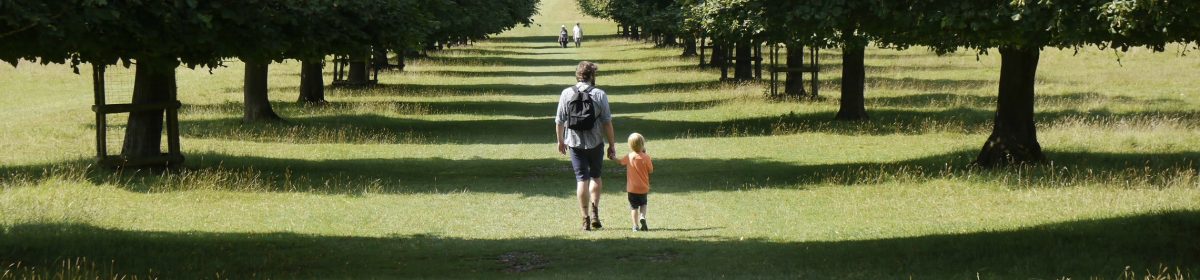
Terrible pun, I know, but I just couldn’t help myself.  I didn’t post yesterday because we spent a day with the grandchildren and their mum at Dyrham Park. By the time we’d got them (the children that is) bathed and into their pyjamas, we were totally wiped out.  But they had the unusual opportunity of seeing these Fallow deer close up.  The does are in a separate enclosure at the moment, away from the bucks and the tourists and able to devote their whole time to their fawns without being molested by either,  I was chatting to one of the rangers last year and they told me that it became necessary to provide a safe area for pregnant does when they spotted a family of visitors encircling a lone deer in order to get a photograph with their daughter! There’s one entirely separate enclosure off the beaten track, and another with unusual gates that allow a doe to bolt to safety but have a narrowed entrance at the top so the bucks’ antlers prevent them from following. At many times of the year the mixed herd roams freely – hence the distinctive tree grazing pattern on the banner for this blog. The trees are grazed off in a flat plane at exactly the height of a hungry deer’s reach – absolutely classic park landscape. During the rut the does can escape into the safe enclosure, and during the period when the does are giving birth the bucks roam in ‘bachelor herds’ It was a meltingly hot day and even the presence of three excited children didn’t seem to phase them.

But there’s something else that came up yesterday that began with a not very good cup of chamomile tea and ended this morning with a re-reading of a favourite book, I hesitate to call it a cookery book, and if you’re a fan of Patience Gray you’ll understand exactly what I mean. So first the tea.

We’ve grown chamomile for a couple of years now and for some reason we’ve never yet made chamomile tea, but yesterday we picked a small quantity of flowers, fetched an infuser out of the cupboard and before the grandchildren arrived I brewed a small pot. The first thing was that I didn’t add any mint because I was interested in comparing the pure infusion with the dried teabags we’ve always used in the past. Neither did I sweeten it in any way. The resulting infusion was both a revelation anda disappointment. The revelation was the sheer intensity of the floral perfume – taste and smell united in a flavour I’ve never experienced before.  The downside was a slight bitterness which I suppose could have been masked by a little honey but didn’t seem the right thing to do.

So where did I go wrong? Most recipes include mint but none mentioned bitterness. Then, this morning in a burst of Jungian synchronicity and without any discussion we both rushed to the bookcases looking for exactly the same book.  Madame, having spotted the courgettes and a squash/courgette called Tromba d’Albegna in a trug on the kitchen table, remembered a Patience Gray recipe for Zucchini al forno which I cooked a lot last year because we both love it. I was after the exact same book – “Honey from a Weed” in search of an answer to the chamomile tea problem.  After a preliminary skirmish I gave in and waited until the book became free.

If you love cooking you’ll love this book.  It’s the complete antidote to the supermarket sponsored recipes that demand forty ingredients from the four corners of the earth. Patience Gray – who initially outsold Elizabeth David – was a fine cook who moved with her husband, always known as ‘The Sculptor”, but whose name was Norman Mommens, to Carrera to be near the marble quarries there, and then on to Puglia. They lived in what most people would describe as poverty (if not squalor) and she wrote this classic book which is more of an anthropology of the region and its people although it does contain more than a few recipes as well.

The critical chapter for me, today, was – “Edible Weeds”. I thought if anyone would know the optimal times for gathering and using herbs it would be Patience Gray, and I was right – but –  there was far more there and I’d forgotten it.  You know how it is when you read a really good book more than once, your unfolding and deepening experience of your own life in the meanwhile can make it seem like an altogether different book – just as inspiring, but highlighting the new interests.

So it was with “Honey from a Weed”. Here in Bath, more than three decades after it was first published we live in an utterly different culture.  The link between food and medicine has become a giant business model, feeding off our anxieties and absolute lack of cooking skills. Ordinary food has been pathologised, even clean tap water – one of the great achievments of our history – is rejected for millions of plastic bottles filled with who knows what? In the book there’s a charming story of a peasant woman who had piped water installed for the first time and just left the tap running continuously because she thought of it as a modern form of spring.

In Puglia they ate the herbs – so simple.  Here we eat the burgers, feel/get ill, mistrust ‘big pharma’ so we try herbal remedies and if we’re really well heeled we can go on a foraging course for £250 a day and learn how to pick our own. Or, if we decide to take the easy route, we buy the coffee table herbals and forget the whole thing.

We have lost the very skills that could sustain us

Why is writing your CV and getting a bank loan thought of as a ‘life skill’, when knowing your plants and how to grow and prepare them is thought of as a kind of eccentric ‘hobby’? To take us back to the beginning, Fallow deer know exactly how to do it.  The does teach teach their young by leading them to the good plants (they’re herbivores) and steering them away from the bad. In Puglia they did exactly the same thing, it was (maybe still is in remote areas) an intensely parented skill. Isn’t the popularity of “cucina povera’ the ultimate irony in a culture that can barely peel a potato? In Pembrokeshire last week I was looking at a field where horses were grazing and dotted around the whole area were “poisonous” ragwort plants and fierce looking thistles. The horses just left them alone – somehow without the benefit of MAFF or any other directives – they knew what was bad for them and didn’t eat it. Now I’m beginning to sound like William Cobbett – another favourite writer, although he would have pointed out that eating potatoes made you effeminate and lazy (honestly) and the only diet for a working man was bread, bacon and home brewed beer!

No we can’t go back and I really wouldn’t want to, but there’s nothing blissful about our food culture, it’s dangerous, wasteful and unsustainable. If we want to save the world we’re going to have to change our whole food culture and teach our children how to thrive in it.

Sometimes life requires log-rafting skills

I’m still not completely sure I’m doing the right thing by passing so many of my books on, but the decision stands and the total I’ve disposed of is in excess of 350 – or nearer 750 if you count the ones I got rid of when we moved here. But they were the easiest ones, and now it feels like I’m eating ino my own history as box after box goes into the car boot. The ‘disposed of’ group includes a surprise hoard of college library books that I’d completely forgotten I ever had, but felt obliged to return to their rightful owner – which I did yesterday, and then discovered another four stowaways.

It’s feels like a rather revealing thing to do, as I hand them over a box at a time to the woman in the Oxfam shop. She was kind enough to say what interesting books they were, and inadvertently threw me into a bit of a tail spin because I felt I’d handed over something immensely personal – like a secret diary – to a complete stranger who would be listing them in some kind of inventory. No different than Google or Amazon and every other internet company who steals my most revealing information and then sells it on, but this was more personal and almost intimate.  When I was an early teenager and because I was incredibly shy, buying books or clothes became an absolute torment because I couldn’t shake off the feeling that I’d be judged by what I was buying.  It was only through the kindness of a bookseller called John- he was a bit of a legend – that I was given permission to browse all day if I wanted and buy whatever I wanted, but  I never realized that disposing of my books would land me in the same place.

So now each book that goes into the boxes leaves me second guessing what the reaction will be – goodness knows what today’s four boxes of rather arid theology will have done to my street cred – especially after four similar ones on Monday. So not for the first time I blurted out the first thing that came into my head, and I wondered aloud why on earth I’d kept them all, and postulated that it was in case I forgot who I was. I could almost see her thinking I was trying to tell her I’d got some sort of dementia, not least because on Monday I’d said (in another moment of brain fade) that I was doing this so our children wouldn’t have to “when I popped my clogs”.  I’m half expecting a letter of condolence from Oxfam and then my pointless shyness will turn into a clusterblurt.

So four more boxes of books and two guitars gone today, and my oldest son has contacted a removal company to take the piano to his house, while enquiring anxiously about the philosophy books which I promised I wouldn’t get rid of because I know that (eventually) he’ll give them  good home. Meanwhile Madame has jokingly accused me of fancying the woman in the Oxfam shop, but I think I’m suffering a bit from some weird variant of Stockholm syndrome.

So the reason for the reference to log rafting in the title is that the raging flume of my unconscious has also to allow for the fact that this is busy busy time on the allotment. Now the crops are coming in earnest, and we’re struggling to cope with the pace of things.  The overwintered broad beans have, at last, all been harvested and so we’ve had two sessions in which the Potwell Inn kitchen is transformed into a freezer production line. The three experimental plantings of garlic have now also been taken up and it’s clear that of the three varieties we tried the early purple bulbs were far and away the most successful.  The batch of five elephant garlic yielded four real lunkers.

As the beds are emptied and become clear, our aim is to hoe the weeds off, give the beds a covering of composted manure and a handful of chicken pellets or fish blood and bone and get them back into production as soon as we can.  This year we’re able to try the no-dig idea more easily because after three seasons of hand weeding we’re pretty much on top of most unwanted perennials, and the annuals are hoed off as they germinate. Today while I prepped the beds, Madame planted more runner beans raised in root trainers and also some modules of celery. After a bit of a wobble with the weather last week, the sun shone and after a few hours we were able to celebrate the solstice with the allotment looking at its most productive. “Blimey” – said Madame – “this feels more like a market garden”.

And as I type the title ‘Madame’ once again, I’m reminded that a friend said recently that she didn’t like me calling her by that name because it made her sound like a brothel keeper. Although nothing would delight me more than the thought of the Daily Mail reporting something like “retired priest found dead in Bath brothel” I’m afraid the explanation is much simpler.  Madame prefers not to have her name published in the blog because she doesn’t want to lend her implicit imprimatur to the words I publish before she’s seen them, any more than I would suggest improvements to her drawings before they’re finished. There are certain subjects over which we do allow forceful dissenting views – not least the planting, disposition and maintenance of the allotments because we are both very srong willed and neither of us wants to assign agency to the other.  It must work pretty well beause so far I’ve never had to remove a sharpened fork from my back, and it’s never got beyond the withering look and toss of the head stage.

And so  we’re in ‘second crop” mode while we’re feasting on the first, almost at the stage of being able to choose what to eat off the allotment and then taking it home, while the autumn harvest is beginning to take shape in the ground. When I built the line of compost bins I was convinced they were far too big and we’d never fill them – but as you see the first bin is now pretty much full and in a couple of weeks it will be ready to turn.

Leechdoms, Wortcunning, and Starcraft

P1060098
Snake bite, snake pipe, Lazarus bell or Fritillaria meleagris

I’v been dipping into Geoffrey Grigson’s book “The Englishman’s Flora”, and the irresistable words in the heading come from the name of a book he mentions – Cockayne’s  “Leechdoms,Wortcunning and Starcraft of Anglo Saxon England” (1866) – a sentence that, as I read it back to myself, makes me fear I’m treading on sacred ground once occupied by Flann O”Brien and Umberto Eco who loved to make fun of sentences exactly like this one.

But (straightening my roughed-up tie and recovering my hat) what lovely words – “Wortcunning” ,”Leechdoms”, “Starcraft” . I bought Geoffrey Grigson’s book, long out of print, for a couple of pounds from a second hand bookseller entirely on the recommendation in Richard Mabey’s “Flora Britannica” – another one worth getting.

It’s the only book I have that lists all of the folk names of the commonest British plants along with the uses to which they’ve been put. It’s not a medical herbal, not a flora you could identify a plant from, but an erudite and joyful celebration of a whole disappearing culture. Wortcunning is  the loveliest way of expressing the deep knowledge of plants needed to produce a leechdom, or medicinal formula. If you google ‘leechdom’ you’ll find the whole text Grigson is referring to.

These three strange words are enchanting.  Specifically they re-enchant the world of plants and evoke old, and new ways of relating to them.  Language can make familiar things strange and present them to us in a new light altogether. It’s impossible to underestimate the power of playful and inventive words to enlighten our world and it’s not strictly necessary to invent them.  Warcraft games, Tolkein, Alan Garner all do it powerfully but we don’t need to invent new languages  – they’re already there – buried in the folk usages of the past. Waterpepper is botanically known as Persicaria hydropiper but its folk name, ‘arsemart’ tells you a lot more. The two names need each other in order to to flourish.

British wildflowers are all too rapidly becoming the exclusive domain of botanists and ecologists and their folknames and medicinal properties are disappearing from memory while plant taxonomists argue over their DNA. Is this a loss? Well, I can think of a couple of reasons at least why it’s a loss.  The biggest reason is that we can’t protect something if we don’t know it’s there, and so there’s a danger that the argument about the building of a housing estate over the last outpost of a rare plant will sound like a theological dispute in the face of a housing crisis. It’s taken us a very long time to realize – almost too late – that our destructve selfishness in the abuse of the earth is leading to our own destruction. When we lose even the name of a flower, then we lose the flower itself.

Another reason for protecting this heritage is that language is a lot more that a list of words. Our world is constructed in language, and when language is impoverished the world gets smaller. We were walking through Leigh Woods to the West of Bristol many years ago, when a strange man, obviously sleeping rough in the woods, burst out of the scrub and grabbed me by the arm, talking wildly about “coming to see something”. He said “I’ve been living here in the woods for twenty years and I never saw one of these before!”  We followed him – because we’re like that – and he dragged us to see a thorn apple in flower. The privations, discomfort and inner demons that probably kept him there had been blown away for a moment by finding a plant whose capacity to both lift his spirits by simply being there, or do him serious harm if he ate it, showed the dual power of plants.

Is this a hard read? I’m sorry but a blog is not much more than a message in a bottle – I throw it into the sea and maybe a handful of people will read it.

My mother knew many of the flowers by their local names, but then she could predict rain by looking at the sky over “Granny Perrin’s nest”  – a group of tall elm trees behind the cottage she was born in. I don’t remember ever being treated for ear ache with a boiled onion, but even as she administered the latest medicine she would occasionally remember how the ailment had been treated when she was a child, living in the Chilterns.

We have to avoid all that Grigson calls “cross-gartered whimsey” in sentimentalising the past; we have to get it into our heads that the past is not an expensive Sunday night costume drama on the television, just as understanding the natural world is not the same as watching a few episodes of Countryfile. Wortcunning is not the hippy alternative to plant taxonomy, they’re like a divorced couple who really owe it to their children to start talking to each other again. Being learned in plants means embracing the whole of them, their histories, meanings and usages.

And while I’m on the subject of disappearances, whatever happened to that prolific social group of human beings like Geoffrey Grigson and Jane Grigson, vastly learned, filled with curiosity and interested in everything?  Jane Grigson is one of my favourite food writers – and if I could invite myself to any household in history it would be to eat with them. Their daughter Sophie wrote somewhere that it wasn’t impossible to find the bath full of unspeakable bits of meat when she was a child. This brave new world of targets, spreadsheets and reviews doesn’t favour the long life, the full life – lived like the course of a river with its rapids and waterfalls, meanders, watermeadows and estuaries.

Back, however at the Potwell Inn my struggle with the unidentifiable Fumaria was finally rewarded by a confirmatory email from a proper botanist who confimed that (having looked at my photos), in all likelihood my plant is Fumaria muralis. We’re meeting at the allotment on Friday evening to seal the deal.


English or Latin

IMG_5401I learned to love the names of common wildflowers from my mother who never used anything else.  I totally understand why having three plants with the same name and one plant with ten names drives proper field botanists mad, but there’s so much pleasure to be got from the English names which frequently point to a medicinal use like, for instance, fleabane, or refer to an immediately recognisable characteristic.  They can even be downright funny.  Check out Arum maculatum for raunchy English names like ‘lords and ladies’ ‘cuckoo pint’ where the second word is, or should be pronounced to rhyme with mint and refers to a pintle which is the shaft on which the rudder of a boat is fitted. Cuckoo, as in ‘cuckoo in the nest’ needs no further explanation I hope. A supremely naughty plant whose latin name merely tells us what it is.

Anyway, as predicted we went for a stroll around the clifftop below St Davids and in order to facilitate actually going anywhere instead of grovelling around on my hands and knees, I just took my iPhone, a notebook and pen. These coast paths are the most joyful places in spring, with enough wildflowers to keep anyone happy. You’ll see from the list that we began our walk by crossing through a marshy area before we got to the coastpath.  So here they are in no particular order because I started the list halfway round and had to remember quite a few.


  1. Red campion
  2. Sea campion
  3. Scurvy grass
  4. Southern Marsh orchid
  5. Yellow iris
  6. Dandelion
  7. Celandine
  8. Buttercup
  9. Ragged robin
  10. Herb Robert
  11. Common Mouse ear
  12. Marsh marigold
  13. Cowslip
  14. Navelwort
  15. Lady’s Mantle
  16. Cuckoo flower AKA Lady’s smock
  17. Primrose
  18. Dog violet
  19. Spring squill
  20. Tormentil
  21. Gorse
  22. Stichwort – forgot to check which one
  23. Bucks horn plantain
  24. Sea plantain
  25. Ribwort plantain – three plantains in a short walk is good going, I think
  26. Red clover
  27. Oxeye daisy
  28. Fumitory
  29. Sheeps sorrel
  30. Upright hedge parsley
  31. Alexanders
  32. Cut leaved cranesbill
  33. English stonecrop
  34. Sheeps bit
  35. Foxglove
  36. Bluebell
  37. Kidney vetch

Isn’t that lovely? – 37 wildflowers – in flower – in a walk that can’t have been more than a couple of miles, and I’m sure that could have been fifty if I’d taken a day over it and carried my mighty copy of Stace and a magnifier. Oh and if I’d not chickened out of the grasses, although I could confidently add cocks foot to the list.

The day started badly, though, with a knackered water pump on the van. We’ve been nursing it along for a year with a leaking gasket, but today one of the spade connectors finally gave up the ghost, having corroded away in the leak. Two faults in two days, but the flat battery may have been connected to the wet contacts.  At least it’s a repair I can carry out myself, and a replacement pump costs about £50 so not the end of the world.

Back to the wildlife, and it’s been a sunny but cool day in a brisk northerly wind. Back on the headland we saw a brief skirmish between a common blue butterfly and a small copper.  I would have loved to be able to say it was a small blue, because the foodplant for the small blue is the kidney vetch which was there in abundance. However the small blue prefers a more sheltered site and is not recorded here. The small copper has plenty of common sorrel and sheeps sorrel to lay its eggs on, and the common blue has a feast of birds foot trefoil at its disposal so enough said. I am condemned to wander the earth encountering and recording the ordinary and everyday, hoping desperately that these ordinary objects of joy  are not about to vanish.

I’ve just finished reading Dieter Helm’s excellent book “Green and prosperous land”. It’s the first book I’ve seen that considers the economic case for what he describes as “natural capital” that’s to say, the natural assets of the world, wildlife, water, clean air which are being destroyed by our present way of life.

Some of the alexanders we saw here were very sick, with every appearance that spray drift from the adjacent field had killed them. It’s difficult to be sure, because it could as easily have been frost damage with such confusing spring weather.  What is certainly true here is that intensively farmed land is butted up against these last strongholds of wildflowers. Surely we have to stop paying farmers simply for owning land, and start re- assessing our entire apporoach to subsidy.


A Rose by any other name!

And after much huffing and puffing I’m posting this via my phone and at the cost of heaven knows how much of my data allowance – but hey …..

The Potwell Inn does not have many overnight guests.  This may be due to the fact that our inflatable spare bed has the unfortunate habit of deflating very slowly during the night – which, combined with the lingering effects of a lock-in, sometimes leaves us sleep deprived and hungover at the same time. Our most recent guests escaped that fate by virtue of an improvised puncture patch and an early(ish) night which contributed to an early breakfast and a civilised conversation. Later, during a guided tour of the allotment, an intriguing insight into the parallel universes that we occupied.

Here’s an instance of something close. In the 1970’s I was very involved in pottery and during those years I acquired the habit, whenever I looked at a pot, of turning it over to look at the base.  It’s surprising what you can learn from the bottom of a pot – what it’s made from, who made it, whether it was hand made, machine made or cast, when it was made. I’ll even touch the base of a pot with my tongue to see how hard it was fired.

Yesterday I saw some similarly interesting behaviour in our friend who is a great enthusiast for butterflies and moths.  And so when we were taking a walk around the next-door community garden she almost ignored the impressive efforts of the volunteers but spent some time examining the leaves of an unruly patch of nettles. “Where you see a weed, I see a foodplant”, she said. I realised instantly that there are probably hordes of things that we know but don’t know and, of course, I knew that butterflies have their preferred food plants – but I hadn’t made the connection in the part of my brain where it really matters. The large and small white butterflies will lay their eggs on our cabbages, but they would also love to lay them on nasturtiums if they could be found. This is one of the foundational ideas of companion planting. Butterflies, and therefore their caterpillars, are fussy eaters.  Just like our children, they would eat their greens if you stood over them or bribed them, but they would always go for a burger if there was one available.  She also put me right on my ‘from-memory’ list of butterflies on the allotment so far this year and so I learned that my ‘small blue’ was almost certainly a holly blue. This was enough to send me back to my butterfly books where I was able to read much more. The Collins Wild Guide by Newland and Still, lists habitats and food plants separately in an index which makes it incredibly useful both for searching out species and growing the right food plants, and it’s small enough to carry in your pocket.

I’ve written before about plugging in my field botanist frame of mind (if there’s time) when we’re out for a walk, and there are plenty of other ways of framing the natural world.  You’d have to be a genius to be fluent in all of them, but simply being aware that you tend to see better if you’ve some idea of the time, the seasons, the environment, the habitat and all the other factors that determine presence or absence within the natural history of where you happen to be, can bring into focus things you’d never normally notice.  As the previous president of the Bath Natural History Society once said to me – “The idea is to walk in nature rather than just through it”.

My friend is presently hatching six elephant hawkmoth pupae which sounds greedy, but then she knows where to look. They’ll be released back into the wild as soon as they hatch. We’ve planted loads of nasturtiums a long way from our brassicas, to lure the butterflies away and make them happy at the same time. Does companion planting work, then?  Think of the plates of leftovers after a children’s party – I bet there are loads of carrot sticks left behind because most children will always eat favourites first. I don’t know of a way to educate butterflies to stop laying eggs on cabbages, but I can give them a snack they much prefer.


We all need to choose!

Two pictures that seem, to me, to express a parting of the ways that’s so important the future of the earth depends on us taking the right direction. The first was taken in Portscathoe, Cornwall in October 2014.  A green lane and bridleway that we often used, and which had ancient hedges on either side was flailed, presumably to make space for farm equipment to travel up and down. The second was our organic hotbed, taken this afternoon.  Notwithstanding the difference in the seasons, the lane will never properly recover, and the displaced small mammals, insects and birds may never return. The hotbed, in its various iterations will go on providing good food and spent manure to the soil for as long as we are able to tend it.

Last time we went to Heligan I took with me Wendell Berry’s collection of essays “The world ending fire” and it lit me up.  So too this last visit when I read Isabella Tree’s book “Wilding” and followed that with my latest read – “Green and Prosperous Land” by the economist Dieter Helm. It’s so easy to get despairing and cynical about the state of the earth and it’s vital the we don’t get sucked into a mindset that plays into the hands of the agrichemical industry and the climate change deniers. I spend a lot of time trying to make connections between what’s possible for an individual or a couple like us and the sort of global change that’s needed. It’s no accident that the isolated individualism of our culture plays into the sense of helplessness.

Yesterday I was talking to a leading light in our neighbouring community garden -with which we share an ugly boundary of Cupressus.  When I explained a plan to replace it with a more natural hedgerow he agreed completely and then spent the next five minutes explaining why it would be difficult, the Parks Department would never agree and they’d make us pay for it all anyway.  He was probably correct in every sense and yet …… ?

I know I quoted the old management saying “culture eats strategy for breakfast” only last week, and it’s still true – but that’s not a reason for giving up. It just means that we need to go about it in a different way, by changing hearts and minds.

There was a warm southeasterly wind today. It was so strong it pulled out all the pegs on one side of a net guarding our chard from the pigeons, and left it flapping helplessly. We fixed it and moved on to other jobs.  We don’t talk much on the allotment, we both know what needs doing and we seem to divide the work without much discussion, each according to our preferences and abilities. It is a place of sanity and re-enchantment, and  a place where our 250 square metres can represent the whole earth in our experiment in low impact living. It is, in truth, a culture of its own and the truly radical thing about new cultures is that they’re caught and not taught, and they don’t care a fig about power, wealth, gender or age. Individually the choices we make don’t change the world much. But collectively? that’s a different matter altogther. Collectively we can change things if we can only believe that it’s possible.

Meet ‘the widowmaker’

IMG_5194If you detect a certain look of distaste on Madame’s face, it’s just what anyone might look like when they’ve just heard something that compels a rearrangement of the neural networks. How many of us go to the Lost Gardens of Heligan in search of Downton Abbey -you know, six residents lovely frocks and fifty servants –  or perhaps in search of a lost time of horticultural innocence. I’m so exercised thinking about the poisons that we’re pouring on to the earth in the 21st century, that it really never occurred to me to enquire too deeply into what they were putting on it in the early 1900’s. So – meet what our guide today claimed was known by the gardeners as “the widowmaker’. It’s an ordinary hand operated spray, through which the gardeners dispensed weedkiller and insecticide. Substances like sea salts, waste manufacturing products, and oils were used as weed killers. In the late 19th century, additional materials such as carbon disulfide, borax, pyridine and other coal-tar derivatives, mercury, strychnine and arsenic trioxide were used, not to mention nicotine of course. So let’s not get too breathlessly sentimental about late 19th and early 20th century horticulture it was as much a product of the industrial revolution as any other aspect of life.

IMG_5192However, a century later – now we can see what havoc industrialised agriculture can wreak on the countryside and its ecology – anything before 1945 is going to look better than what we’ve got now.  Time for a cheerful picture. Here we’re looking at about half of just one of several gardens dedicated to growing fruit and vegetables at Heligan and you can see some rather vast rows of shallots.  This is the bed we photographed in the autumn under four or five inches of seaweed straight off the beach.  We had a conversation with the head gardener and she was very reassuring,  so we mulched our asparagus bed with a car-load of seaweed from North Wales and, just as she said, the seaweed has almost disapeared and we have a very healthy growth of second year asparagus. We’ve taken and eaten just a few spears but the bed will be fed and left alone for the rest of the season, just keeping an eye out for asparagus beetle which decimated our neighbours’ crops last season. Allotmenteers face the same challenges as the old gardeners of Heligan in controlling pests and we’ve turned our backs on synthetic chemicals, but we did have to use natural pyrethrum twice last year, or face the destruction of our plants. It was applied early in the morning when the impact of any drift on passing insects would be minimised, and the asparagus itself was not in flower. We try not to let the perfect drive out the best. Short of a major infestation you can often pick enough beetles off plants to set them back.

It was here too, at Heligan last year, that we first saw a hotbed in action and again we were sufficiently inspired to build a small one ourselves and in spite of a few mistakes on my part (like getting too little straw in the manure) it’s providing us with salad onions, beetroot, radish and lettuce which appear to love their warm environment.

We’re staying on the campsite adjoining the gardens.  I’ve never mentioned the campervan before. We call it “Polly” which, confusingly refers to Alfred Polly the hero of the Potwell Inn. On the right our inflatable kayak that gets us to some epic birdwatching spots on local canals.

Apart from visiting the gardens, as always when we’re in the van I’ve been doing some serious reading. This time it’s been Isabella Tree’s book “Wilding”. It’s a brilliant book that raises all manner of questions and ideas for us. My head is spinning with challenges, not least because instinctively I’m a tidiness freak (only) when it comes to the allotment. I have to remind myself that my idea of rubbish could often be better described as habitat. Once again, I’m trying to bridge the gap between what can be done on many hundreds of acres and our 250 square metres, and I know there is a link, but we just haven’t worked it out yet.  I remember one of those annoying management catchphrases – “culture eats strategy for breakfast”, and it’s true.  Reading Tree’s book, I understand perfectly what so many of the objectors were getting so exercised about.  One decription of culture that really impressed its usefulness on me was “the way we do things round here”. Changing the way we do things involves for most of us – especially for me – the sense of overriding long held prejudices and instincts. But ‘bring it on’ I say – for the first time in years I’m beginning to feel optimistic.

Might moon gardening have a point?

IMG_3484A couple of summers ago I was looking at an infestation of Corn Marigold in an arable crop in Pembrokeshire.  I foolishly (what’s new?) asked the farmer where the plant usually grew and he said “there’s a bit of a clue in the name – Corn Marigold” – drrrr….

And there’s a bit of a clue about my attitude towards magical thinking in the sub-header to the Potwell Inn title.  “A sceptic’s take on being human” . Whilst I will happily assist at the Wassail, say a prayer and bang a saucepan, I don’t go home afterwards puffed up with pride that, once again, I’ve driven off the evil spirits. If only it were that easy. In fact if I had a pixie dust tree on the allotment I’d be a wealthy man with a lot more followers than I’ve got just now. On the other hand, last year’s Snake Oil Extract is going well at £50 a shot when you buy it over the bar.

That just about sums up my attitude to whacky gardening theories and unsubstantiated golden rules. There’s usually a crypto religious hierarchy somewhere, selling off the secret knowledge and running seminars at eye-watering prices. IMG_4942

Scepticism isn’t the same thing as cynicism which presumes something’s bad before even examining it. True scepticism is always open to the possibility of an idea going either way – it just demands the opportunity to give it some thought, read it up perhaps and even try a couple of experiments.

So when I saw a mention of ‘moon gardening’ – in Mark Diacono’s “The New Kitchen Garden” (on page 247 if you happen to have a copy), in a section about the management of the garden at Tresillian House in Cornwall – I had to think a bit. First point, moon gardening is not quite the same as biodynamic gardening. They’re related but separate disciplines. Moon gardening seems to pay attention to phases of the moon for different operations in the garden.  A quick check online suggests that there’s a more complex formulation that includes the pasage of the moon through various constellations but that part has a high cringe-factor for me in much the same way as the full Steiner method does.  There’s a bit too much esoteric that in the end boils down to “because I say so!”

The point that I found most interesting was the notion that the passage and phases of the moon  not only affects the tides but also groundwater. Now that’s a big claim, but at least it’s potentially testable, bearing in mind the huge number of variables at play – surface evaporation, recent rainfall and so forth.  And there has even been some serious research into the behaviour of aquifers close to the sea, that shows a mild correlation. Living close to the sea, and especially if you’re close to the huge tidal range of the River Severn, for instance, it wouldn’t be inconceivable that the rate of run-off could be affected by the spring and neap tides. All you need to do is look at the rising and falling of the water level in the rhynes (drainage channels).  The question then is – how far away from the river/sea, and how high above sea level would the effect still be noticeable?

You’ll never put weight on eating your words!

So back to the allotment because theories don’t grow cabbages. Our allotment is maybe ten feet above river level when the flow is low. When it floods we’re a lot closer. According to my OS map we’re 25 metres above sea level, so if there’s any validity in the theory we’d possibly experience some benefit. If we conducted a trial, the one certainty is that it could do no harm, but I’m sure that trial results can be skewed by confirmation bias. The other source of error would be that anything that increases particular attention on the allotment is bound to bear fruit in some way – the farmer’s boot is the best fertilizer.

Charles Dowding (the no-dig man) makes a positive case for the moon in his book “Organic Gardening the no-dig way” – Pages 67-69, and does it in an open and non-sectarian way.  The tricky part is demonstrated by the old tradition of planting potatoes on Good Friday.  The date of Good Friday and Easter is the only major festival determined by the moon and consequently it can vary by some weeks – at a time when the last frost date is a crucial marker for planting times. So should you follow the moon or the frost dates? I know which I’d go for!

On the other hand Ken Thompson in “The Sceptical Gardener” – Pages 100 – 103, not only rejects the idea he digs it up, flame guns it and gives it a good spray of Roundup to make sure, and with more than a touch of religious fervour. In fact he gets so cross about the “relative positions of objects hundreds of light years away” that he appears to forget that the moon is very large, very heavy and very close.  The fact that it’s burdened with a huge symbolic load is not a scientific argument.

So is it worth a try? I reckon it’s an extremely long shot but anything that increases our sense of embeddedness in the natural order is bound to be a good thing even if it doesn’t grow longer parsnips.