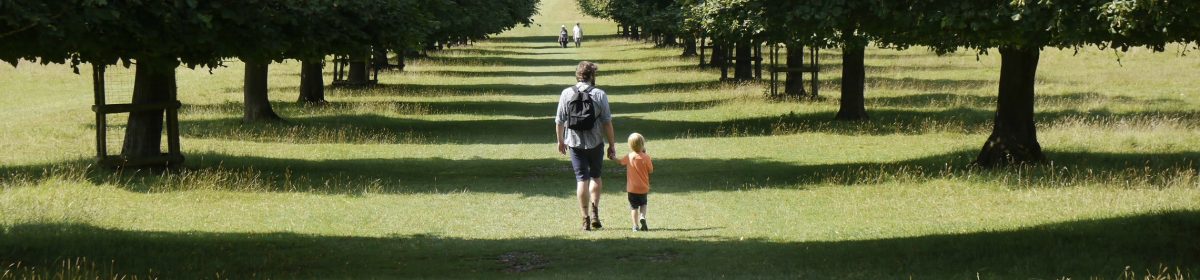
Birmingham but not as you might expect it

IMG_6318

We’ve been going back and forth to Birmingham for twenty years since our son moved there. We’ve grow to love it for all sorts of reasons –  it truly deserves the title of Second City and given the avaricious spread of what Cobbet called the Great Wen, it should probably push London into fourth place for being a pain and hardly fit for a human being to live in.

Anyway this weekend he decided to give us a taste of the unexpected by taking us to Winterbourne House – which used to house the University Department of Botany, and to show us the biggest wildlife corridor I’ve ever seen.  If you wanted to study botany at degree level these days, you’d have to come at it sideways via plant sciences or ecology – not that there’s anything wrong with those disciplines but the days when every science student had to study some field botany are well and truly over, and the discipline has been divided into the fiercely scientific world of DNA, plant breeding and drug development, professional horticulture, and environmental studies that often seem to serve mammon. Finally old-school field botany limps in, populated by relatively mature amateurs who (trust me) really know their brambles and dandelions – I stand in their shadow.  But the buildings and grounds now house all manner of short diplomas and courses organised by the university, so all is not lost.

IMG_6321

Winterbourne House is worth a visit in itself, and the gardens – the old botanical gardens – are an absolute treat as well, a real wildlife haven near the centre of the city. Birmingham is awash with botanical gardens by comparison with most universities. The house itself is rather lovely too – in an ‘upstairs downsairs’ kind of way. I can never quite fit myself into these great houses because I’m painfully aware that in all likelihood I’d have been one of the servants and never the one to disport myself on a chaise longue.

But once you’ve escaped the relative formality of the botanical gardens, you can slip through a gate and get into the Edgbaston Nature reserve which includes a large lake and therefore attracts ducks and swans, plus – to our great delight – a heronry. I can’t remember the last time I saw five, if not six herons at once. All this, remember, in the centre of a great city. Adjoining the reserve there’s a golf course, and we saw a great swathe of green as far as the university halls. Birmingham can be proud of the fact that it’s got more green spaces than any other European city, and they’re big enough to be quiet.  We could clearly hear the university clock chiming the quarters.

Next, then to the main campus nearby and the Barber Institute where, as usual I was bowled over by the very early 13th, 14th and 15th century devotional paintings. But they’ve got a great collection of modern works – Madame was very taken by a Matisse landscape of Corsica which he must have painted on his honeymoon.

IMG_6328Then on Sunday we shipped off to the Wyre forest and shared our walk with innumerable cyclists, dog walkers, families, horseriders and half-marathon runners.  The runners were pretty inspirational – clearly many of them were on personal crusades, some being supported by friends or personal trainers, and all of them up to their ears in mud. The forest is so big and so lovely that it would have been easy to escape the crowds, but it seemed nicer to share the day with all those other people. One of the race stewards said to me  – “Have you seen a bloke in a long cloak and a witches’ hat – he’s bringing up the rear.”  Sadly we didn’t see him but I could have hugged some of the runners who were so far out of their comfort zone. The final stretch was a long slow and muddy climb, and after only about 4 miles we were already tired, but the runners all seemed determined to finish – even at the cost of walking for short periods.

As expected it was a bit late for a great number of fungi, but I managed to photograph a fly agaric, a bolitus which I didn’t want to pick so I couldn’t identify it fully, and candlesnuff fungus.  I’m sure with a guide who knew the forest better than me we could have seen masses of fungi. So home to find two new (second hand) books waiting. Somehow I managed to follow a random trail in search of Elizabeth Blackwell, illustrator of “A Curious Herbal” which was published in parts between 1736 and 1739.  It was a ground breaking book which offered far better illustrations than previous herbals written in English. Her book made enough money to get her dodgy husband out of debtors prison and has subsequently become famous, but when I checked for references in Blunt and Stearn “The Art of Botanical Illustration” I found her summarily dismissed by Blunt as –

“Not worthy of their reputation; the work of an industrious amateur ; and show no touch of genius”.

This loftily dismissive pronouncement by Wilfred Blunt just about sums up in a sentence everything I despise about the art establishment and has left me fuming with indignation.

But enough, I’m ploughing through a rather poor edition of Culpeper whose American editor mis-spells Tutsan (Hypericum androsaemium) as ‘Tustan’ – neatly removing its relationship with Norman French “tout sain” and consistently ‘translates’ ‘divers’ as ‘diverse’. Am I being pedantic to care about it? When it comes to plant names, it’s hard to find better than Geoffrey Grigson’s “The Englishman’s Flora” – I got mine for about 30p and I’m ever fearful it will fall apart.

Home on the range

IMG_5988

Well, sort of – although this isn’t home, rather a borrowed kitchen in the summer where we cooked some great food for all the family. However, the range – or the stove is a wonderful place of retreat when everything is going to hell in a handcart, and that certainly seems to be the case in the UK where we, or the government, have managed to create an extra crisis as if environmental extinctions and global heating weren’t bad enough. We’re poised on the edge of withdrawing from the EU in pursuit of some bizarre dream that we can relocate in another age.  Even a member of our family (fortunately not one we have to see very much of) opined yesterday that it would be lovely to go back to the 60’s.  ‘Be careful what you wish for’, I thought, as I tried not to bite the end off my tongue.

It all adds up to a terribly depressing and stressful time as we are being lured into a distraction robbery by a bunch of people I would gladly introduce to some of the unregulated dark and satanic mills I’ve had the misfortune to work in. BUT – it is what it is, and we may yet escape from the gimlet eyed brexit evangelicals.  Tomorrow will tell.

So today was supposed to be a bit of R & R after a very busy week and my first thought was to do some drawing, but that idea soon wilted like a warm lettuce as he “what’s the point” feeling swept over me.  There were jobs lining up on the list so in the end we went to the garden centre and bought the first seeds for the 2020 season, and ordered some more on the internet.  Preparing for the spring does, at least, inject a bit of joy into the procedings and thereafter I tied myself to the cooker and cooked as if my life depended on it. I quite enjoy batch cooking and so I did 6Kg of ragu to be portioned up for the freezer, I roasted a chicken, flaked the meat off and made stock, I made tomato soup with yet another batch of fruit, drank copious expressos and forgot that we have virtually no freezer space – that’s the problem with displacement activity, it always seems to displace the most important bit of the brain.

One aspect of the difficulty with getting on with drawing is the fact that we’ve just been to an exhibition of the Bath Society of Botanical Artists. In fact we’ve been twice and I’ll probably find an excuse to go again.  My teacher has a piece in, and she’s also recently published a book which I bought. She (Julia Trickey – “Botanical Artistry”, Two Rivers Press) is inspiring and daunting, and she’s a great teacher.  When I look at my work after having seen some of the work on display, I know I’ve got a million miles to go.  My last big project ended in hundreds of preparatory drawings and photos but collapsed in the face of the challenge.  Being the kind of person I am, (I hate failing), one of the purchases in the garden centre was a single hyacinth bulb which, when it flowers, will enable me to complete the project and move on. You can’t wait for inspiration to call, it has to be willpower plus technique, I’m not Michelangelo!

Anyone for angelica?

IMG_6215

IMG_6212Sometimes the success or failure of a day out hinges on something essentially random – like finding a shop that sells crystallised angelica.  We last bought it in Penzance at least three years ago, and so as we set off up Causeway Head I had little hope of finding the shop, which even then had the air of a pop-up, still in business. But there it was, very much in business and pleased to sell me enough for three Christmas sherry trifles at least.  I’d despaired of ever finding it again but somewhere there’s a person with the energy to simmer angelica stalks in increasingly strong sugar solution for days, until the tender stalks are preserved ready to add a touch of green to contrast with the morello cherries floating on whipped cream atop the trifle.  The Potwell Inn always produces Christmas puddings as well, but we rarely eat them until well into the year because sherry trifle made according to a recipe given to us by an old friend has become a Christmas fixture.  As you can see my thoughts have turned instinctively to Christmas for no better reason that the preserving and pickling are all but finished.  Once upon a time, Gill made us the trifle as a gift every year, but when she became too old I took on the task as a tribute.  No Christmas could be complete without it, and because she always aded angelica it never looks right without it.

When I think about it, most of the canonical tasks of Christmas involve quite inexplicable feats of endurance. We know perfectly well that the puddings, cakes and treats are ridiculously rich and life-threateningly full of fat and sugar but a good life deserves a bit of occasional feasting as well as fasting. We are far from the mindset of a couple known to Madame whose idea of the perfect Christmas lunch was to warm up an Iceland frozen turkey dinner and eat it on their laps. Somehow the angelica is even worth a trip to Cornwall, and  always tastes better as a happy accident.  IMG_5459

We grow it on the allotment – it’s a magnificent sight in the summer as it grows to six feet tall – each plant producing enough of the leaf stems to decorate a hundred trifles – but once again this year, we didn’t find time to create our own store in the kitchen. The little shop is, in itself, a model. There is virtually no packaging to be found in it, you could bring your own containers and buy a huge range of ingredients from bulk.  How strange that even in cosmopolitan foodie Bath there isn’t an equivalent shop – I’m sure it would do well.

We walked up and down the pedestrianised street and found an excellent bookshop (Barton Books) the contents of whose bookshelves closely resembled our own at home.  I think I’d read about a third of the stock, and would happily have read the rest.  I joshed the owner a little and asked him if he’d only stocked his favourite books and he responded that good booksops always reflected their owners’ tastes. I couldn’t agree more, and I came out with John Wright’s latest book on foraging which I’ve already started reading.

Penzance is a place of contrasts  – three years ago I’d have been glad never to visit again after we watched an unhinged young woman pouring abuse and beating her dog in the street.  Today we were in Newlyn buying some fresh fish and the fishmonger said he lived in Penzance but it had become “a hole” over the years. Exactly as if we were at home, we watched a couple selling drugs on the street – both obviously addicts themselves, both hollowed out by drugs and life in general and with no provision for any help out of their mess.

Mousehole, where we’re staying, is stuffed with ludicrously pretty cottages which are all that remains of a once thriving fishing community.  Next door in Newlyn there is still a big fishing fleet but Moushole, with its tiny harbour, confines itself to selling souvenirs and doing a bit of occasional crabbing. The purpose has gone out of the place. In Newlyn the fishmonger said he’d voted for Brexit.  I sincerely hope for the town’s sake that he doesn’t get his wish. Virtually all the fish we eat as a nation we buy in, and virtually all that’s caught here is sold abroad, overwhelmingly in Europe. If tariffs were applied to the catch, the fishing would become as unprofitable as the tin mining and that would leave tourism – which only really pays for a third of the year – as the principle industry, bringing even more poorly paid jobs, homelessness and unemployment, helplessness, anger, drugs and alcohol abuse.

But the incomers seem to be taking up at least some of the slack by driving up house prices and providing work for an army of builders, painters and plumbers. The landscape and its wonderful light are largely untouched by change and the granite landscape of West Penwith is as magical as ever it was.  Am I too hard on this place?  We lived in Falmouth for a year as students and were both captivated by it whilst, at the same time, being wary.  You’re always an ’emmet’ here, one of the teeming hordes of ant-like tourists who come, as if to a left-luggage office, looking for something you’ve lost but can’t quite describe. The little battery lit serpentine lighthouse you used to be able to buy from the turners’ shacks on the Lizard has come to stand as a lament for that loss.

We walked to Newlyn today and passed the memorial on the original site of the Penlee Lifeboat station from which the Solomon Browne set out in 1981 in a hurricane force storm to try to rescue the crew of the Union Star coaster. Both crews were lost in the 60 foot waves, and the tradition of Christmas lights here must surely reflect and bring to mind that terrible tragedy as the lights shine out across the sea as if to welcome back the men who will never come.

IMG_6206There’s nowhere to park here: the village was fully formed before the car was invented and the old fishermen’s cottages form a maze of narrow alleyways but there’s an excellent bus service back and forth to Penzance and from there onwards to anywhere in the county. On the roadside facing the sea there are allotment gardens, with some sculptural and whimsical scarecrows.

So, as always we celebrate a few days in Cornwall with mixed feelings. Loss and tragedy are never far below the surface and yet there are few places quite so likely to get the creative sap rising. The railway line to Penzance brought with it not just the tourists, but the painters of the Newlyn School, and later the St Ives artists who, for a while, changed the course of art history.  It’s a culture that’s never quite at ease with itself, often feeling isolated and angry with the ‘upcountry’ politicians who have served it so badly.  If ever a place needed strong regional government this is it. There’s an uncanny resemblance to Wales where the mineral wealth was extracted by a semi colonial economics leaving the place sucked dry.  Love it?  Hate it? It’ll still be here long after we’re all dead!

A bit of re-mythologizing

img_5650

From Christmas with the demythologisers – Rev. E. L. Mascall, – to the tune of Good King Wenceslas

“Sir, my thoughts begin to stray

And my faith grows bleaker.

Since I threw my myths away

My kerygma’s weaker.”

“Think on Heidegger, my lad,

That pellucid Teuton;

Then you won’t feel half so bad

When they talk of Newton.”

Sorry, that’s a terrible theological in-joke, but writing earlier about the way the (my) mind works, prompts me to share this pretty awful character with you.  I invented him during a period of intense reflection about nine or ten years ago to try to think or write about the power of words to uncover/expose the inner workings of ideas. I’ve never had a problem with myths – understood properly they’re just about the best way to tell the truth about the most profound mysteries. Furbelow is, of course, one of many alter-egos such as we all adopt from time to time. They’re custom built and rooted in the confusing reality of our individual lives. Taking Furbelow and mythologising him deliberately gave me the chance to regard a fragment of my own inner life, as it were, from the outside. I’m hesitant to release him into a harsh world, but he hates being caged up in my head so here goes –

Captain Furbelow

At the edge of the River Severn in the month of December you might stand in the freezing cold one night, with the moon sitting low in the sky and the wind rattling down over your shoulder from the Northeast and driving the clouds across like fat schooners. And if you stood until your fingers turned white and brittle and waited and waited as the tide flowed and foxes went about their business you might wonder at the sheer size of the sky above your head. And you might, as you scanned the sky and thought to yourself – “this is the point in the film where the geese fly over, honking, and my blood freezes” – you might also begin to see the millions of stars above your head and among them you might notice the constellation of Orion with his sword and his belt. And you might think to yourself also that this dark sky reminds you a bit of your Dad’s huge black railway overcoat then you wouldn’t be far out. And imagine if you could search in his deep black pockets for sweets, and breathe in the familiar sharp smell of his armpits, and the smell of the bus, and the smell of the rain and the pub and you would feel very strange indeed perhaps and you would know that asking whether such a being as Captain Furbelow actually exists is a silly question, rather like asking whether the Potwell Inn exists. And when you have seen the stars that line his greatcoat stretched over your head in the dead of night, then you just know it, and the teachers, pharisees, inquisitors and pedants as usual, know nothing.

As to the facts, there’s not a lot to be said. He’s a weaver of meanings, creating a unique form of greatcoat cloth.  Some people have argued that there may be a whole hierarchy of Furbelows and such a thing may be as true as any other thing. What we know for a fact is that he lives on a hill near a seaside town – hence the name and rank – and he drives a yellow Morris 1000 van with stars and a crescent moon hand painted on the side, and he has a more or less scandalous and very intermittent liaison with “Oestral” who is an “International Clairvoyante” and whose visions regularly transcend the parish boundary.

The cloth which he weaves descends on the town at night which is why you can’t see it. It’s said he spends the day time at a huge loom in a wooden shack, and where he weaves the cloth from fragments he has harvested during his journeys. Anything from a ship’s manifest to a small advertisement could be woven. A tiny piece of conversation blown in the wind is not too small to escape his attention. He might be arrested by the arching of an eyebrow or the faint flush of the skin in a chance meeting between two people who do not yet know that they are lovers. A dog’s bark, a small joke or even a road sign might inflame him. A particular favorite of his are lists and catalogues which can easily be unravelled and used again. Memories, sounds and smells are the warp and weft of the cloth and if he can lay his hands on the glint of the sea he can weave it in judiciously so as to bring the whole fabric to perfection. The promiscuity of his means is a source of continual irritation to the town, and especially to the deacons of the local Baptist church who, being both strict and particular as well as Baptist, have only the one story which, is completely threadbare.

This may be the origin of the assertion that “Captain Furbelow is a creature of the night” – which phrase has a peculiar resonance for parish councillors and deacons. However it may be that the simple fact that he is, in reality, out and about more obviously during the night, is enough to remove the inverted commas and turn the criticism into an observation. Some qualification may therefore assist us. Captain Furbelow is especially a creature of the warm summer night. On such a night, when the sea-town is held in the air by the force of dreams. Faded seawashed driftwood spars, frames, orange-peel. Delabole slate, terracotta tiles, paynes grey, windworn rocks, seaworn pebbles, scrubbed sand, lichens, quoits and dracaenas like silks in a cabinet or an artists’ colour chart gather on the shore.   Then, on such a night, as the sun sets and the fast food shops are cleaned down, the soft warmth of evening insinuates its seductive aromas around the harbour. When the scent of hot tarmac, wallflowers, fish and chips, cigarette smoke and stale beer hang in the salt air like pheromones to the girls gathered like moths beneath coloured lights . When pasties, suntan oil and peeling shutters, (shriven by the summer heat), gift their perfumes to the sky as it turns from pale blue to indigo. When the people refuse the cadence of night and day.   When they try to stretch the day as if they could hold the tide at the rim of the horizon by sheer effort of will. Then Captain Furbelow will leave home and drive down the winding road through the town.

He is also a creature of the winter night, of the harvest night, of the wassail, of the night of mourning. He is both Captain of the Feast and solitary figure at the graveside. “Amen to that!” he cries, and the deacons and the parish councillors murmur damp threats and plan revenge so horrible that you would dream bad dreams for a month.

Truth to tell, I think Captain Furbelow is a bit frightening. The smell of his armpits and the acrid greatcoat speak of other adventures and happenings that aren’t so good. In fact they’re everything the deacons say. Sometimes he puts his hands deep down into his greatcoat pockets and you can hear things scurrying around in there. Terrible things. Some say that the Captain is exceedingly old, even as old as Adam himself and others maintain that he drifted into town in the nineteen sixties and never left.

Nothing goes with a greatcoat like a beard, and a cigarette. But this beard is different. So dense you could not hack your way through it with the sharpest billhook. A beard to occlude the sky and the clouds. A beard full of thorns and small nesting birds and fugitives hiding from justice. A beard full of things you tried to say and couldn’t. A grey beard with a golden stain that might come from poems spoken out loud or from constant furtive roll-ups.

Go well, Captain Furbelow out there in the world with your beard and your greatcoat. I’ll see you again at the Wassail in January.


“Blood on Paper”

IMG_6174Is the title of an exhibition at the V & A that we stumbled on in London sometime between April and June of 2008. That same day I found a ceremonial Chinese garment from the permanent colllection which was the single most beautiful piece of clothing I’ve ever seen.  Needless to say it disappeared back into the vaults by the next time we visited and we’ve never seen it since. What also went missing for ever was a poem, illustrated by Claes Oldenburg that formed part of the exhibition subtitled “The Art of the “Book”. It was the illustration that caught my eye first, a typical Oldenburg drawing of a slice of cake with two cherries on top. Beneath it was a section (I now know) of a poem by an artist I’d never heard of, a Chinese American artist called Walasse Ting, and the poem was called “All kinds of love”.

It wasn’t a great poem by any stretch.  There was nothing about it that made you think ‘how clever’.  It was simple, repetitive, inflected with a strong Chinese accent – if that makes any sense at all of a written work? But it was beautiful, life affirming, challenging, transgressive – I’m running out of adjectives. It was so beautiful I started to copy it into my notebook, but it’s agonisingly slow to copy a poem, the room was crowded and so after the first few lines I gave up and assumed I’d be able to find it again.

Interestingly, one of the other exhibits was a book that had a hole blown in it by an explosive charge, but it wasn’t that exhibit which blew my mind – it was the rapidy disappearing Ting Poem.  Back home I blithely googled it and drew a complete blank. I was so desperate to find it again that I bought a hugely expensive catalogue of the exhibition, but when it arrived in the form of a cardboard box full of separate sheets, it wasn’t there. That was eleven years ago, and ever since then I’ve searched regularly and never found the poem again except in the form of a PDF extract from a book about Oldenburg where I can see the poem but I can’t read the words.  “All Kinds of Love”  came into my mind unannounced today, as these things often do.

I frequently read two books simultaneously, particularly when one of them is very disturbing and I need another to balance my mind. I started reading “The Uninhabitable Earth” by David Wallace-Wells last week and it fell right into the ultra disturbing category – we’re all going to die a horrible slow suffocating death just about sums up the message in the early part. I don’t know about the rest of the book yet because it  sucked so much oxygen out of my mind that I had to pick up Aldo Leopold’s “A Sand County Almanac” to give me a bit of hope and make me feel human again.

My mind functions more like a loom than a linear calculator, weaving thoughts out of sights and smells, fragments of conversations overheard, old bus tickets and their journeys, the sounds of lorries and curlews, and so there are more threads to be added before the cloth appears. Why “All Kinds of Love” – after eleven years?

  • A book with the right message and the wrong impact?
  • The anniversary of a leaving?
  • A poem about loving?
  • Autumn and the shortening days

As for the Wallace-Wells book, it’s a straghtforward matter of strategy. There’s no ‘if’ about the coming crises – unless we change our ways, and that means changing our whole culture, things will go badly for future generations. My problem with shocking people is that one possible impact is not to energise but to paralyse.  We might, having been convinced of the enormity of the threat, behave like rabbits in the headlights. Denial is the constant companion of grief and shock, the shadow side of bad news.  “It can’t be true! we say, even while we half-know that it is.

In fact Elisabeth Kübler Ross’s five stages of grief, although much challenged nowadays, certainly contain elements of our response to the bad news of climate change and mass extinction. Denial, anger, bargaining, depression and acceptance all feature in our (wealthy western) response. Our problem is that grief takes a long time to work its way through, and we don’t have that much time. So how do we take the initiative here?

That’s where, I think, the poem comes from. “All Kinds of Love” is a celebration of the sheer diversity of expression that love finds in spite of all the religious and cultural efforts to canalize it within concrete walls. Fear changes nothing, but love can break up the fatberg of our inner lives.  Love can make us better people – if it couldn’t why would bad people spend so much time trying to shut it down.  And what I recall from that one reading of a poem in the V & A is thinking that there isn’t one kind of acceptable love, there aren’t categories of love, each one different from all the others, there isn’t “Christian love” or Buddhist love” or “Comradely love”, just love in all its bewildering complexity, all its splendid, heartbreaking, erotic and life enhancing beauty; all its dangerous and destructive potential, – just the one kind, just love, and it’s only through love that we can head off the coming crisis.

How, possibly, could the earth be saved if we are afraid, if we deny the problem, get angry or depressed or, worst of all accept that it’s all over? It’s only by loving the earth and one another that we and our home stand a chance of survival, and that’s why books like “The Uninhabitable Earth” are far less likely to change us than “The Sand County Almanac”.

Finally, it’s autumn – the end of a season and the declining of the light. this is the fourth anniversary of leaving my parishes and moving to Bath.  I simply hadn’t calculated how difficult that was going to be. Bearing in mind all that I’ve just written about love, leaving – the act of handing over the keys – was, looking back on it – one of the hardest things I’ve ever done. I still dream about the parishes, the people, the bloody battles.  Don’t misunderstand, I’m not sitting around with tears running down my face, but my biggest articulated fear when I left was that I’d become hefted, emotionally and practically attached to those square miles. I was right.

But the Potwell Inn, with it’s ragged-assed crew hangs on in the teeth of the storms, loving the sheer weather of life, the cabbages and the caterpillars, the seedlings and the slugs.  Strap me to the mast Gaffer, we’re going to run the rapids.

Clanger Pudding again

IMG_6117This is a family story, passed down to me and I’ve no means of verifying it, but it came to me from my mother who had inherited my grandfather’s habit of inventing names for dishes.  As children, if we asked what was for pudding and she said it was ‘Asquith’ my sister and I would groan  – “not rice pudding again!”

My grandfather and his three sons (my uncles) were all carpenters and builders and spent a good deal of time working away from home.  They had apparently invented a dish called ‘clanger pudding’ which comprised anything – literally anything – that could be warmed up in a pan and dumped on a plate.

Any half experienced allotmenteer will know that clanger pudding feeling, because crops don’t ever ripen in recipe order.  Gluts and failures invariably stand in the way of the fantasy that you can wander down to the garden and come back with a trug full of the exact vegetables needed for the recipe you had in mind. Pickling, preserving, freezing and bottling can take up some of the slack but at the Potwell Inn we have very limited space and there are only two of us so we are regularly invaded by masses of courgettes and – this week – broccoli.

When we packed up and drove to Lleyn on Wednesday the back seat of the car resembled a greengrocer’s market stall. We had harvested anything that was ripe on the allotment and brought it up full of good intentions to explore new vegetarian dishes while we were here. The first darkening on the horizon came when we discovered that many of the runner beans were a bit past it – well a bit kevlar to be honest and on the edge of becoming basket weaving material. Then there was the courgette that had become a marrow, a squash big enough for six and pounds of summer broccoli some of it on the brink of flowering. Cucumbers, tomatoes, potatoes, beetroot, peppers, aubergine, chillies, herbs in abundance – did we think we were going to spend 24 hours a day cooking and eating?

And there’s the allotmenteer’s torment.  It’s hard work growing things and so we don’t like to waste them. Naturally the colour supplement gurus have this under control by planting single seeds at 4 day intervals thereby offering a perfect succession. In the real world we have better things to do than a one mile round trip to sow a seed, so as the week progresses we feel more and more guilty and the smell of the broccoli in the veg compartment begins to spread through the cottage every time we open the fridge. We’ve had one or two successes on the veggie front, but it requires a good deal of ingenuity and we’re noticing a certain sameness about many of the recipes.  The temptation to add intense umami flavours to everything can make the vegetables – which should be the stars of the show – into mere carriers of the flavours.

Today was a C+ effort using the tomatoes we’d brought to make panzanella.  I wrote the other day about the “sourdough” we’d bought and this being a pretty shop free area I was stuck with it for this evening. I added in a grilled pepper and our own basil to reduce the surplus a bit more but as soon as I added the dressing the bread quickly collapsed into pulp. Clanger pudding in fact. But it was good enough, as was the large quantity of broccoli and stilton soup I made yesterday.  Jacket potatoes were OK too and we’ve eaten plainly but well. But I think the takeaway point is that if we’re going to eat as much as possible from whatever we can grow, we shall have to be content perhaps with less variety.  The upside is that the treats when they come along – I’m thinking of our own asparagus and apples – are all the more exciting.

Our time here is half gone, but we’ve done some good walks  and in the evenings we’ve entertained ourselves by reading to one another from our books.  It’s very efficient because we each get to read one and hear the best bits from the other.  Madame is reading William Feaver’s new book about Lucian Freud and I’m reading Richard Mabey’s “The Cabaret of Plants” – both of them excellent (and I wish I could read that last sentence as my eighteen year old self!)

IMG_6115

Tomato festival

Yesterday was a bit wet, but the tomatoes seem unbothered and we needed to get them processed as quickly as possible so I was up at the allotment to pick them before breakfast and it was pretty much lunchtime before I managed to grab a bite to eat. Last year we invested in an inexpensive hand cranked passata machine and it really helps when you’ve got a lot of tomatoes to deal with. We don’t bother to skin them, just rinse them off to get rid of dust and insect leavings, and then chop them into pieces. Then we pass them through the machine, returning the residue  around four times to get the last bit of flesh out. Today’s batch of tomatoes weighed around 10Kg and made up 9 litres of finished sauce – it’s a Marcella Hazan recipe, very simple, just simmered for a couple of hours with six peeled and halved onions and 500g butter. Last year we experimented with bottling some of the produce because our freezer is too small to freeze all the tomato sauce and passata  we need for the next year. The bottled sauces were incredibly useful and kept well in a dark cupboard, in fact we finished up the last bottle a couple of weeks ago. Marcella Hazan and Anna Del Conte are two of my favourite writers on Italian food.

Any allotmenteer will know that you can get tempted to grow all sorts of things that turn out to be somewhere down the list of useful or favourite vegetables. We’ve discovered that good stock, fresh herbs, and prepared sauces like pesto and straight tomato are a tremendous ‘go-to’ resource on busy days and so we give some priority and growing space to them in the planning stage.

I love this time of year.  With a bit of luck we’ll be harvesting the seaweed in a short while, and thinking about charging the hotbed with a new load of fresh manure ready to beat the winter cold. So it’s not just the things that we’ve grown ourselves, there are all sorts of freebies in the hedgerows, not least the sloes and this year I think we’ll make some rose-hip syrup too. The storecupboards are slowly filling up with preserves, jams and pickles – it’s a very comfortable feeling as the nights get colder and longer.

Winter is civil engineering time and there are still a number of jobs to do like plumbing all the water tanks together and covering the compost heap.  It’s also a time for reflection on the last season.  We’ve already decided to move the strawberry bed into a more accessible place, and reposition a number of gooseberries and blackcurrants to give them more breathing space and light. Today I cut off the last of the maincrop potato haulms and covered the rows with black plastic until we’re ready to dig them. There was weeding and clearing away dead leaves to catch up with after our time away, but nothing much to worry about. We came home with boxes of veg to keep us going for 10 days.

We’re going to have a bit of a bash to increase our repertoire of vegetarian dishes, and decrease our meat consumption which, to be honest, has been declining anyway because we can’t afford the kind of meat we’d prefer to eat and I’d rather do without than support intensive farming with all its impact on the earth. No philosophy today, you may be pleased to see, but just the sense of profound thanksgiving for the gifts the allotment brings to us with very little credit to us or our skills.

Is it wild or isn’t it?

IMG_6043This holiday is turning into a prolongued commentary on the books I’m reading in the wet and windy evenings here in the Lake District, and the photo is completely out of focus, I know –  but it was this little flower that caught my mood and crystallised some thoughts I’d been mulling over earlier.

The flower is a particular favourite of mine and its vernacular name is Fox and Cubs – Pilosella aurantiaca, an irresistably pretty member of the Daisy family.  I’ve only ever seen one other plant and that was on a village playing field near Portscatho in Cornwall. But it’s not particularly rare and in fact it’s another garden escape, first planted in gardens in 1629 – according to Harrap’s Wild Flowers (recommended) and first spotted in the wild in Europe in 1793.  So we’re not talking Japanese Knotweed!

In the background is Muncaster Castle which was  there in 1258, so it’s been long enough for a naturalised plant to take up residence, although I doubt very much if that’s what’s happened in this case.

So that’s the flower and the castle and now the book, which is called “Deep Ecology – living as if nature mattered” by Bill Devall and George Sessions.  It’s a primer of extracts and a commentary on most of the main philosophical threads of the environmental movement in general, and in particular a ‘deep’ ecology that goes beyond conservation in its generally accepted  sense; and so “wildness” is one of the concepts that gets explored in great detail. We spent today at the castle and part of the experience was to visit and watch two displays of owls and vultures being flown. I’m not keen on zoos, but there was no opt-out at the ticket desk and so we went with the crowd and saw the caged birds and also watched them flying in the displays. Ironically (or perhaps not), among all the rarities, the one bird that tugged most at my heart was a Tawny owl that sat in its cage and called persistently. We often heard Tawny owls when we lived in the countryside, and the very first night we moved to our flat, we heard a Tawny calling outside as if to say “don’t worry I’m still here”.  It’s amber listed in the UK , and I’m sure it was only there because it had been rescued but ….. all that space and woodland around and it was in a cage. IMG_6041

It was a fabulous place to sit and watch the birds flying so close that we were warned to duck if they were heading directly towards us. I was trying (displacement activity)  to use the display to watch the birds – there were owls as well as vultures – and to admire and understand the way they were using their wings so differently but my underlying feeling was that there was something sad about these magnificent creatures being kept in cages for much of their lives. I was involved in a silent conversation with the keepers whose commentary was largely concerned with conservation. Vulnerable and threatened species of all kinds may disappear altogether if we don’t do something.  Breeding programmes, game reserves and all the available bureaucracy of grant aid and legislation are turned towards the preservation of these species but I can’t help feeling that it’s us who have to change. We’re still inclined to think of the natural world as being essentially there for us – for our education, leisure and entertainment; as a resource for geneticists and drug companies, as a raison d’être for conservationists, rangers and wardens, but we rarely understand them as existing entirely in their own right within a family of which we are only a part.

If we want to save these creatures we  – WE – have to stop exploiting and destroying their habitats, not gift aid a tenner to a charity at Christmas. Do we care about them enough to relinquish our cars, feed ourselves differently, stop kidding ourselves that mass tourism into ever more remote areas brings much needed development, preserve our remaining wild areas while turning a blind eye to deforestation in Brazil so we can go on eating cheap meat.  We, collectively, are the biggest threat to wildlife on the planet and the planet needs us to turn around.

Of course the other threatened species on display at the castle was the building itself. My heart goes out to the owners who must struggle every day to keep the show (and their ancestral home) on the road. I confess I’m a bit of a propeller head when it comes to drainpipes, I’ve seen some beauties over the years, and among the (cheap) cast iron downpipes outside the building there were some beautiful hand-made lead pipes.  Clearly the hand-to-mouth restoration of the building is being done one drainpipe and one ceiling at a time.

So how do we resolves these issues of preservation and conservation? There’s a growing thread of purism in the conservation world that demands huge reductions in human populations and industrial growth, with the re-creation of vast amounts of ‘wilderness’. It is, some say, a spiritual issue. If that means that we have to change our culture at the very deepest levels of our being then I totally agree, but not if it means forcing the solution on to the most vulnerable people on earth, because we are all too often the cause of their poverty.

Is the orange daisy lookalike wild or cultivated? Does it really matter in the great scheme of things?  Is a sperm bank or a seed store in the permafrost the best way of addressing the extinction crisis? – don’t be silly! Is a castle worth saving when there are millions of homeless out there? Well why not build some (eco) houses rather than forcing the owner to sell it off to a hotel group and leaving another family to be housed and most of the present staff unemployed.

We have seen the problem – it is us!

Rural rides – going north

“All my life I have been in and around wild nature, working – exploring, studying and even living in cities. Yet I realized a few years ago that I had never made myself into as good a botanist or zoologist or ornithologist as so many of the outdoor people I admire have done. Recalling where I had put my intellectual energies over the years it came to me that I had made my fellow human beings my study – that I had been a naturalist of my own species. That I had been my own object-of-study too.”

Gary Snyder – in ‘Blue mountains constantly walking’ from his collection “The practice of the wild”.

IMG_20190827_200521

Two books were very much at the top of my mind as I was writing this post. First, as the title suggests, I was remembering William Cobbett’s book describing rural poverty in 1830,  (and incidentally, citing a book doesn’t mean I agree with all the writer’s sentiments. Cobbet was probably a very unpleasant man who, in this instance, had his finger on the pulse because he went and saw for himself). But secondly I was reading Gary Snyder’s book “The Practice of the Wild” while I was writing it and I’m sure it’s leaking through every line. This is a truly important and inspiring book for our times although it was published in 1990, and I can’t recommend it too highly.

The net result of this reading and the reason for the quotation from Gary Snyder was that I found myself putting aside my hand lens and county lists in favour of pondering just what we’re doing to ourselves and how and where we allowed our humanity to be so diminished.  I had to become “a naturalist of my own species”.

Holidaying together on the border between Cumbria and Yorkshire, we are one of those temporary communities that forms and re-forms from time to time in different places. Our extended family flows like a busy stream around the large kitchen table in this eighteenth century farmhouse. Noise and conversations are continuous – everyone talking at once and nobody listening, children tugging at me and racing about with swords and shields enacting a fight I hope they never see for real. I play the elder, and I am straining to understand who is cross with whom today, who had too much to drink last night, where are the cracks in the family brickwork. The big range at the end of the kitchen is in constant use as we take it in turns to cook according to the rota and so the whole symphony is punctuated by cries of “hot!” and “watch out!” as we swirl like advancing and retreating waves, occasionally pausing to eat and clear and wash up once again. The children have their own cycle between excited chatter in the mornings as they visit us all in our bedrooms to steal biscuits and cuddles, and howls of anguish and rage as they are put to bed in the evening and the first bottles are opened. Yesterday it was announced that the government intended to suspend parliamentary democracy in order to force through the plan to leave the European Community. Here in the depths of the Yorkshire Dales the news was filtered through a shaky and ancient portable radio.

MVIMG_20190825_102312When the news came on Madame’s little radio I lost it completely and hurled bad tempered abuse at the radio. I’m truly scared by what’s happening. Fear and powerlessness are nasty and unproductive emotions and I was reproached for my outburst for frightening the children. There was nothing for it but to retreat to the river and sit there on a rock watching the peat stained water for half an hour imagining terrible acts of violence and revenge and struggling to allow the river to take the unwelcome thoughts away.  It worked, as it always does, and so, sufficiently shriven, and after a supper of bacon, cheese and potatoes accompanied by anxious looks from my family, I consoled myself with Gary Sneider’s book for a while before rejoining the throng.

I never see myself as being particularly patriotic. I think I love this country as I love my family, mindful of all its faults but leaning on the assumption that ultimately we are one. It is only when it is threatened that I become fierce and defensive.

Outside the conservatory window we’ve been watching three brown hares, one much larger and two of them smaller – possibly a doe and her leverets as they relax in the sun and occasionally eat. Up on the hill we found a dead and half rotten raptor beyond identification – possibly shot – this is grouse country. While we followed the river down to a bridge that has been damaged for the umpteenth time by a passing lorry, we heard the thrilling liquid song of  curlew and watched lapwing flying across. These remote places are the breeding grounds for many threatened species of bird. Down by the river we watched a yellowhammer, a bird I haven’t seen in ages. Here the landscape and its inhabitants look familiar enough from a distance but when I get my eyes down to ground level I discover that my knowledge of natural history is more appropriate to the western coastal regions. There are strangers here among the flowers and wildlife, just as there are among the “larger than wolf, smaller than elk” humans who work this landscape and speak in a totally unfamiliar dialect that can speak Slaithwaite as ‘Slough’it’ which makes me feel like a stranger.

This could read rather like a Cobbettian travelogue in the bad-tempered mould of Rural Rides, because much as I’d like to bathe in the silent beauty and rustic charm of it all, it’s impossible not to be alarmed at the fragility of both communities and landscapes. To drive from the West Country to Huddersfield, and thence across this huge county to the Yorkshire Dales is to experience all the contradictions that are throwing this country into a civil war whose deadliest weapon is passive aggression. We fear the climate crisis and yet we cannot manage without the cars and lorries that turn traffic jams into toxic clouds. Just to get here we queued for miles on slow moving motorways that turned our journey time on both of the first two stops from four hours to six. Last year it took us longer to drive from Cornwall To Bristol than it used to do 50 years ago before the A38 was relegated to history by the M5 and extensive dual carriageways.

IMG_5960Our friends in Huddersfield share a great part of our history and values. They are highly active in the community, avid gardeners  and implacable in their opposition to destructive chemical use by farmers, even going so far as to engage with one of the largest producers face to face. They describe the efforts of these companies to justify their noxious products as “greenwashing” and it’s hard not to agree when you read the notes taken at the meetings. IMG_5967.jpg‘S’ has made several poncho’s by ironing together plastic supermarket bags, an operation which she says is best carried out carefully and outside because of the smell.

There are many signs of hope and they have helped the MASTT build a lovely community orchard complete with its own complement of bees. The bees were the idea of a Syrian asylum seeker who has now moved on to run a community beekeeping project close by. Why this delightful man and his family with so many gifts to offer should be regarded as a threat, escapes me altogether. We never needed writers so much as we need heirs to Cobbett and Dickens to lead the charge against the mendacity of the politicians who are leading the country into catastrophe.

As if to drive home the point we spent part of a day walking on the Huddersfield Narrow Canal, built in the heat of the last industrial revolution, and which never really turned a profit. These days its principal use is for tourism, and even that is limited by narrow width, daunting sequences of locks and the longest, deepest and highest canal tunnel in the UK. IMG_5976We drank tea outside the entrance to Standedge tunnel and talked to a man with an intimate knowledge of the feeder lakes and reservoirs, who told us that the recent collapse of Whateley Bridge dam, a canal feeder reservoir in Derbyshire, was the direct result of the management failure to respond to weather forecasts by lowering the reservoir level. We were told that they are absolutely paranoid about running the reservoirs low for fear of negative publicity if a prolongued drought should increase the demand for water in the canals. We were also told that this was not the only nineteenth century dam liable to collapse after sudden floods, and that other centres of population are equally under threat from old dams being subjected to excessive loads by keeping them full. Whether any of this will emerge during the enquiry is doubtful as the more senior levels fight to cover their arses and blame the weather as if it were a surprise. No doubt “lessons will be learned” but there is no hope that among those lessons the government will put any extra money into averting a disaster. One day, perhaps, dozens or even hundreds of people will be killed, and a minister will visit for a photo opportunity in a hi-viz jacket, but the facts on the ground will not change – nature is not there to be controlled and farmed for our own benefit.

After an equally testing drive westwards to the other side of the county (it was a bank holiday weekend) we came into the Yorkshire Dales. We had rented a cottage right alongside the upper reaches of the River Swale, miles from anywhere and entirely without phone signal or internet, which made it so much easier to unwind. But the news every day is so awful that even in this peaceful setting I woke in the night with the horrors after dreaming about the situation. Driving through the much diminished places that were once centres of industry, mill and mining towns where houses can be bought for next to nothing because there is no work is so obviously depressing that it hardly warrants attention any more. We’ve got used to poverty, food banks and Pound Stores.

MVIMG_20190826_115716But anyone who comes to the Dales, which still seem the same as ever, and thinks the landscape – which really does take your breath away – is ‘natural’ in any way at all, is deluded. These dales are the product of not one but many forms of agriculture over the millennia. The ancient landscape was not so long ago buried under hundreds of metres of ice and with no flora at all; there’s nothing immemorial about it, and it could change again in the blink of an eye or the stroke of a pen far away in London. The farmers here rely on public subsidy for 80% of their income and, trust me, they are not rich. Were it not for the support they get, the land – which is marginal and unproductive – would be left ungrazed and would swiftly become scrub. Woodland and forest, desirable though they may be in the right place, are not ‘free’. In historical terms the whole landscape was intensively managed and if it is to remain in the form that we love, open and available to us with its biodiverse communities, and able to achieve the balance between sustainable food production and intensive farming leading to ecological breakdown, we will need to invest money, and farmers will still have to do the work. When a whole farming community disappears we lose the skills that have been honed over centuries and built into common life. The media like to fret about disappearing tribes in the Amazon, but don’t get sufficiently excited about the prospect of losing the hill farming communities in our own country.

Here the becks and rivers seem eternal. The landscape is sculpted by forces we can barely conceive of, and at the human level everything seems uncompromising. When it rains, it rains with a scale and intensity that sends hack journalists towards words like ‘biblical’, except it isn’t. It could never be tamed and put in a box with Jesus and the others. What the journalists never want to mention is that in the Genesis myth, the flood was a punishment for the over-reaching greed and promiscuity of the human race. But rain is rain, that’s it – fierce, driving, scarifying, clarifying rain gathered from the oceans and hurled back at the hills that gout it back at us. Hills that float on water, notwithstanding their great age and mass. The wind searches at the doors of the farmhouse and rattles the doors at night as if seeking entry to level us to dirt again.

But stuff happens and things do change. The circus has moved on and it’s appallingly obvious why people here voted as they did to leave the EU. The collapse of heavy industry was no less predictable than the onslaught of unpredictable weather that presages the climate catastrophe. But the politicians, safe and well-rewarded inside their closed communities had no inclination to think ahead while they profited from strip mining human communities of every shred of extractable wealth: of housing, education, health care and self-respect but more wickedly they destroyed whole cultures.

It’s almost too late as the farmers contemplate the cost to their livelihood, but one thing is sure. We need to reinstate democracy from the ground up. From citizens’ assemblies to parish and district councils, to county councils, regional assemblies, constituencies and only finally government, we must learn to engage democracy for the good of all – and that includes the earth that sustains us. It’s philosophical dualism that’s led us to this – me and ‘it’, the worthy and the unworthy, the future and the past, human and nature, God and servants, rich and poor, clever and stupid.

For the first three days we had almost continual sunshine, and then the weather closed in and reverted to its stereotype, but nothing kept us indoors, and several of the nights were clear enough for stargazing. There are no artificial lights for many miles and so old and familiar constellations and planets (well, Saturn at least) were surrounded by multitudes of stars we’d never seen before. One of our party had brought a telescope and after an abortive attempt when we forgot to put in one of the lenses(?) the boys finally found Saturn’s rings. There’s a huge difference between knowing things in your head and knowing them with your senses. They were completely energized when they told us at breakfast the next day.MVIMG_20190824_213430

As we left after a week, we struggled to get the van up the steep and narrow track leading to an equally precipitous and narrow road. I had to reverse the whole 3 ton truck back down and around a sharp corner and then take it at a run with only a tap on a wing mirror as I roared through the first set of gates. As we turned towards civilization we were accompanied by a small flock of half a dozen lapwing who could easily have flown to the left or right on to the fell, but flew in front like a miniature honour guard or possibly they were fighter planes escorting us away from their territory. We all went our separate ways, and with the benefit of a phone signal, photos were exchanged and progress reported. Our journey took us north and west, looping around the Lakes to the coast at Ravenglass past Bassenthwaite Lake where we once almost went to live save for the rainfall – which has subsequently proved to be monumental.

The journey, once again, took us past several depressed mining towns and villages that demonstrate all too painfully that tourist money only sticks in a few places in the Lakes. This was once a great centre for the mining of coal and iron ore and which supported a prosperous and skilled workforce. There had been fitful attempts to build industrial estates and business parks on the abandoned sites but it all seemed too much like sticking plaster. As we approached the coast the looming buildings of the Windscale nuclear reprocessing plant hogged the landscape.  Was this where the politicians learned to lie on an industrial scale.  Was this where the idea that it was morally acceptable to lie to the population “for the good of the country” was conceived? A large sign on the roadside proclaims “The Energy Coast” without a trace of irony or self-awareness. The radioactive beaches tell a different story.

I want to stop looking and worrying.  What I’d really like to do is go back to botanising and growing plants on the allotment and forget all this, but I can’t. The union jacks and crosses of St George flying in the gardens of so many run-down homes and businesses give testimony to the lie – the great lie – that we can have it all. The mainstream political parties still don’t get it – they each peddle the snake oil remedy that they alone possess, to run the country better without changing anything. Best stop here, I think, before I start ranting on (like Cobbett) about turnips. We’re in Ravenglass now on the third leg of the journey and at the point where the Cumbrian fells of the Western Lake District drop from the heights of Scafell down to the sea.  It’s mournfully beautiful, a melancholic’s pick-me-up.IMG_6015

This is beautiful – really!

IMG_5954The last time I actually studied biology I was 13 years old and determined to drop the subject as soon as I could.  I don’t know quite why, it was probably to do with the teachers we had.  The biology teacher was very young and we were a pretty unruly class, given to asking silly questions that were certain to make him blush – he blushed easily. His nemesis was – let’s call her Jolene – who was reputed to be a great comfort to the sixth form boys and therefore an object of awe to the rest of us. Jolene collected detentions like most of us collect loyalty stamps, and one day she discovered how easy it was to escape confinement by lifting up her dress and showing our biology teacher her knickers. Word got around and the class descended into anarchy. Being a bit of a geek, I thought I’d be better off doing physics so I defected to the subject that had an inspirational teacher known by us all as Jinks, whose lessons were never less than exciting and often featured electric shocks and explosions, and that’s one of those odd bifurcations in the road that sent me off in another direction than the subject of the little diagram above while I still knew next to nothing about biology.  Until this week.

So sixty years later I’ve developed an interest in herbal medicine, largely through growing things on the allotment. Like an annoying child, my mind always functions by asking an endless regression of ‘whys?’ and so I thought I should investigate some biochemistry – which is down there with brain surgery on my list of least understood subjects. So I bought a copy of ‘Medical Herbalism’ by David Hoffmann in the hope of some enlightenment. There is one sentence near the beginning of the book that gave me the energy to carry on because it said – in relation to the incomprehensible formulae and diagrams – don’t worry too much about them, they’re just a schematic way of expressing molecules that don’t look anything like them.  

‘That’ll do for me’, I thought, I’m good at using myths and metaphors as ways of understanding real-life events that elude description any other way. So to cut to the really exciting insight it’s nothing more than a biological commonplace if you’ve been immersed in the field but to me, whose last experience of scientific biology was cutting up a potato while thinking about Jolene, it came as a revelation.

It’s all very simple really.  We are – as smart arsed scientists in the media like to say – a carbon lifeform. I’d never really thought what an awe inspiring fact that is until  I started to look at some of those beautiful metaphors like the one at the top of the page. They really are so simple it’s ridiculous.  Every living thing, every plant cell, every green patch behind the sink, the birds, the bees and Jolene too while we’re on the subject, is made from a ridiculous lego kit  comprising a very limited palette of atoms whose properties allow them to engage with one another in such complex forms it leaves you breathless. My head is flooding with ‘hows?’ and ‘whys?’ but the fact is that everything that has ever lived, or might come to life in the future is built from the same simple components.

Plants, it turns out, having the leisure of evolutionary time at their disposal, are perfectly adept at creating massively complex molecules, some of which are essential to our human lives but which we are unable to create ourselves. We are, to an extent, made out of plants.  “You are what you eat” turns out to be true in a less grandstanding sense than it’s usually employed. Our familiar compound Serotonin whose diagram is at the top of the page, can be largely synthesised by plants with the sort of ingredients available in every plant’s larder.

A question arises from this. What happens to all those molecular spare parts when we, or any other life form, return to the ground? Do they maintain their integrity as useful spare parts? And so is normal soil – I’m talking about healthy soil that’s not been drenched in pesticides and herbicides – full of these spare parts, and is that something to do with soil health? Is my compost heap a breakers yard for complex molecules? I have no idea what the answer to that might be but I’d like to think it was true.

I’ve come out of the brainblast with very little more understanding of the detail but a much bigger idea of the unity of all life.  I mean, our sympathy, our love, our study of nature is not predicated on some lofty and detached platform from which we can study the earth as a neutral observer.  We are the earth, we’re made of exactly the same stuff which is just organised in a different, more complex way. When we abuse and mistreat the earth we are self-harming. Isn’t that awful? Self harming!

Anyway, enough for the time being.  We’re going to be away for a week in a place that’s 25 miles from the nearest shop, with no radio, TV or internet and no phone signal, while our son minds the Potwell Inn bar and waters the plants.. Are we looking forward to it?  Hell yes!

More pictures on today’s crops below.  The pumpkin is for the grandchildren at Hallowe’en – if I can still carry it. The boring picture with the black plastic is a reminder that if you’re leaving ground empty, even for a while, it’s best to cover it.  The black plastic is waterproof membrane bought from a builder’s supplier about eight years ago and it’s been in continuus use ever since.