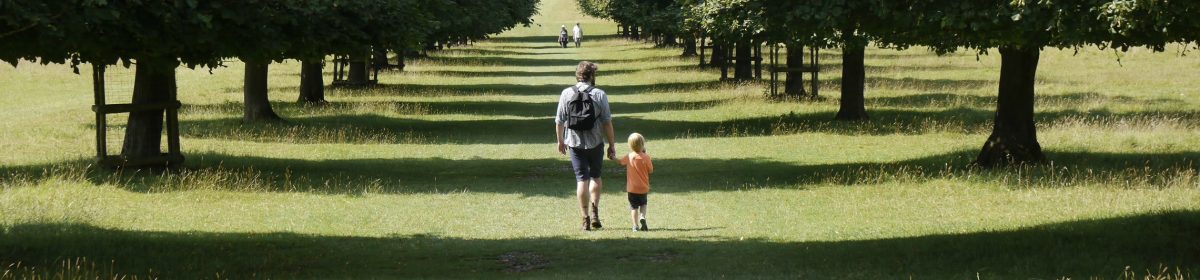


Here’s a photo I took a couple of days ago of the Birdcage in Clifton. We, and everybody else we know who actually lives or lived there call it the Birdcage but a rather snotty notice at the southern end insists it’s really the Lime Walk and the real Birdcage is the diagonal path across Victoria Square. It’s not really a ditch worth dying in, but I do hate any kind of pedantry – especially when it’s not justified by the evidence.

Of course there’s a reason for my forceful opinions. We lived in Clifton and Hotwells as well as Redcliffe for years and the Birdcage passes through St Andrew’s Churchyard. The parish church was destroyed by bombing during the air raids and if you stand on the south side of the river you can still see the remains of the attack as a visible scar through the landscape. My Father and his siblings were baptised there, and later several of my family were married at St Mary Redcliffe since both parish churches, St Andrews and Holy Trinity Hotwells were destroyed in the same air raid during the blitz by a single stick of high explosive bombs. When two of our children attended Hotwells School they were the third generation of the family to go there. My Dad was born in Dowry Square a beautiful Georgian square which was only saved from demolition by a campaign run by the architect Peter Ware who fought tooth and nail to prevent the “development” (read destruction) by the City Council.
When we moved back to Hotwells, my Dad’s godfather’s family had returned to the rebuilt Holy Trinity church and his family are probably still connected there today. Don’t worry about the details, the important idea is to show that Clifton, Hotwells, and Redcliffe too were, and functioned as, villages. Families knew one another and their respective histories. My entire extended family on my father’s side lived there; one of my great aunts was warden of the almshouse where my grandfather lived. She moved in nearby with her sister later on and when they both became senile in old age they were well known for going out for walks in their corsets. One or another of their neighbours would always lead them safely back home.
But there was always a problem, and it afflicts Hotwells as much as it affects us, now living next to it in Bath. The problem has a name and it’s the A4 road and both Bath and Bristol neighbourhoods are being slowly destroyed by it. It passes barely fifty yards from our flat and notwithstanding the new zebra crossings many drivers still regard stopping as optional. On Wednesday we travelled by train to Temple Meads. A journey that would have used the A4 for much of the way, takes up to an hour on the bus (or in a car) and 10 minutes on the train. It’s a lovely journey by train and the recently opened east entrance to the station leads directly to the bus stop for Clifton and saves a long wait for the pedestrian crossings to allow us to cross the six lanes of the A4. We asked the bus driver if the re-routed bus still stopped at the Birdcage and he looked blankly at us. I said “it’s a local name” but that didn’t help. It stopped there in any case, but, through no fault of his own, the driver only knew the City by main roads and bus stops. The neighbourhoods and districts, the urban villages through which the roads pass are merely ghosts. The journey from the station took us through unrecognisable commercial developments which have become menacing temples to Mammon. The A4 passes down Redcliffe Way through a soulless canyon of office buildings; a cultural desert from which grey souls flee to the equally soulless suburbs after work. The university has opened a new campus there, and there is a 24 hour bus service to Clifton which at least, with its students, has some life. There’s a new secondary school, but the veg market will close and move out. The dozens of small businesses are being displaced by concrete as far as the eye can see. It’s a truly horrible scar. The Hotwells road section of the A4 was once universally known as “Love Street” because the brothels that served the docks area were all there, but now there are blocks of flats where the slaughterhouses once stood and more flats where the Baltic timber came into Baltic wharf; and next to them the A4 separating the residents further up the hill from the river.

This thought came to me as I took the photos of St Andrew’s churchyard. We read and sometimes contribute to “wildlife corridors” as a positive benefit to wildlife, and I thought “why can’t we humans have the same kind of corridors for ourselves?” Why do some residents put up such rage filled fights whenever local councils try to create safe passage for cyclists and pedestrians? Here’s a photo of the corridor connecting Clifton and Hotwells – one of many such lanes that join the villages together. In many other places such ancient rights of way mean we don’t have to resort to the car and a fifteen minute journey to walk from one place to the other.
I see the bilious attacks on our local council whenever the imaginary and sacred right of motorists to clog the city centre with dirt and fumes and drive as fast as they wish without care or restraint and then park on the pavement is threatened by low traffic areas and pedestrianised neighbourhoods. We have a little car but generally only use it for journeys beyond Bath or when there’s no alternative way of getting to where we’re going. In many ways the ghost village in which we now live closely resembles those I’ve already written about in Bristol. Once this area was partly industrial and in Georgian times was home to many alehouses and brothels. The stench of the dye-works must have been awful because they often used human urine as a mordant. Now the council are at last building cycle paths and pedestrianised streets making Bath safer and cleaner but they’re harried at every turn by legal actions and demonstrations. The angry mob complain about the potholes and then complain when the road is blocked while they’re mended.
There is only one cause of the constant traffic jams in cities and it’s not pedestrians or cyclists. It’s cars and lorries. Lorries which have grown and grown in size and weight and are relentlessly destroying the roads, bridges and basements. I never heard of a bicycle or overweight pedestrian that could damage the structure of a centuries old bridge.
We humans are a part of nature too and we deserve to be able to move about cities quietly and safely and stop for a conversation with our neighbours without having to shout over the roar of traffic. The answer is obvious. Let’s restrict cars and lorries, invest in clean and efficient public transport – electrified trains and trams – and put people before profit. Of course some short sighted people will howl with rage as did the silversmiths of Ephesus when the growing strength of Christianity threatened their trade in silver trinkets of Diana in the first century. They’ll march the streets chanting “Blessed is Ford Prefect” but their cause is doomed, like the market in goose quills and steel pen nibs (both of which I still use occasionally, but I have to find my own sources)!


On the left, the pedestrian lane down to Clifton Wood (notice the green) and on the right the bottom of Christmas Steps which my maternal grandfather helped to restore maybe 75 years ago. He was a vernacular builder and carpenter; one of few people in the trade who could dismantle and rebuild a timber frame at that time.
