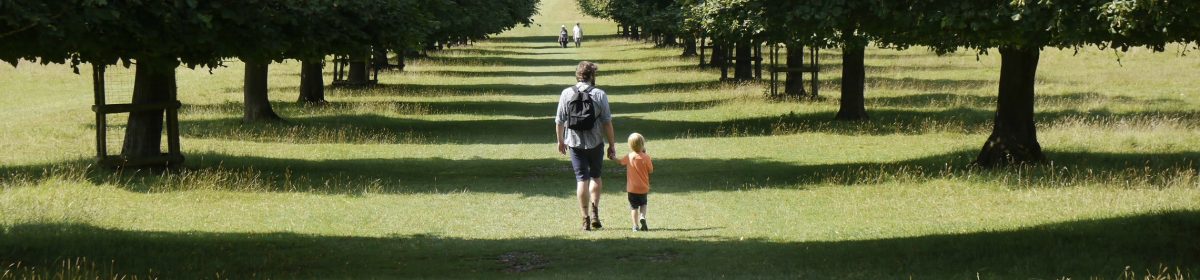

In his famous 1961 book Weeds & Aliens Sir Edward Salisbury (1886–1978), an eminent British ecologist and a former director of the Royal Botanic Gardens, Kew, described an informal experiment after returning home from a walk through the countryside. He noticed that the turn-ups of his woollen trousers were full of mud and burrs.
Instead of brushing the debris away, he scraped out the dirt from his trouser cuffs and planted it. Salisbury was surprised when the tiny amount of soil yielded over 300 individual plants representing more than 20 different species.
- The answer to my question “who was it” – an AI question on Google Gemini
I thought I’d better own up to that bit of AI because it seems that some saddos enjoy knocking down writers because they’ve sailed too close to someone else’s writing. It seems that for that kind of tiny mind, every semicolon needs to be the sole unaided work of a single creative mind. Give me a break! the logosphere is one huge whirlpool of language forged and forgotten over millennia. I’ve been reading Alice Oswald’s new book “Rhapsody – a manifesto” and you would probably love it as much as me if you’re sick of the tired old clichés about solitary bohemians and geniuses and their entourages of critics, editors, gallerists and curators.
So I picked that story about Sir Edward Sainsbury’s trouser bottoms because it’s such a good illustration of the way in which creative minds really work. I go for a walk on the allotment with my mind open and alert while my metaphorical turn-ups fill with seeds for new posts. My botanical mind asks “who, what, where and when” but my creative mind asks “why”. Why has this Peruvian Apple landed on our plot and how did it get here? What does it mean? what’s it for?
We have robins which just love it when we break open the soil and expose grubs for them to feed their families. They’re very tame, and come to our feet unafraid even singing their minor key songs to us. Yes they’re highly territorial -we once had to evict a couple of fighting males from the fruit cage before they really damaged one another. There are many other birds on the allotment site and I speak to them all and clap my hands to scare off the pigeons from our cabbages. Occasionally a magpie will attempt to rag a nest nearby and the sky is full of spite and venom and alarm calls. One day I saw something moving in a hedge and I stopped to look closer. After a while a wren cautiously came to the edge and immediately hurried back into the shelter. I was taken aback by my unexpected love for it. I stop and consider that word, “love” – but enjoy; like; admire, don’t come close in intensity. It seems to me that most of those relationship terms demand reciprocation but it didn’t matter that my burst of love for the wren needed no response or even recognition on its part
Apples, on the other hand are a bit difficult because they’re so hard to give names to. Madame’s old boss, George Gilbert, could name the variety with ease – he’d lived and breathed them for a lifetime. For us, it means long searches in databases and through books written fifty or more years ago. The apple at the top was – we were told – a French variety called L’Abri Noir. We were never convinced, especially when I discovered that “abri” could be used for a carport. The romance rather drained out of that one . It was Belgian in any case. But the American Arkansas Black is a closer fit – and now we know its likely name it’s easier to treasure.
Apple trees have a distinctive shape. You wouldn’t think this could conceivably be contentious but I once had a bit of a row with a lecturer who scoffed at any thought that they had a distinctive form and rejected my black and white painting in house paint on a piece of cardboard. But he was wrong. There’s a distinctive downward curve in the branches that could be caused by the weight of apples season by season, or might be a genetically determined feature. Whatever the cause, it’s easy to pick out an apple tree by its shape – and a world in which creatures and plants are known and loved by name is a better place.
All of which comes back to Sir Edward Sainsbury’s trouser turn-ups. Of course we can take a walk; enjoy the sunshine and breathe the fresh air, return home and think”that was nice”. But a walk with the senses screwed up to eleven never returns home empty handed. Half the fun of writing a blog like this is opening the box of remembered treasures and stringing them together into some form of story. Narrative; the spinning of yarns, poems, songs, prayers and laments is fundamental to our humanity. Overheard remarks, captured glances, rich gossip, all contribute to our sense of who we are and occasionally comfort and hold us safe in times of crisis
The point of all this is that the creative imagination doesn’t work with rules, templates and footnotes. The creative mind is shamelessly jackdaw-ish. Always happy to take someone else’s insight and work it into something new. I always try my best to give credit to the originator of a borrowed phrase or idea, but sometimes they just come out of the flow. I’m pretty sure that some of my pieces have taken on a second existence on someone else’s site and I know for sure that the entire million plus words and thousand plus postings have been scraped into the large language AI models. It would be nice to have some acknowledgement as a source but I’d love it if it was shared with a credit and link to the Potwell Inn.

.
