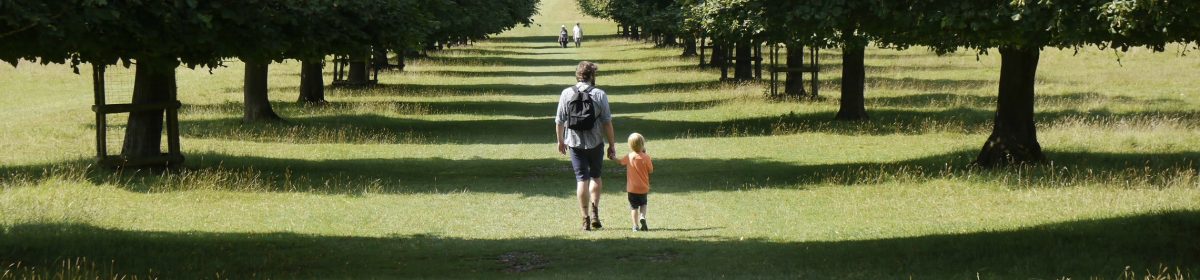


The dream
I like to think of Dabberlocks and Furbelow as invisible friends; but in reality, as solicitors for my superego for my whole life, they’ve hinted, adjudicated and occasionally forbidden my wilder flights of fancy. Occasionally they’ll issue a non-disclosure order on one of my ideas but mainly they just sit in silence and I know what’s required. I call it censorship but they refer to it as discretion and normally they win.
The visitations come in occasional dreams and their names and faces are never visible to me but I always know they mean business even if their language is completely opaque and I struggle to understand what they’re driving at. Once I had a dream about a very large and menacing dog clutching a beautiful ruby in its teeth which I think I was supposed to remove. on Saturday night I had another dream in which the words were said – “you can’t argue with a blackthorn” in the context of winter flowering plants. It usually takes a lot of imagination to turn the key in the lock but this one immediately brought to mind a long abandoned project about a character I’d invented called Barnacle. I wrote a kind of CV down for him at the time, along with a quite detailed description of his appearance. Beard, huge greatcoat with deep pockets and that kind of thing. But as soon as I recalled the word “blackthorn” I knew that he would have carried a blackthorn stick representing both the peaceful rambler and the belligerent cudgel known in Ireland as a shillelagh. Two of his multiple temperaments in a single wintry stick that flowered like snow in the hedges in the worst and coldest season of the year.
Then I had him. I’d kept him secret for twenty years and it was time to let him out.
I learned something unforgettable from Sister Enid many years ago, and it helped me to weave some random threads into a thick cloth.The first time I met her was on a Catholic retreat. This was no pious weekend, though, because the La Retraite house in Bristol was, a beacon of radical and practical faith. I took part in a number of retreats there – they were pioneers in bringing Myers Briggs to the UK – but on that particular occasion there was something else going on. The point here is not so much what went on, but the fact that until 48 hours in, Sister Enid didn’t speak a word. She sat in the corner silently and, being young and arrogant, I assumed that she was an ancient, probably half senile sister who had been propped up in the room for a bit of company. We were a strange mix, but amongst the retreatants were a group of sisters from another house who were experiencing – let’s say – interpersonal difficulties. There was something bad eating away at them.
Anyway, the retreat went on and we talked a bit; shared a bit and did some challenging exercises in small groups and in full sessions. In the last plenary, Sister Enid finally spoke. She had watched and listened from Friday evening until Sunday afternoon – the daft old lady in the corner – and then finally and without notes, she accomplished the most forensic examination of a group’s dynamics I’ve ever witnessed. I learned two important things that weekend. Firstly, never again to stereotype and then dismiss another human being because they were old; and secondly that watching, listening and paying minute attention is infinitely more humane and useful to a writer than spouting smartass ideas and showing off.
I even invented – conceived – a character who embodied that lesson. The name, I’m afraid, was invented long before the children’s TV programme called the Octonauts so I must ask that you banish any thoughts of the character of the bear in the TV films. My Captain Barnacle – without the final ‘s’ – is a darker character and – to be honest – he’s part of an alter ego that I created for myself twenty years ago. Here’s the CV I wrote for him – or perhaps it was me all along.:
A wintry story at Christmas

At the edge of the River Severn in the month of December you might stand in the freezing cold one night, with the moon sitting low in the sky and the wind rattling down over your shoulder from the Northeast, driving the clouds across the sky like sea foam. And if you stand until your fingers turn white and brittle and wait and wait as the tide flows and foxes go about their business, you might wonder at the sheer size of the sky above your head. And you might, as you scan the sky, think to yourself – “this is the point in the film where the geese fly over, honking, and my blood freezes” – you might also begin to see the millions of stars above your head and among them you might notice the constellation of Orion with his sword and his belt. And you might also think to yourself that this dark sky reminds you a bit of your Dad’s huge black overcoat then you wouldn’t be far out.
And imagine if you could search in his deep black pockets for sweets, and breathe in the familiar sharp smell of his armpits, and the smell of the bus, and the smell of the rain and the pub and you would feel very safe indeed perhaps and you would know that asking whether such a being as Captain Barnacle exists is a silly question. When you have seen the stars that line his greatcoat stretched over your head in the dead of night, then you just know it, and the teachers, pharisees, inquisitors and pedants as usual, know nothing.
As to the facts, there’s not a lot to be said. He’s a weaver of meanings, like an angel or possibly the weaver of a unique form of cloth. Some people have argued that there may be a hierarchy of Barnacles and such a thing may be as true as any other thing. What I know for a fact is that he lives on a hill near a seaside town – hence the name and rank – and he drives a yellow Morris 1000 van with stars and a crescent moon hand painted on the side, and he has a more or less scandalous and very intermittent liaison with “Astral” who is an “International Clairvoyante” and whose visions regularly transcend the parish boundary.
It’s said he spends the day at a huge loom in a wooden shack, and where he weaves a sky cloth from fragments he has harvested during his journeys. Anything from a ship’s manifest to a small advertisement could be woven. A tiny piece of conversation blown in the wind is not too small to escape his attention. He might be arrested by the arching of an eyebrow or the faint flush of the skin in a chance meeting between two people who do not yet know that they are lovers. A dog’s bark, a small joke or even a road sign might inflame him. A particular favourite of his are lists and catalogues which can easily be unravelled and used again. Memories, sounds and smells are the warp and weft of the cloth and if he can lay his hands on the glint of the sea he can weave it in judiciously so as to bring the whole fabric to perfection. The cloth which he weaves descends only at night which is why you can’t see it in the day time.
The promiscuity of his means is a source of continual irritation to the town, and especially to the deacons of the local church who, being both strict and particular as well as Baptist, have only the one story which is completely threadbare.
This last factor may be the origin of their assertion that “Captain Barnacle is a creature of the night” – a phrase that has a peculiar resonance for parish councillors and deacons. However it may be that the simple fact that he is, in reality, out and about more obviously during the night, is enough to remove the inverted commas and turn the criticism into an observation.
Some refining of the idea might help. Captain Barnacle is especially a creature of the warm summer night. On such a night, the sea-town is held in the air by the force of dreams of faded seawashed driftwood spars; frames; orange-peel;
Delabole slate; terracotta tiles; Paynes grey skies, windworn rocks; sea worn pebbles; scrubbed sand; lichens; quoits and dracaenas as various as silks in a cabinet or an artists’ colour chart. Then, as the sun sets and the pasty shops clean down their shelves, the soft warmth of night insinuates its seductive aromas around the harbour. When the scent of hot tarmac, wallflowers, fish and chips, cigarette smoke and stale beer hang in the salt air like pheromones to the young men and women gathered like moths beneath coloured lights . When Pasties, suntan oil and peeling shutters shriven by the summer heat gift their perfumes to the sky as it turns from pale blue to indigo. When the people refuse the cadence of night and day and they try to stretch the day as if they could hold the tide at the rim of the horizon by sheer effort of will. Then Captain Barnacle will leave home and drive down the winding road through the town.
Captain Barnacle is also a creature of the winter night, of the harvest night, of the night of mourning. He is both Captain of the Feast and solitary figure at the graveside. “Amen to that!” he cries, and the deacons and the parish councillors murmur damp threats and plan horrible revenge. They will whip him with scorpions, they say, and Elder Bell keeps a whole nest of them behind the shop where he keeps the flick knives and condoms for the local lads.
Truth to tell, I think Captain Barnacle is a bit frightening. The smell of his armpits and the acrid greatcoat speak of other adventures and happenings that aren’t so good. In fact they’re everything the deacons say. Sometimes he puts his hands deep down into his greatcoat pockets and you can hear things scurrying around in there.
Some say that the Captain is exceedingly old, even as old as Adam himself and others maintain that he drifted into town in the nineteen sixties and never left. He might be some kind of extraordinary deity or he might be a beach-bum entrepreneur.
The beard is a nice thought. Nothing goes with a greatcoat like a beard, and a pipe. But this beard is different; so dense you could not hack your way through it with the sharpest billhook. A beard to occlude the sky and the clouds. A beard full of thorns and small nesting birds and fugitives hiding from justice. A beard full of things you tried to say and couldn’t. A grey beard with a golden stain that might come from poems spoken out loud or from roll-ups. It is impossible to imagine him without one and so I will give him one without fear of being accused of not really knowing him at all – and the length of his hair? Flowing, naturally, and long …. somewhat wavy and a tad greasy for some tastes.
And his stick? Why of course it’s a blackthorn shillelagh. Dark with age and cured for a year in a dung heap wrapped in oiled cloth to make it harder and more resilient and made by a man called Rex who’d scoured the hedges near the riverside for exactly the right conjunction of root (for handle) and shaft; donned his thickest gloves against the thorns and sawn it off – unique and precious; polished it to a glow and weighted it with lead so that it balanced at exactly one third of the way down where – if needs be – Captain Barnacle would hold it in order to administer stern correction if the deacons came after him on the heath, in the dark.

There must be more!
