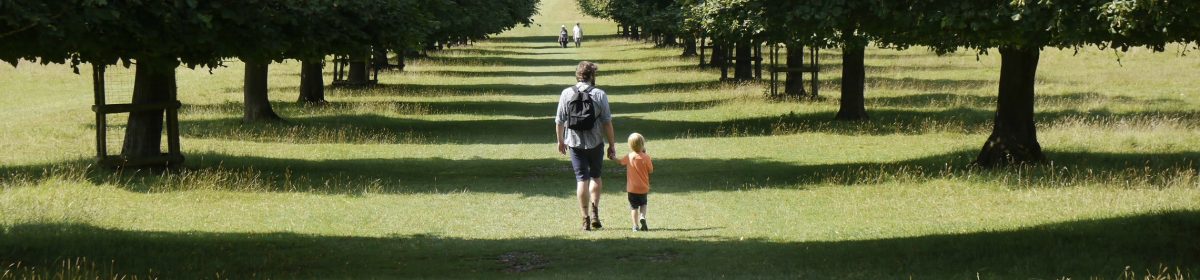


We’ve moved just over ten miles to a very small cottage on the side of the hill above Porth Neigwl which, in English is rendered as Hell’s Mouth on account of the number of ships wrecked there in South Westerly storms. We’ve been down to the long dune fringed beach in severe storms, and seen how the sea can be almost overwhelmingly dangerous. The Welsh name might also be translated into gateway for the clouds – a name we can also vouch for. This part of the peninsula, with Mynydd Rhiw on one side and Mynydd (mountain) Cilan on the other, seems to attract and embrace banks of low cloud and sea mist in its long arms, mist that, with luck, will burn off during the day. There’s an irony in the photo because we struggled without success to make the telly work last night and it wasn’t until we looked at the photo that we realized there was a satellite dish on the wall. Wrong socket error!

We’re looking down from the garden towards Sarn y Plas below us; the cottage owned by the Keating sisters who allowed R S Thomas, priest and poet to live there after his retirement from Aberdaron. The church authorities refused to allow him to remain in the vicarage next door in spite of their having no use for it. Madame noticed some days ago that it was in disrepair, and a drive around it today confirmed the very poor state of the roof. I find it very hard to believe that the church had so little understanding of how celebrated he was as a poet, even though they must have known that his eccentricities led many village people to dismiss him as a “miserable bugger” . The church on the beach in Aberdaron does its best to give pilgrims somewhere to see and hear the reality of his poem “The Moon in Lleyn” , and there’s a small upper room in Llanfaelrhys church with a peaceful feeling and a fine view of Bardsey. In the churchyard his wife Elsi, his son Gwydion, the Keating sisters and the poet and acquaintance, Jim Cotter are all buried. It’s a windy and often cold place for visitors to meditate. Even Sarn y Plas, his old retirement home is under plans to open it to the public, but there is no sense that the church authorities or the village itself is prepared to treat him and his work as much more than a side-hustle. The old vicarage could be redeemed with some restoration and a permanent exhibition. The Keating sisters, who lived almost next door at Plas yn Rhiw, on the remote estate where we’re staying, were equally disliked by many for their opposition to potential caravan sites in the area and even bought up land and gifted it to the National Trust to prevent any further development of tourism. They united in opposition with RS and many others to a nuclear power station being built in Edern up the road, and to military development down on the dunes where bombing practice took place during the war. RS was rumoured to have supported the arson of second homes in the area but no evidence was ever presented. He was a fierce Welsh Nationalist without doubt, leaving ample evidence, sadly, for the the fact that those with most to gain from the destruction of this beautiful place wanted him and his campaigns gone for good. The church, as chaplains to the status quo, wrung its hands and hid the bibles in case anyone ever read them properly.
So, inspired as I’ve been by his brutally honest poetry, it’s pretty cool to be here in the midst of it. I’ve already mentioned his poem “The Moon in Lleyn” which shares a kind of melancholy tempered by hope with Matthew Arnold’s poem “On Dover Beach” which could as easily have referred to Porth Neigwl. But before we get too carried away by the melancholic solitude of this extreme Westerly point, it’s sensible to remember that beneath the hillside where I’m typing this, lies a lode of manganese ore that led to one of the biggest manganese mines in Europe for a while. For all I know this cottage could have been built for a quarryman and his family who would have lived here many decades before RS came to minister here. I could walk across the top of the mountain, which isn’t very high at all, and in ten minutes drop down into the valley beyond, where there are abundant signs of the old industry. I suspect RS would have hated the clanking of the overhead cable lift down to the waiting ships below; the pollution and the whole bleak rust-belt atmosphere of it. However passionate a priest he was, he would never have regarded himself as a missionary; more of a Jeremiah perhaps!

And today, sitting in the pub opposite the church with the smell of hot cooking oil drifting past and hundreds of tourists looking for something to do, I know he would have hated it just as much. The environment has recovered from the mining and could recover perhaps from mass tourism and caravan sites, although there’s talk of another nuclear power station on Anglesey. Despite the best efforts of RS, the Keating sisters, the National Trust and thousands of Welsh Nationalists, his world was a temporary one. The other night we were driving down to Porth Oer for a walk and we even surprised a hare which ran down the road in front of us and bolted into a field. Another poem brought to life. The soil here is slightly acidic and I’ve been finding Heath Bedstraw and Harebells, not to mention orchids on one of the dune lined beaches. It’s still awesome but overhead the bombers still make training flights
It would be easy to put on a pessimistic air and claim that – therefore there’s no point in resisting change – and our local (but thankfully no longer) MP Jacob Rees Mogg was dubbed minister for the 18th century by one journalist for wanting to reintroduce imperial weights and measures. But battles such as engaged RS can last for a generation or even a century, outliving our own disappointments but ultimately vindicating our campaigns. There’s no need to accept the judgements of our contemporaries who will, soon enough join Dante’s bishops in the circle of hell especially reserved for those who didn’t give a shit. All we can do is hold on to the good we can still find and keep the hope alive for the turn of the soft withdrawing roar of the sea.


Oh and this – one farmer’s investment in the future:

