
We’ve planted five varieties of potato this year –
- Jazzy (first early)
- Arran Pilot (first early)
- Pink fir apple – maincrop but we dig them early for the best potato salad ever
- Red Duke of York – again a later potato and fabulous roaster, but also good early
- Sarpo Mira – which, being highly blight resistant, we leave in the ground.
The reason we try to get the vulnerable varieties out of the ground early is because the allotment site is plagued with blight. The problem with doing it this way is that we can be overwhelmed with new potatoes early in the season – but then, better overwhelmed than stuck with tasteless supermarket potatoes. But this season – need I say – has been very odd, with a dry early period followed by some pretty cold weather and now almost continuous rain for a couple of weeks. The rain has come just in time for the early potatoes which looked set to be a tiny crop, but they’ve plumped up nicely this week. The photo shows Jazzy at the back, and a few Arran Pilots next to the beetroot. It’s only when you see them together that the whiteness of the Pilots shows up. We’ve never grown them before but they’re the ones my grandfather and my parents always grew, and I remember what a wonderful flavour they had from my childhood, so I can’t wait to get them into a pan.
As for the rest of the vegetables, the weather is causing a mixed bag of results right across the site. Only the overwintered broad beans have survived the aphid onslaught, but at least the ladybirds peaked at exactly the right time and we’re seeing six plus larvae on a single plant. It’s the larvae, not the hatched ladybirds with the prodigious appetite for blackfly.
Tender plants have all suffered stress in the cool wet conditions, and the onion crop has been hit hard everywhere, but the cabbages have enjoyed every moment of the weather and made steady growth. So I suppose that’s the whole challenge of allotmenteering – no season is ever the same as the last one and with global heating playing the wild card, we just have to duck and dive and ride the weather.
However that was only a part of the day because this morning I took the first car-load of books down to the Oxfam shop. This is turning into a bittersweet time as I declutter my study to make space for new projects. Today’s books weren’t just old novels, some of them had been very important at the time for all sorts of reasons, and I could almost remember where and why each one was bought. When I came home I made a start on the serious collection of music books, which seemed more unsettling and painful than ever. I’ve been flunking this moment for four years – I knew I should have sorted through them when we moved here, but we ended up only letting the painless ones go. These latest ones represent a huge investment of time and money during the period I was deeply involved in music, and I had to summon up every ounce of resolve to pass them on to new owners. Music kept me sane for a very long time, especially during the most stressful periods. Anyway that’s enough, and I’m saying to myself that I was really using them as a comfort blanket – something I could define myself by during the period of introspection and loss of role after I retired.
By lunchtime we’d cooked soup for supper and then went for a second look at the Bath Society of Artists show. Julia Trickey – who taught me – has sold a magnificent painting of leaves found in the Bath Botanical Garden. Among the leaves was a Harts Tongue fern, and when I looked carefully there was even dry brush detail in the sporangia. Epic stuff. In the photo below the horizontal pile of books in the foreground has been resting on the lightbox for months now and that’s why I’m clearing up.




 So our first day at Rosemoor was not nearly as wet as the forecast promised, although we kept our waterproofs on all day. Last night’s rain was prolonged and heavy so we weren’t taking any chances. Our main interest was in the vegetable gardens because I wanted to find someone who could help us to understand what happened to our onions this year. So I trailed around with the pictures on my mobile, accosting gardeners and largely discovering that they were no wiser than we were. Aphids were mentioned, as were all the usual suspects – flies, fungi and eelworm, but none quite fitted the bill. In the end Madame suggested that it could have been that the sets, which arrived early and had to be stored for ages, had simply deteriorated before we planted them out. The idea made sense to both of us, although it would mean that almost everyone else on the allotment site stored them badly as well. Anyway we’re getting an email address for a free ID service for members and I’ll send off the photos to see if there are any more suggestions.

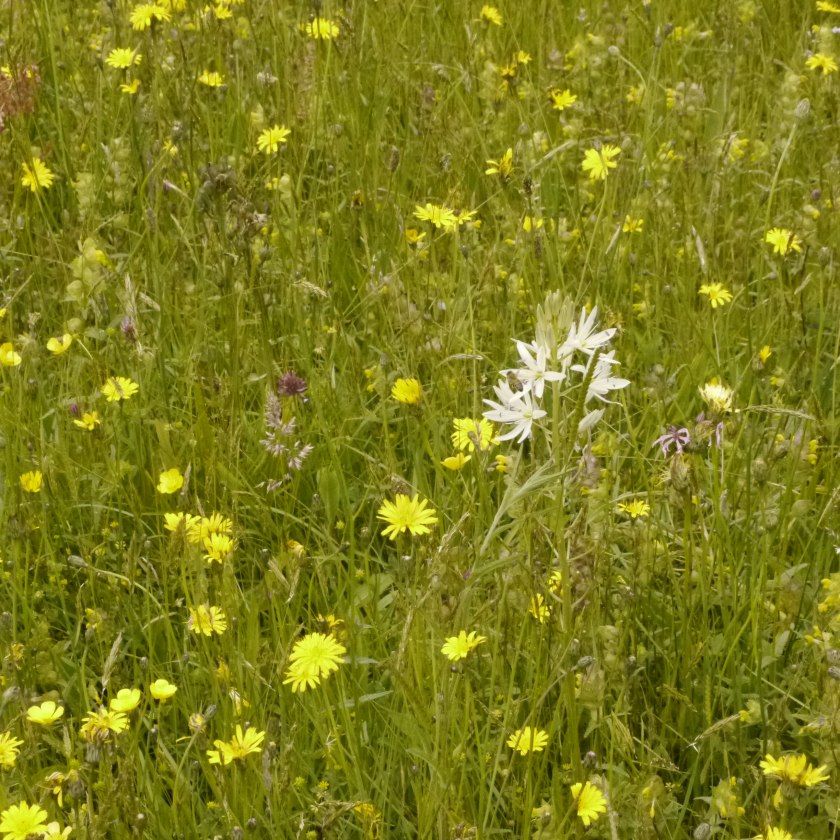
 However, there came a moment when the dilemma became acute for me and that, ironically, was when the garden started to offer something I really wanted to see. There are now some quite large areas of wildflower meadow which I fell upon with joy. There were southern marsh orchids in flower, ragged robin, knapweed, oxeye daisies, umpteen grasses like crested dogs tail and so on, yellow rattle and an unexpected white flower that I don’t think I’ve noticed before which turned out to be Star of Bethlehem – Ornithogalum angustifolium . It was all too good to be true, surely? There, in a patch half the size of a football field, was a collection of plants I’d expect to find one at a time in a day’s search over a much wider range. All this in an area that had been turned over by earthmovers less than 30 years ago. It’s a wonder, a triumph of science and the gardener’s art. A horticultural Las Vegas in the depths of a Devon valley. I’ve never seen a better display of plants in a wildflower meadow; it exactly fits our current anxieties about biodiversity, and I don’t suppose the birds, the insects, moths and butterflies that flock to it will give a hoot whether it was there in 1930 . Compared with the usual miserable sowing of ‘wildflower mix’ that developers ususlly throw around their bleak gulags to persuade the planners that they really care about nature, this was xanadu. So why was I troubled? I think a large part of it was my stupid attachment to authenticity – whatever that means – and the truth is, starting from where we are (which is a pretty dreadful starting point) there’s no other show in town except the Las Vegas route, re-creating at great expense and with enormous skill, the flora and fauna of the environment we’ve allowed to decline to the point of no return. There’s no way back to the good old days before we lost nine tenths of our wildflower meadows, because simply abandoning a patch of ground to ‘nature’ can’t possibly succeed.


 And just one more little joy – they’re developing a new orchard here and it’s dedicated to one of Madame’s old bosses – George Gilbert, a delightful man who probably knew more about apples than anyone else alive. We also saw a plaque in his memory at the Lost Gardens of Heligan, commemorating his contribution to the gardens there. He died in 2007, and took with him a lifetime of experience. His students are a big part of the future if we’re ever to rediscover and recreate the lost varieties of apples, pears and soft fruit, lost to careless agricultural policy, and that’s another star for the RHS who do so much to train the next generation of gardeners with apprenticeships, courses and such like.


 Is it really worth the bother?

