A quiet Sunday with Meister Eckhart

I’m not in the least orthodox when it comes to sabbaths and such like, but since I launched off in praise of the monastic life a couple of days ago, and I deliberately took a complete break from gardening today,  I thought it would be a good time to mention the third major aspect of Benedict’s rule known as lectio divina – divine reading, study, prayer and meditation – that’s supposed to fill the times in monastic life when you’re not working or praying in the chapel. Sleep, you’ll notice, comes a poor fourth! This kind of “quiet time” – to use a deliberately non religious way of describing it – is, for me, an essential component of being human. I’ve always been a voracious reader, but this kind of reading is a bit different because in the way I’ve learned to do it, I choose a book by casting a wide net  – for instance recently I’ve been reading a lot of deep ecology, much of which has a strong spiritual component without nailing any particular god into a box of any kind at all.

Today it was Meister Eckhart – 13th century Dominican theologian who was posthumously found guilty of heresy by a Pope who was also later found guilty of it – you couldn’t make it up! Anyway, without getting into his spirituality, which is very challenging but also very relevant to today, the way of lectio divina is to read very small sections, if necessarily over and over, and then ponder what they might mean, and I don’t suggest  by that, trying to figure out what it might have meant to some imaginary reader when it was written, but what it means and demands of me today. It’s a very slow way of reading and meditating that involves putting the book down a lot, getting out of the way and letting it speak, and I was doing a bit of it on the allotment today because it helps me to flourish when my life has balance and discipline.  Work (allotment, cooking and all that stuff) + prayer (WTF – remember?) + study. Some activities – like botanical drawing and writing seem to involve all three!

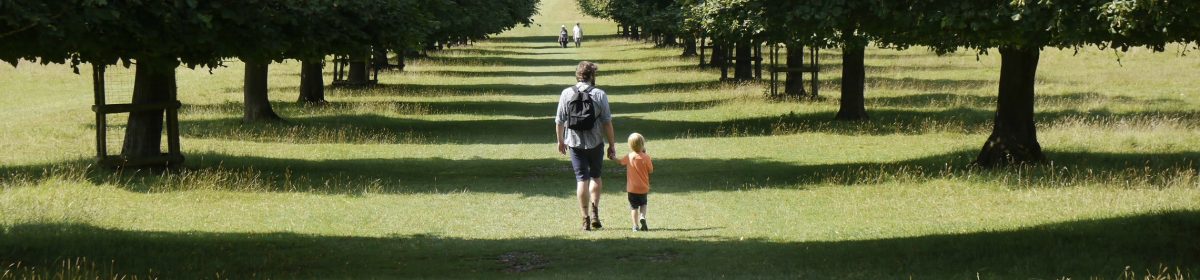
Anyway the sun was shining and we got out the fold-up chairs and read together in silence.  But I kept being distracted by the plants because I felt sure I could hear them growing. The Swiss chard, in particular seemed to be making a proper exhibition of itself, chomping up sunshine and rainwater and unfurling itself almost in front of our eyes. I fell to reflecting how small is our contribution to the allotment. A bit of digging and hoeing; a bit of lifting and hammering and raking; the odd backache. The rest is sun, rain and soil and the rewards are generous beyond all human reason.

Today we came back with enough asparagus for a few stalks each, some green leaves, radishes and salad onions.  Together they made a salad to gladden the heart. There doesn’t seem to be any ‘because’ in allotmenteering.  Any conceivable human explanation of what we are doing and how it happens would fall laughably short of an absolute reality that refuses to name itself. The book fell shut on my lap and I dozed in the sun as if I were one of the plants. I’ve never seen this phenomenon described in the gardening press but it’s real – I mean really real!


If a tree falls in the wood and no-one hears it, does it make a sound?

IMG_20191215_141322
Tansy – Tanacetum vulgare, flowering out of season in December, on the towpath.

Many years ago I spent a week on a silent retreat in a Franciscan convent in Compton Durville in Somerset.  Sadly the sisters eventually had to move because they were unable to cope with managing such a large house, but it was a very beautiful place to spend a week in silence. I was the only man there, and so they gave me a small cottage all to myself. There was a mostly rather solitary silence except, that is, for 1.00pm, after lunch, when the radio was turned on for the BBC news headlines and off again immediately they were over. It was during the reign of Margaret Thatcher and one day there was a particularly tendentious headline (they were troubled times) and one of the more radical sisters snorted in word-free despair,  a snort in which we were probably all complicit, and we went back into what you might describe as a newly established communal silence. You have no idea how intensely a silence can communicate.

This last few days the memory of that week came back to me. After the disastrous results of the election were announced, as I’ve already written, I had to deal with a whole pile of anger and despair and among the things I did in response, more instinctively than deliberately, I gave up listening to the broadcast news or buying any newspapers at all. I didn’t even cheat by reading the papers online. It seemed to me that the cacophony of opinions, stupidities and anger were echoing around in my head and it was like being trapped on a bus with a drunk, powerless to stop the fetid tide, and I thought to myself –

“if this were happening in the room I’d get up and walk away”,

So I’ve walked away and you’ve no idea what a difference it’s made. One way and another I’ve spent quite a bit of time around and close to monastic communities. Aside from being extremely married, I completely lack the strength of character it takes to live in community, but I’ve pressed my nose against the window many times.  We’ve lived in several communes and I promise that they can bring you closer to murder than any other way of life! In some Benedictine houses the doorway into the chapel is inscribed “To pray is to work” as you go in, and as you leave the inscription reads “To work is to pray”. Any which way, life is better when it’s prayerful and even having such a liminal faith as mine, it never seemed truer.

After days of awful weather we got on to the allotment this morning and, after a rotten week, we began to feel human again.  We often work in silence, completely absorbed with the task in hand.  It’s quite prosaic – I was turning the compost and spoiling our resident rat’s day again; Madame was planting out broad beans, and I thought fondly of the monastic gardens I’ve been in.

I can almost hear some of my friends gnashing their teeth at my proposal to withdraw for a while, but there are many noble precedents.  In China, monks who were odds with the emperor would take themselves off ‘fishing’. But disengaging from what Heidegger called “das gerede” – the endless torrent of gossip that destroys our authentic life, is essential for us if we are to discover what it means truly to be ourselves, however painful that process might be. At a less philosophical level, getting out of that stream of ideological noise that constantly tells us who and what we are, and how we should behave and what we should believe, is the only way we’ll survive with our souls intact.  For a few days I’ve lived a monastic silence right in the middle of the world and I can breathe again. To walk and weed and to turn compost and plant beans is to pray, just as to meditate is hard work.

So the tansy we found yesterday as we walked down the towpath alongside the swollen river is out of season, it shouldn’t be there – none of the books think it should be there – and yet it is; vibrantly alive in mid December in complete defiance of expert opinion. Can this be true?  Can a plant defy all-powerful human research? If a tree falls in the wood and no-one hears it, does it make a sound? There’s the coming extinction in a sentence. Does something only truly happen when it happens for us, and for our benefit? The tansy flowers, cast a glow amongst the rough grasses on the towpath. I thought of all the long history of using the plant, the women it helped discreetly, the wisdom of  its use and its dangers.  This was a plant that once befriended the truly desperate – no moral judgement here, and as I touched the blossoms and smelt them it felt as if I was being invited to share a secret – as indeed it was, when knowing the plants could be a sign of witchcraft and cost you your life.

But if my tansy had been growing unobserved in the depths of the forest, and without a name it would still have been there, blissfully unconcerned about our fear filled lives. The earth doesn’t need us: we’re probably the most useless and destructive species that ever lived, and if we should disappear altogether through our own greed and stupidity the tree would still fall unheard in the forest and the tansy would still flower whenever it saw fit.

But meanwhile, in the intervening years we would do well prayerfully to consider our situation. Years ago I stood at the top of a ladder lopping a long and heavy branch off a horse chestnut tree. As the branch fell away, the part of it that was supporting the ladder jumped upwards and the ladder fell with me on it.  I threw the chainsaw as far away as I could and landed in an embarrassed heap. That day, work turned into prayer in the blink of an eye. My only worry with my quiet regime is that when I get really old and the doctor asks me what day it is and what the prime minister’s name might be, I won’t know the answer!