My life in a landscape

IMG_4944

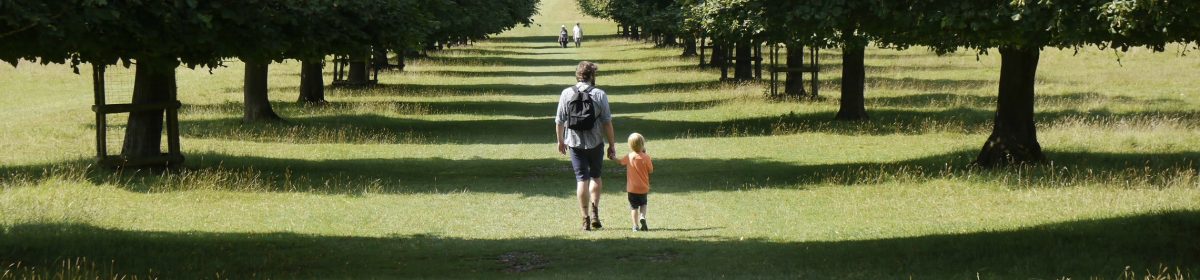
This photograph embraces the landscape I’ve spent much of my life working in, walking in, cycling around and variously exploring. It looks looks across to the Forest of Dean and in the flesh, as it were,  you can just see the pillars of the old Severn bridge so all my old parishes are there. To the left is the place where I was born, and the whole of East Bristol towards Clifton where we also lived and all our children were born. The depression on the horizon contains the Avon Gorge through which the River Avon (which flows past our flat in Bath) enters the River Severn and the Bristol Channel. Our flat lies on the cycle path that traces the abandoned railway line between Bristol and Bath and if I follow it I can pass the house I was born in. I first went into Dyrham Park when I was about 11 years old and was allowed to go cycling on my own. I explored all of this landscape and often climbed over the wall of Dyrham Park and rested there.  In fact I still feel as if I’m trespassing although the house was virtually derelict at the time.

Whenever we go to Dyrham Park we ignore the bypass and the motorway, which I loathe for having gutted and broken up the landscape of my childhood. There is, or rather was a powerful sense of place that came from the style of buildings and the stone many of them were made from. There were old connecting routes like the dram road – even the name “dram” is, I think a soft mutation of “tram” which is very characteristic of the dialect of my childhood. The road which has almost disappeared now, was the tramway that brought coal from the South Gloucestershire Coalfield – Parkfield Colliery, Coalpit Heath and so on, to the river Avon for onward transportation. I think I’ve written about the sense of rootedness I had from just talking to an assistant at Bendrey’s Sawmill who spoke with exactly my own dialect and which placed us both within a few square miles. The dialect is gradually ebbing away and the explosion of housing estates and their infrastructure of roads and services has eroded what sense of belonging once existed except for a few eccentrics and die-hards who, like me, are apt to be taken for idiots because we refuse to jettison our accents. As I’ve often had to remind people ‘the fact that I speak with an accent doesn’t mean I’m stupid’, but such is the power of the stereotype. To get back to the point, though, we sometimes take the route I might well have cycled as a child; through Keynsham and then past Fry’s old factory now renamed “The Chocolate Quarter” and converted into attractive flats too expensive for the people who lost their jobs at Frys to buy. Progress my ass! North Common, Bridgeyate, Siston Common , Wick, and Dyrham were, I suppose, just about the catchment area for Rodway School. One of my first girl friends used to catch the train from Yate to Mangotsfield along with maybe twenty others. It was a human sized patch of territory within which many remained and I’ve returned from living only twenty miles but a whole civilisation away. I remember saying when I retired from parish ministry – I think it was my last service at Elberton – that I was afraid I had become hefted in Severnside. Well, if it was ever true, the territory of my childhood has proved the stronger force. Each place is embedded and enchanted by memories. The brickworks at Shortwood where Eddy and I would play in the old flues, crawling through the underground passages to gaze up at the sky through the chimneys. The capped mineshaft at Parkfield where you could still peer down the mineshaft and see the harts tongue fern marking the boundary between the known and the terrifying depth of the shaft.  All this in a landscape.

And so today we took a break from the allotment and went for a walk in Dyrham Park and by the strangest coincidence we met a couple of Rangers one of whom was the daughter of the Deputy Head of my primary school, so we’re talking sixty years ago. It’s always the voice, you see. Between us we remembered not only all the teachers, but their idiosyncracies and the colour of their hair. A whole cast of characters came back to life.IMG_4946Then as we zig-zagged down the Terrace to the formal gardens we were admiring this pruning on the espalier pears in front of the main house, when one of the gardeners came along and he then called over the full-timer who had actually pruned them so beautifully. As soon as he knew that Madame had once worked at Long Ashton Research Station they were away, talking about growing virus-free budwood and grafting and, of course, pruning. So then we had a marvellous impromptu seminar on the Modified Lorette pruning system, and he’d actually visited the gardens at Versailles to see the method being used.  Apparently they are quite happy to allow nine years for the lower branches to reach full length before they allowed any rising shoots to establish a second tier. So back home and a glass of perry from the orchard while we reflected on the day. As we were checking out at the shop I had a jokey exchange with the woman on the till.  I asked her if I’d live longer if I collected enough of their ‘bags for life’ she instantly swtitched into metaphysical mode and asked me intently “would you really like to live for ever?” No, absolutely not” I said – but I thought to myself “can I have a few more more days like this first?” 


Hot beds

I wouldn’t dare say that this is the way to make a hot bed because, like the vast majority of people, I’ve never made one before, and the only one I’ve ever actually seen was at the Lost Gardens of Heligan where they import many tons of horse manure from Newmarket for their lovely pineapple house. As I said yesterday it’s pretty hard to lay your hands on the good stuff and I know, from talking to one of the Heligan gardeners last year, that they had a similar problem with sourcing the right kind of manure to get the heat they needed. You wouldn’t go all the way to Newmarket from Cornwall if you didn’t have to. On the other hand we’re not trying to grow pineapples and I don’t have any friends in Newmarket, so hopefully Annie’s stuff (she’s no slouch as a rider) will do. I can only promise to report honestly on how this experiment turns out for good or ill.

I have to give credit to Jack First’s book –“Hot Beds: How to grow early crops using an age-old technique” 2nd Edition. I bought it last year and it’s a mine of information.  There’s plenty of other information out there on the internet and after a lot of research I came to the conclusion that there’s no such thing as a perfect design but there are some good pointers. For a small bed like ours the most useful advice came on the Garden Organic website which suggested a proportion of 3:1 for manure over topping.  

Just as an aside here, I’ve got a bit of a thing about perfectionism and following exact instructions.  Nature doesn’t function that way at all, and so the last thing in the worldI would want to claim is any universal validity for my methods.  This is just what I did – nothing more.  My advice is be brave, use what you’ve got and forget experts.

IMG_4938

Anyway – the procedure goes something like this.  Build a box – mine was solid but I may yet have to drill holes in it to let air in.  On the internet I’ve seen apparently successful systems with slattted bars or made from pallets. Fill it up to two thirds with fresh manure – should I have had more straw in mine?  honestly I don’t know yet.  Then I topped up the manure with 1/3 by approximate weight of a 50/50 mixture of topsoil and good compost with some horticultural sand added. As you see I mixed it in the wheelbarrow, raked it level and covered it with a layer of polythene held in place with a pallet.

Will it work? Well, I checked the temperature of the manure against the ambient temperature in the nearby soil.  The soil temperature was at 5C and the manure (after less than 24 hours in the box), was 12.5C. You can see a soil thermometer stuck into the soil layer so I can monitor how things are going.  If it fails the whole lot will be composted, and if it really flies I’ll put a couple of deckchairs on top for Madame and me to warm our bottoms.

What it offers is the potential of increasing our heated propagator space by a factor of three and increase the length of the productive season by maybe six weeks.  Apart from being hard work, what is there to lose?

Where’s it gone? – Oh there


So yesterday at last the sun shone and the snow had melted and so we drove over to Annie’s stables to collect the manure for the hotbed.  It’s surprisingly difficult to source manure ‘fresh’ – as it were. Just as every item on a restaurant menu comes with a small pack of needless adjectives like delicious attached, the word manure is rarely seen without its attached qualifier well rotted.  We’ve asked high and low and our search for the freshest, smelliest and hottest manure has met with head shaking and occasionally patronising hints that we don’t know what we really want. So as always we fell back on a friend who lives in one of my old parishes who was pleased to help out, and even sent photos of the growing pile to keep us focused and cheerful. Yesterday we lined the back of our little car to stop any leaks from the bags from soaking into the seats and drove over.

My guess is that I shovelled about 300Kg of the stuff into bags (we always save the old ones they’re terribly useful) and lugged it into the back of the car which was pretty flat on the springs by the time I finished. Then we drove back to the allotment while Madame amused herself by swatting copious numbers of manure flies that had decided to come with us. Everything has to be wheelbarrowed about 100yards down narrow paths from the allotment site car park and so by the time I’d tipped all the bags into the hotbed frame I was aching just about everywhere. I was pretty glad that I didn’t build the frame any bigger because against all expectations the manure was simply swallowed up.  I really thought I’d have quite a bit left over, but that certainly didn’t happen.  Still, it’s all done now and today’s job is to cap the bed with a mixture of soil and proper compost and then cover it and wait for it to heat up.

Our site is divided into two halves which are nominally organic and non-organic.  As I was unloading the car I fell into a conversation with a man who had come across from the organic half and we had one of those blokey chats that men have, which are more concerned with rangefinding than sharing – each of us trying to find out enough about the other to orientate ourselves.  As we drifted from wheelbarrow punctures to carrot varieties we finally ventured into contentious ground.  I said ” really we’re all organic here except for one man, two plots across, who used Roundup to clear his plot.”  He put on a most virtuous face and said – “Roundup? I wouldn’t go near that stuff.” And so the conversation drifted on about permissable chemicals and the Soil Association rules and then, out of the blue he said – “I use that other stuff, glyphosate it’s called, but I don’t spray it I just paint it on the leaves.” I was speechless.

On resilience

IMG_4931No prizes for guessing that this was our local Sainsbury’s the day after the snow fell. To be fair it was a combination of equipment failure and panic buying but the same thing happens every time we get a period of severe weather.  The system collapses, people get angry and we realize that there is no slack, no resilience in it at all. I had a quick look on Google and I could see that there were people complaining everywhere – broken by the fact that they’d been forced to buy brown bread instead of white! This kind of event is almost designed into the system. Some time in the 20th century the notion of public good was set aside by the food industry in favour of profit. One kilo of asparagus is flown from Peru at the cost of 8 kilos of carbon released into the atmosphere Our passion for fresh, out of season vegetables and fruits may not (like meat production) be releasing methane into the atmosphere but it’s making up for that with all the other greenhouse gases  involved in transporting it a thousand miles overland, and even if you buy local produce, when the infrastructure collapses because it’s not properly maintained, the milk, the fresh seasonal veg and everything else that needs to be brought to market stays put and sometimes even rots in the ground.

I had a hilarious conversation with someone at the Lost Gardens of Heligan harvest meal last autumn.  He was a Cornishman, and he said he’d asked at the local Tesco if they were selling locally caught fish.  “Oh yes” he was told, “It all comes from Newlyn [about five miles away] but it has to go to the distribution depot first”. This isn’t the fault of the producers, it’s the result of a ‘designed for profit’ but completely sclerotic distribution system, designed in such a way that it has no resilience at all.  There’s nothing in storage,  and we’re only saved from serious disorder by the fact that the events that cause breakdown don’t usually last very long. Yet.

The alarming fact is that we’re not facing a number of separate  problems – climate change, ecological destruction, food security, poverty, migration, social breakdown, artificial intelligence and war.  They’re one big one!

You’d  have to be pretty old to remember this, but some of us may recall the cover of the Whole Earth Catalogue back along, as we say in the West Country.  The cover was one of the first pictures taken of  Earth from space, with the slogan “We can’t put it together, it is together” .

Here we are, all looking for ways to save the earth by eating a tub of Ben and Jerry’s vegan ice cream once a week, when what we really need to be doing is thinking in a different way altogether. When the big man in the shiny suit comes around offering to take the load off us we need to consider his (or her) offer carefully. It comes with strings attached – read the small print!

Lets take a look at the Potwell Inn store cupboard:

Last night was one of the coldest I can remember. Our first floor window ledge went down to -3C. That poses a problem for us because we live in a 1970’s concrete building that grows black mould on the interior walls as soon as it gets cold. Yesterday we tried to go out but the pavements were covered with sheet ice and lethal and in any case the shelves in the shops would probably be stripped bare.  But here in the Potwell Inn – this is what resilience looks like. We have food – not exotic by any means, but plenty.  We have oats and bread flour and I suppose we could even broach the barrel of wine we made in the autum.  We could walk a quarter of a mile to the allotment and pick fresh vegetables, even winter lettuce. We’re not self-sufficient, in fact I think that whole idea is a dangerous myth.  If there’s a way forward out of this mess then it’s not going to happen if we separate from our neighbours, it’s ‘dog eat dog’ economics that has brought us to this place. The way forward will involve more trust, more dependency on neighbours and a lot more generosity of spirit. As the American cartoonist Walt Kelly said in his second Earth Day poster back in 1971 – “We have met the enemy and he is us.”

Thinking globally and acting locally is the only way we can make this work. There’s nothing we can ‘pass a law’ about that will work faster or more powerfully than our local choices.

  • Would it be hard work? – yes
  • Would we have to do without some stuff we enjoy? – yes
  • Would it change the way we need to live? – yes
  • Would it be difficult to understand?  See Michael Pollan’s rule – “eat food, not too much, mostly veg”
  • Wouldn’t it be going backwards? – no –  going forwards into a sustainable future rather than one blighted by hardship and starvation.

Is this a nag? Well let’s say this kind of stuff keeps me awake at night. But I’m an optimist and there’s a crocus in flower right next to where I’m writing and I’m driven by the thought that we don’t own the earth, we just borrow it from our children and grandchildren.

Four days late but snow finally arrives

img_4921

And at the risk of destroying any residual reputation I might have for competence, it really did arrive in style. When we went to bed last night it was snowing gently and the forecast was for nothing too much.  However when we woke up, the view from the flat told a different story and it was clear that around three or four inches had fallen overnight, with more falling out of the sky as we watched. With the number of nets we’ve got up this was always going to present a problem and so I went up to the allotment before breakfast to see what the damage was. When you think about it it’s obvious that the larger the horizonal area of a net, the quicker it will collapse under the weight of the snow. img_4926The fruit net was the worst casualty with a couple of feet of snow inside which had torn the net wherever it was supported.  My brilliant idea of a tall pole with a football on top was a complete failure  – it just ripped a football sized hole through the net. So that’s one that needs a redesign and some new netting.  The other two 10′ square nets were buckling under the weight, but I got there just in time to shovel most of the snow out before too much damage was done. The stars of the show were the home-made nets made from water pipe bent into the shape of a Roman arch – there’s one in the top photo. They at least were able to move in the wind and their more flexible structure had enabled them shed the snow as it built up.  All they needed was a vigorous shake to clear them completely. There was one hoop net that fared less well because of its flatter shape.  So heres a good rule for snowproofing nets – forged through exprience.

Semi-circular nets on hoops seem to do better than anything else in the snow.

I didn’t touch the cloches because they were obviously capable of carrying the snow without deforming because they were so much smaller in surface area. The last unknown is the area covered with fleece.  Whatever was growing underneath has been pressed into the ground, but hopefully the plants will recover as soon as the snow melts.

The weather stats for this week have been pretty severe.  We’ve had the coldest night in years and today the highest snowfall as well.  It was 1C out there when I was shovelling snow, but with the windchill it was more like -6C.  I belatedly discovered that my raincoat was leaking somewhere and as soon as I came indoors and thawed out I realized my clothes were wet through to the skin. Snow has the most amazing ability to penetrate your clothes.  If there’s the smallest crack the snow will find a way in.

As I left I met two other allotmenteers at the gate and both were suffering from the same problem – overloaded nets.  But there’s a large resident pigeon population on the site and if they spot any brassica leaves in weather like this they’ll strip them to the ribs. So there’s no alternative to nets if you’re cropping all year round. I could see, though, that we were all secretly enjoying the challenge.  That’s the spirit, there’s no such thing as a cockup, just a learning opportunity.  In my heart I knew yesterday that the fruit cage was vulnerable, but it would have been hard work to take the net off on my own and so I didn’t.  My fault entirely.

How much beauty is required to launch one ship?

The answer, of course is one millihelen, that’s to say one thousand times less beautiful than Helen of Troy. If we’re going to consider a scale, the ugliest child I ever saw was in Kingswood, on the eastern edge of Bristol. I was in a thoughtful mood that day because someone had made me his executor and next of kin without asking me (or telling me) and I was walking up Two Mile Hill to see a dodgy solicitor. My dark mood was deepened by spotting this child bearing down on me in his pushchair, being pushed by his obviously doting mother.  He was squat and almost bald with a thick neck and such a malevolent expression he could have curdled milk at 200 yards.  I often think of him now, aged maybe sixteen, and I wonder if his doting parents still show photos of him to all their friends.

You see, I write this blog and I post all these photos of the alllotment as it develops but frankly, other peoples’ children, holiday snaps and graduation photos rarely convey the emotional freight that the owners project on to them. Even more so, I imagine, with photos of other peoples’ allotments. If I switch off my pride for a moment, most of them – especially the ones taken in the winter – are a bit of a specialist interest.   Those recyled boards on the new hotbed spent last year on the edge of the strawberry bed – oh for goodness sake! is this supposed to be interesting? Well it is to me, but I’m an allotmenteer.  The plot is seen with the eyes of love, endlessly productive and immaculate.

Did you ever see W D Griffiths brilliant documentary film “Nanook”? There’s a scene where it becomes the childrens’ responsibility to warm father’s boots ready for him to venture out into the frozen wastes and catch fish.  On a bad day they (the boots not the children) might be so frozen that they needed to be chewed – yes you read me right – they needed to be chewed in order to make them soft enough to get them on. My children are not interested particularly in gardening and Madame has better things to do and so there was no-one available on the allotment this morning to chew my gloves which had been put away wet and therefore were frozen solid this morning when I tried to put them on. Temperatures had dropped to -3C overnight.  Worse still, I couldn’t make a flask of tea because the floor of the Potwell Inn kitchen had been mopped and I had been forbidden.  This is the real allotment experience that you never read about in those hideously expensive coffee table books. But the hotbed is complete and ready to receive its load of precious manure tomorrow.  I had to buy a big polythene sheet this morning to line the back of the car.  It’s not the first exceptionally smelly load we’ve carried – I ‘ll never forget the rotting seaweed – and it certainly won’t be the last, but actually soaking the seats with poo will probably provoke Madame.

I was so pleased with finishing the hotbed that I carried on and finished the long-planned border to the east edge of the plot, so I can level the path and make it less lethally dangerous. But I always underestimate the muscle power required to use the post-rammer and always regret it a couple of hours later. No it’s not angina you idiot you just never know when to stop!  Et Voilá , the right hand photo seen with the eyes of love I’ll give it at least 750 millihelens. But then I’m the proud father

The gulf between the reality and the plan

Here’s the reality

img_4903

– and here’s the plan …

 Click here to see the plan on growveg.com

There’s nothing quite like the slimy, viscous quality of re-purposed boards when they’re coated in mud and frozen. You need a tracksuit under your overalls, thick gloves and knee pads when it’s this cold.  The promised snow never arrived, possibly because Bath is in a kind of bowl, surrounded by hills and only divided by the valley of the River Avon.  So being at river level we get a degree of protection – that’s the upside.  The downside is that a mass of polluted air often hangs over us and that’s bad news for asthmatics like me. The City Council have been refusing to deal with the problem ever since the Buchanan Report 50 years ago. We breathe fumes and they see tourist revenue.  Every couple of years the set up another committee and kick the whole thing into the long grass.

However, the sun was shining and I really wanted to get on with building the hotbed today so that we can drop the hot horse manure straight into it on Friday.  It couldn’t be a simpler concept. I’ve built a rectangular 4’X3′ frame that can drop into any of the raised beds we’ve built. It will hold about 10 bags of manure capped with good quality compost. The picture shows it upside down because it’s not quite finished. In February of each year the frame is filled with the good stuff and then by the end of the season it’s all become well rotted and very rich compost.  So we’ll lift the frame off and spread the contents over the bed and move the frame to another place. It occupies just under half a bed and so in 50 years time, when I’m 132 we’ll be back at the beginning. Maybe we need more frames! but you get the general idea.  We allotmenteers are among the world’s greatest optimists.  We can see into the future, or at least to the end of the next season and we know that with a degree of good fortune and skill most of it will come to pass. What shall we grow in it?  We’re discussing that right now but some very early potatoes would be nice.  We grew ‘Jazzy’ in bags last season and they were pretty good but too close together.

My robin – well, the robin – is becoming ever more courageous and is beginning to dart very close whenever I’m breaking the soil. The ground is frozen solid down to a couple of inches, so it was easier to walk on it, but I made an interesting discovery when I moved some beetroot plants that were in the way.  Underneath the plants the earth was still soft. You can see just how well the earth is protected by growing plants.

We’ve had to remove quite a few crops as the beds were being built so Madame has been making soup almost every day. Today it was parsnip soup – fabulous!

But the plan and the reality are always worlds apart. There’s no sun, no rain and no snow on the plan and yet without them nothing would grow – and that’s why allotmenteering is so much fun. All day the weather forecasters were warning us ancients to stay indoors or face the terrible consequences .  Stuff them, I had a great time and I was as warm as toast. With my flask of tea and a stool to perch on – life doesn’t get much better.

Walking with experts – pilgrimage

I ‘invented’ the Malmesbury Pilgrimage in 2009 and this is a photo of the very first one. It was a two day walk and the first time we did it we took some detours that made it about 45 miles.  We got a bit lost on several occasions and the during the last ten miles a thunderstorm raged around us.  It was all my idea ( not the thunderstorm).  I’d been turning it over in my mind for ages, ever since I learned that one of the little churches I served on the edge of the Severn had been looked after by monks from Malmesbury Abbey and – here’s the gory bit – one of them had been murdered as he made his way across the fields and, it was said, the water in a local stream ran red like blood, every year as a reminder. That triggered a memory because the same legend was attached to St Arilda’s well, just outside my parish.  In that case St Arilda, a hermit, was murdered by a Roman soldier because – as the legend said – she would not lie with him. Obviously my parishes were pretty dangerous places in those days.  They hadn’t changed much! The red staining, by the way, came from algae not blood but the murders – with or without the legends – are still remembered many centuries later.

So, I thought, I could re-create the walk that the monks might have taken (there’s no record) and at the same time take in two of the three sites in the country asociated with St Arilda.  Taking in the third would have meant a huge detour to Gloucester Cathedral and at least an extra day.

When I got the maps out I searched for every public footpath I could find that took us vaguely in the right direction in order to minimise walking on roads and then I talked some keen walking friends into joining me. We got thrown out of Malmesbury Abbey for talking during their (private) prayer service at which pilgrims were absolutely not welcome, there’s hospitality for you, but it all went pretty well apart from exposing my lamentable map reading skills. To be fair, many of the paths had lapsed into virtual invisibility and the next year I packed a pair of binoculars for long distance stile spotting.  We still got lost but in different places.

But the point of this is not my own heroic resourcefulness, but to say that when you walk for a couple of days with someone, you learn so much.  On one of the walks we were treated to a two day seminar on arable crops.  Sad to say over the whole forty plus miles, our informal tutor – who had spent many years buying and selling grain on farms – only saw two or three fields that met his approval.  Why’s that sad? Well I suspect that his career had taken him to the very heart of intensive agriculture and all its obsessive spraying of weedkillers and insecticides and feeding of artificial fertilizer.  The fields he liked were monocultural deserts, the soil was getting thinner and thinner and the cornbrash (stones) were increasingly visible on the surface.  What I learned as well was how to identify all the main cereal crops when they were only a couple of inches high by examining their leaf structure and the way the ligules wrapped around the stalk. Great stuff for showing off!  – but I learned so much just by listening and not judging, and if you wanted to know how we got into this environmental mess, it’s because thousands of decent and well meaning people didn’t stop and think.  No-one wanted to kill the insects but were all so blinded by the prospect of controlling nature and making farming ever more productive, that they just did it anyway. Now we need urgently to row back.

On another occasion I walked the last ten miles with a man who had spent his entire working life on local farms as a stockman.  As we approached our destination he knew every inch of every field; what grew there, what thrived there, and how well it was being farmed.  He would comment approvingly when he saw good practice and again I learned an enormous amount.  I could go on – I walked miles with a chief electrical engineer at a local  power station who knew the model number of every single pylon we passed. Hmm.

Perhaps more importantly relationships were cemented and confidence and trust was built between a group of people who, on the face of it, didn’t have that much in common. That’s the great thing about pilgrimage – sharing experiences, noticing things, being grateful for small mercies like easy walking on a very long hot day.

All this thinking and remembering came out of another morning alone on the allotment.  I was going stir-crazy during all this cold weather and when it failed to snow as forecast today I thought I’d put in a couple of hours.  I was so absorbed in building more beds and recycling some posts I needed to remove that I didn’t even notice it was raining until the water started to run down my neck. The temperatures haven’t got much above freezing for ages and yet when I’m out there, totally in the moment, I never feel cold.  The ground is very sticky at the moment so I tried as much as possible not to walk on it, and we’re very close to completion. My preferred site for the hotbed fell at the first hurdle when I measured the site properly, and so I had to think again.  As is often the case the new site is probably better anyway and on Friday it will be complete and filled with fresh manure. Home for a late lunch rather wet but as warm as toast.

img_4901

Snow tomorrow ?

img_4900This is the season where the weather can be all over the place, and today as we walked down to the allotment we noticed the automatic greenhouse vents were open.  It was no more than 5C with a cold north westerly wind blowing and the ground was still frosted, but the sun was intense and a very little 6’X4′ greenhouse can soon heat up even in the winter. If we were on a mission it was mainly to get the three recently finished beds under cover before the snow. They need to warm up ready for the early plantings, but in addition I wanted to clear the way to build the hotbed, the wormery and the last two raised beds, as well as get rid of a few of the really nasty weeds – like bindweed and couch.

img_3596If we do get a substantial fall I’ll need to go up and clear the nets of snow.  In the past we’ve seen very strong steel frames bend under the weight. I received another photo this morning of the rapidly growing pile of very fresh and hopefully very hot horse manure that my friend Annie is saving for us and so I sorted out a dozen empty compost bags so we can transport the manure back in our little car.  Really I’d love a pickup – we had one many years ago and I loved it – but Madame very properly reminds me that you can’t take grandchildren out for the day in the back of a pickup. Warm clothes?  No probably not.

But it doesn’t take long on the allotment before an ethical dilemma creeps in, trolling me at the back of my mind.  We’re aware of all the downsides of bonfires and we compost the overwhelming majority of our household and allotment waste but after 50 years of trying every which way of killing bindweed and couch without chemicals, a very slow bonfire is the only one that’s 100% efficient.  Round here they’re called ‘burnabouts’ or sometimes ‘couch fires’ and the trick is to get a really hot fire burning in the incinerator before adding the matted wet roots. img_4896For the first couple of minutes it kicks off but very quickly it settles down to not much more than a whisp of smoke and steam.  It’s rather like burning charcoal – after a hot start you restrict the access of oxygen and then, with a bit of judicious topping up and maybe some wood chips sprinkled in now and again, it will burn immensely slowly for a week and reduce the weeds to ash that then goes straight on to the compost heap.  I know that some people swear by stacking it up and wrapping it in black plastic, or – even worse – just chucking it on the compost heap and rendering the whole heap a nursery bed for weeds. Sometimes you just have to do the least worst thing you can think of.

We at the Potwell Inn tolerate perfectionists – after all nobody’s perfect – but we resist being nagged into a state of paralysis, and when in doubt we turn to the evidence before we explore our feelings.  So yesterday I was innocently browsing on a farming website to try to find an answer to my question ‘what would happen to British agriculture if we all went vegan?’ and to my immense surprise I discovered the comments section had been infested with trolls who were pouring the most vicious abuse on farmers in general as if they were ‘all the same’.

I’ll pass on any comment about the trolls – they have to live with themselves and that can’t be a lot of fun.  But here’s an interesting fact, a real fact about which it’s completely imposible to get emotional because it is the case. I’ve seen it suggested that if all the farms turned their land over to growing pulses and vegetables we could save the planet from the coming environmental crisis, avoid the ecological crisis which is its twin sibling, and stop climate change in its tracks.

If you take a look at a map of the UK marked up according to the quality and function of its available land, you see immediately that virtually the whole south west, with its high rainfall and warm weather, is mainly suitable for mixed and dairy farming. You couldn’t convert it all to growing pulses even if you wanted to because the land just isn’t suitable. If then you look at all of the hilly land, so that’s most of Wales and Scotland, again however much we need soya and lentils we couldn’t grow it there.  The only land which is perfectly suited to arable crops is (no surprise) the flat fertile land in the south east. So if mixed dairy, sheep and pig farming were to disappear overnight it would barely add more than a few thousand acres to the available arable land, cost tens of thousands of jobs and increase the 40% of our food that we already need to import just at the time when it seems likely that the cost of food will rocket.

I loathe industrialised farming and we try never to buy its products so in no sense do I want to ‘defend’ industrialized extraction of the soil’s fertility and the impoverishment of the environment.

The only way forward is to abandon perfectionism and move forward on whatever fronts we can. Yes we all need to eat less meat if we’re not already eating no meat at all. That’s a good outcome that can only happen if we refuse to demonize people with alternative views.  The future needs to be ‘caught not taught’.  So low intensity mixed organic farming – both rural and urban wherever feasible – with grass fed cattle is worth pursuing over and against intensive pig units and cattle ‘feedlots’. Some will argue that it would put the price of meat beyond the poorest and that’s true so long as we refuse to utterly transform our whole economic system.  Market gardening around the big urban conurbations can save many food miles. Allotments are so productive they can be expanded wherever there’s a space, with all the health and welfare advantages they provide. Most people are not even cooks, let alone chefs, and so we’ll need to introduce a whole new generation to the skills we need to make palatable sustainable food unless we want the food manufacturing processors to gain ownership of veganism and vegetarianism and sell it back to us. We need to offer mentors and affordable courses for new allotmenteers. The battle’s hardly started and certainly not lost but there’s nothing to be gained from preaching from the high moral ground, and a world to be won by embracing farmers and small producers and above all buying their products thoughtfully.  Some years ago I met John Alvis, a dairy farmer and cheesemaker from Lye Cross Farm near Cheddar, at a Young Farmers meeting.  I was deeply impressed by his thoughtfulness, his commitment to educating children about farming and cheesemaking, and his whole approach to land stewardship. Why make an enemy when you can make a friend?

On the right, below, the site for the 6’X4′ hotbed in the space beween the espalier Lord Lambourne apple and the greenhouse. Hopefully the adjacence of a little heat to the apple tree may offer a bit of protection against late frosts. Theories, theories – we’ll see how it turns out. If Annie’s muck refuses to heat up, it can go into the compost with more seaweed and some of the straw I got hold of when I was going to try to make a hotbed with straw and urine.  The very mention of using our urine on the allotment makes some people so queazy they stop nicking our stuff altogether.  I think we might put some signs up – what about

all crops are regularly blessed with human urine – please help yourself!

And finally, what to do with the leftover Seville oranges ..

The marmalade making left a few stragglers – so what about preserved oranges? We’re familiar with preserved lemons, but when I saw this recipe today I thought I’d give it a go.  It’s virtually the same as the recipe for lemons.  It was suggested that it needed 700g of salt but I couldn’t see any way of getting it in so I cut that bit back.  We’ve had runner beans, which have almost no natural acid, salted far less fiercely.  I also added bay leaves to the mix becuase I like them.  We’ll see in a couple of months – but I’m already thinking about smoked duck breast with some kind of sauce or relish made with preserved Seville oranges.  I hate wasting things so it was quite a relief to find a way of using up the surplus.  In the past I’ve made so much marmalade it’s started to crystallize before we get around to eating it, so this year I’ve been careful only to make sufficient until supplies come in again next January.