

This isn’t the first time I’ve written a piece under the title “slow down”. I did a search just now and I last wrote a piece under that title three years ago, but I’ve explored the concepts on many more occasions. It’s really no more complicated an idea than saying that the slower you walk the more you see; blindingly obvious but in a culture where our personal sense of worth is run by the clock, by targets and by personal bests, crippling to our inner lives.
However the antidote to this dilemma isn’t outsourcing our inner lives to TV celebrities on carefully curated road trips across the earth. You don’t need a full film crew, a fleet of SUV’s and a budget of £100,000 to find nature because it’s there, right next to you. Even if you’re sitting at a desk it’s there, growing under your toenails and eating your favourite woolen pullover.
By the way, in an effort to sound more like a proper influencer, dare I suggest that an 18th century Japanese raku bowl (available from me, of course) and filled with keratin rich armpit hair is the cure for clothes moths that everyone is talking about. No? possibly not, then.

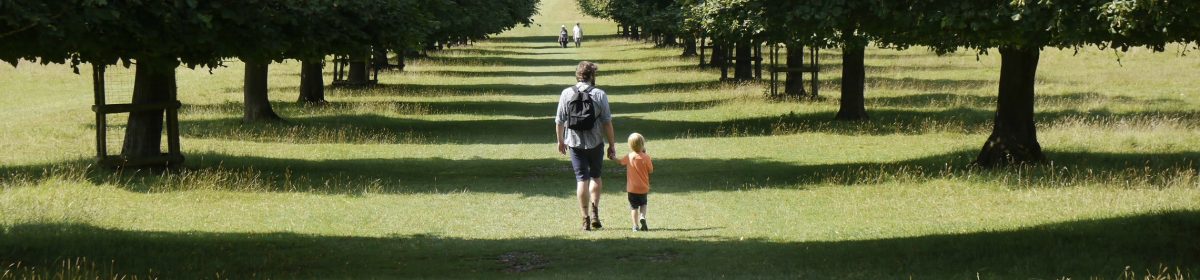
Take a tip from a real expert – no not me – from a child. What do we (did we) find ourselves saying to our children most often? Wasn’t it “Oh do come on!” as we, ever anxious to keep to the unwritten itinerary of the day, try to rush them past something we regard as trivial, like a Dandelion, or some beetles on a weed – so we can get home and open a bottle as soon as we’ve got them to bed. I write from experience!
But children don’t see the world in the same way that we do, with our stratified hierarchies of significance. If we were to sit still for five minutes and think about the way we see the world through our overrated adult eyes we’d perhaps realize that we’ve been schooled in not seeing because seeing soaks up a lot of time and energy. We don’t see street beggars and poverty, we don’t see old people (it might be catching), we don’t see what’s happening in the world because it gives us a headache, we don’t see that society has become deeply and dangerously unequal. We especially don’t see the rapid erosion of nature. We don’t notice the starlings no longer fly in murmurations over Redcliffe church, we don’t notice that those lovely Mexican Fleabanes have been weedkilled or scraped off the pavements. In fact we’d rather think that the city would be a better place if we gave it a bit of ruthless tidying. Let’s divide nature into weeds and pests versus window boxes. Children don’t make that mistake so readily unless they’ve been incarcerated in front of the idiot’s lantern (my grandfather’s name for television). We live, mentally, in -left-over from the war – concrete pill boxes and see the earth through a slit just wide enough to poke a rifle through.

But imagine, for a moment, becoming a child again and switching off the filters for an hour or two and seeing the earth as it is, even in its depleted current state, in all its glory. Let’s use the idea of seeing promiscuously. Everything, all at once, in a riot of sound and colour, unedited or curated by our parents, our teachers, our neighbours and by what we call common sense which may be common but it lacks much sense. A child’s world is full of glory. I remember the spiritual director Kenneth Leach once saying in a talk that doxa is the (ancient) Greek word for glory, and so orthodox at its heart means “right glory”. The beginnings of a green spirituality can be found in those revelatory moments when the earth speaks, pins us to the spot to see some tiny thing filled with beauty. Beauty and truth are soulmates.
Today we went down to St Anthony’s Head and sat on a bench situated on a huge and redundant gun emplacement looking across to Falmouth where we once lived for a year, and the Lizard beyond, one of my treasured plant hunting grounds. Something special grows there now and then. It’s an orchid called Autumn Ladies’ Tresses, Spiranthes spiralis. It hasn’t been recorded there for a couple of years and it’s rather late in the year to see it in flower but since we were there I had a hunt around anywhere I could see a possible spot, but nothing. Sometimes glory takes its time and we need to be patient; but patience is easy when you’re engulfed by the sound of the sea and the sight of so many happy memories. Madame said “it’s good that we can see this together”. “Stop it” I thought, “you’ll make me go all emotional!”

