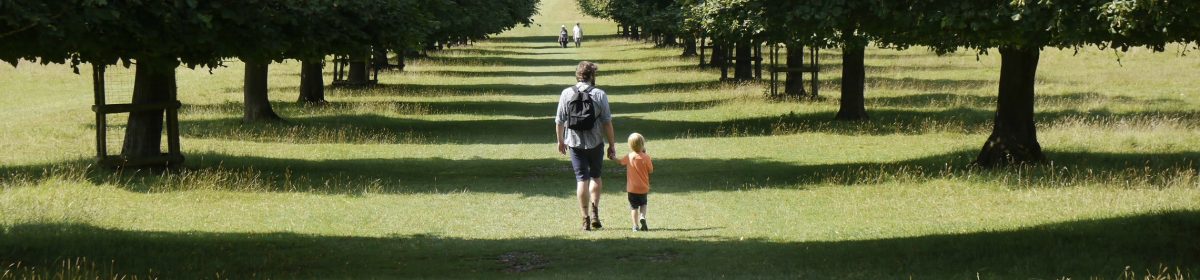

We were lured out by the sunshine this morning and went for a decent circular walk taking in some shopping, a stop off at Toppings bookshop to book tickets for John Wright’s launch for his new book”Grasslands” in May, and then a bit of wall propping overlooking the weir feeling warm for the first time in months. Then another loop up the greatly diminished Walcot street to the top and back along through the Paragon, Milsom Street and home.
Don’t try this at home (or ever)

Going down the steps to Walcot, if you looked closely across the road,you’d have noticed a rather early flowering Greater Celandine in a large pot outside a charity shop. I took this photo ages ago and didn’t think to photograph today’s specimen until it was too late. The thing is, I’d only today been looking today at an entry in a book on Welsh herbal remedies. The section on Celandine comes from a 15th Century herbal translated from the Welsh by John Pughe in the mid 18th century and taken from the tradition of the Physicians of Myddfai – so going back a bit.
A good eye salve. Take vinegar, white wine, the juice of Celandine, and Plantain. Mix them together in a pan and let them stand there 3 days and 3 nights, take it hence, keep it in a box and anoint thine eye therewith.
Here’s the thing, though. Among many other suggested uses, the bright yellow juice of the Greater Celandine is caustic enough to burn off warts and piles. There’s no way on earth anyone could put such a decoction in their eyes without damaging themselves unless there’s something in the recipe or the procedure that the canny doctors failed to share. I’ve got both glaucoma and cataracts (not that they trouble me much and they’re being well looked after by the NHS) but I’m sure that if Andy the optometrist were to lean across me with a mixture of Greater Celandine juice, vinegar and Plantain, and then try to drop it into my eyes I’d be out of the door pretty fast.
That’s the trouble with the reading that I’m doing about Wales and her history. Someone recently alluded to a kind of Cambrian fog that gathers over the culture of the country and leads unprepared travellers (like me) astray if we fail to inspect the teeth of the Bard to be sure that it’s gold and not mercury amalgam glittering between the lines.
We learned the difference between exegesis and eisegesis at theological college. Exegesis means trying to unpick what the original author was trying to say. Doing it properly can feel like unpacking a bottomless suitcase full of ancient garments and figuring out how they were worn. The opposite term, eisegesis, is much beloved by the evangelicals and involves trying to stuff a pair of your own theological pants into the suitcase after discovering that there’s nothing in there that quite matches your prejudices and so you have to chuck out the original contents and their bizarre notions, so you can get more of your ideas in and declare that you have the true meaning of the original.
There’s a phrase that comes from one of the great 20th century scholars of ancient literature who said – if that was what it meant then to the writer, what should it mean to us today? – which is to say that ancient literature and history need to be read with your brain in gear and not uncritically regurgitated as if it had nothing to do with the culture in which it was created.
The events of history are mundane and slippery; evanescent. It takes a poet to land a grappling hook on them and haul them in. It takes a poet to write about them fruitfully and yet another to read them well in vastly different circumstances and even those readings are as evanescent and slippery as the original events. There is never anything but provisional in the pursuit of history, and yet it’s the cultural air we breathe and so we must take it seriously.
I’ve been reading Jan Morris’ book “The Matter of Wales” and the third chapter deals with religious faith in Wales. I found it quite troubling because as she enumerated the waves of religion from the Celtic through Roman Catholicism, post Reformation Anglicanism (both enforced on the Welsh) and then waves of Calvinism, Methodism, Moravianism leading to the 20th century collapse of faith – I realized that in my own way I’d been touched by all of them and even experienced many of them myself. I went through what’s falsely described as Primitive Methodism in Sunday school (the Prims); conventional low Church of England, fiery atheism, Wesleyan Methodism, Evangelical low churches, Anglo Catholicism and theological college on the cusp of the Charismatic revolution. Whatever the light was at the end of the tunnel, they all seemed to swerve away from it when it got too challenging. Pretty well all of them operated a chaplaincy to the status quo. Nowadays if I was forced to put a label on my beliefs it would fall somewhere in the dim space between Celtic Christianity and Taoism but it would be better to evoke the old spiritual doctrine of reserve and apply it to the world in general and the understanding of past cultures in particular. The light at the end of the tunnel for me is the incredible freedom of feeling I don’t have to defend any orthodoxy at all.
The three graces – possibly


