So big you can’t see it

1080827Sometimes the hardest things to spot are invisible because they’re everywhere.  Like the air we breathe, or as the sea appears to a fish, the all encompassing embrace of the big ideas have insinuated themselves into our inner and outer landscapes and become the framework itself. We know this is the case  but it takes a film like The Matrix to spell it out. Today’s Guardian publishes a report on farm subsidies that makes scary reading in the precarious real world we inhabit. $1 million dollars a minute to pay farmers to do the wrong thing is such a preposterous idea that you might wonder whether it could possibly be true, but the reason it slips past us is because we never stand in a bank watching a man in a green overall withdrawing millions in cash.

The best place to see the madness of subsidy is locally – we’re in Lleyn, for instance, and we’re staying right next door to a typical small mixed farm.  There are a few cattle and sheep, the adjoining field has a mixture of tups, and some Jacobs sheep graze the clifftops.  There are all the usual features of the small farm here, hens, a couple of noisy ducks and some mangy looking cats eyeing us up. As we arrived here the farmer, whose knees are shot from handling sheep, was moving multiple trailer loads of nitrate fertiliser on to the farm. I reckon about 30 tons of the stuff passed by us. He’s not rich for sure, and he’s struggling to keep going in a market that’s rigged against him; impoverishing his own land in order to stay in the game. Ironically we saw him yesterday carrying a heavy bag of seaweed up from the shore, over his shoulder. He knows what he needs to do but he can’t do it.

A mile away we found another dairy farm while we were out searching for a source of freshly caught fish. You’d hardly know it was a dairy farm, it looked more like an industrial estate with its huge barns, silos and tanks.  Everywhere there were warning signs that this was a bio-secure area and we were not welcome.  Little bucolic charm there, then, but another sign of a broken farm economy.

The government last week announced a huge extension of the badger cull.  With tuberculosis becoming endemic in dairy herds, the cost of compensating farmers is enormous and yet almost all the scientific evidence suggests that badgers are not the main source of the disease.  TB is a disease that spreads most quickly in highly stressed environments – such as when you force cows to produce far more milk than they are properly capable of. The principal feed crop grown on intensive dairy farms is maize, which is deficient as food without supplementation – rather like living on Big Macs! Badgers absolutely love eating maize and so the farmers are the most likely cause of the explosion in the badger population by providing thousands of acres of their favourite food.  Add to that the constant movement of cattle around the country and it doesn’t need a degree in agriculture to see that the problem is probably another example of agricultural self-harm.

And yet, I read an intriguing article in the same newspaper last week that reported how many industries are quietly greening their approach because it makes more economic sense.  Ironically they’re not publicising this because public perception is that ‘doing the right thing’ results in more cost and less quality in the product.  Some Portuguese wine producers have gone organic without announcing the fact, because they get bigger yields and better quality and they can sell at the same price.

The only way to tackle this desperately urgent challenge is to take on the stakeholders, the industrial farm corporations, the supermarkets, the manufacturers of damaging fertilizers and lethal farm chemicals, but most challenging of all, ourselves. I remember one tired old management cliché that might fit here – culture eats strategy for breakfast. The answer always comes back “we’re only giving the public what it wants!” and it’s true. The situation won’t really change until we see through the ideological fog that sustains intensive, destructive, subsidised farming and demand something better.

Walking with experts – pilgrimage

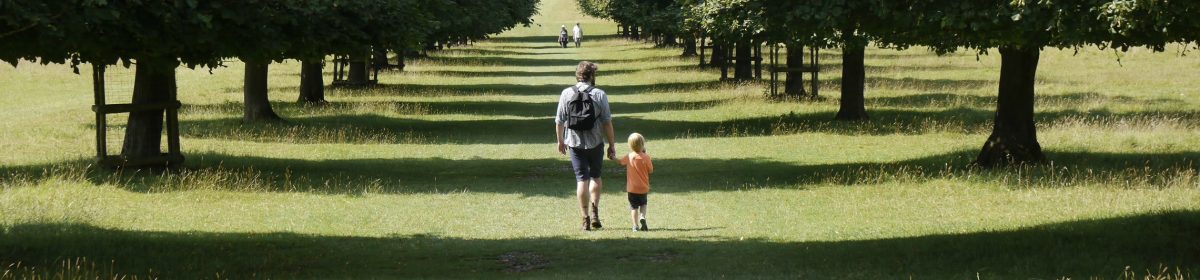
I ‘invented’ the Malmesbury Pilgrimage in 2009 and this is a photo of the very first one. It was a two day walk and the first time we did it we took some detours that made it about 45 miles.  We got a bit lost on several occasions and the during the last ten miles a thunderstorm raged around us.  It was all my idea ( not the thunderstorm).  I’d been turning it over in my mind for ages, ever since I learned that one of the little churches I served on the edge of the Severn had been looked after by monks from Malmesbury Abbey and – here’s the gory bit – one of them had been murdered as he made his way across the fields and, it was said, the water in a local stream ran red like blood, every year as a reminder. That triggered a memory because the same legend was attached to St Arilda’s well, just outside my parish.  In that case St Arilda, a hermit, was murdered by a Roman soldier because – as the legend said – she would not lie with him. Obviously my parishes were pretty dangerous places in those days.  They hadn’t changed much! The red staining, by the way, came from algae not blood but the murders – with or without the legends – are still remembered many centuries later.

So, I thought, I could re-create the walk that the monks might have taken (there’s no record) and at the same time take in two of the three sites in the country asociated with St Arilda.  Taking in the third would have meant a huge detour to Gloucester Cathedral and at least an extra day.

When I got the maps out I searched for every public footpath I could find that took us vaguely in the right direction in order to minimise walking on roads and then I talked some keen walking friends into joining me. We got thrown out of Malmesbury Abbey for talking during their (private) prayer service at which pilgrims were absolutely not welcome, there’s hospitality for you, but it all went pretty well apart from exposing my lamentable map reading skills. To be fair, many of the paths had lapsed into virtual invisibility and the next year I packed a pair of binoculars for long distance stile spotting.  We still got lost but in different places.

But the point of this is not my own heroic resourcefulness, but to say that when you walk for a couple of days with someone, you learn so much.  On one of the walks we were treated to a two day seminar on arable crops.  Sad to say over the whole forty plus miles, our informal tutor – who had spent many years buying and selling grain on farms – only saw two or three fields that met his approval.  Why’s that sad? Well I suspect that his career had taken him to the very heart of intensive agriculture and all its obsessive spraying of weedkillers and insecticides and feeding of artificial fertilizer.  The fields he liked were monocultural deserts, the soil was getting thinner and thinner and the cornbrash (stones) were increasingly visible on the surface.  What I learned as well was how to identify all the main cereal crops when they were only a couple of inches high by examining their leaf structure and the way the ligules wrapped around the stalk. Great stuff for showing off!  – but I learned so much just by listening and not judging, and if you wanted to know how we got into this environmental mess, it’s because thousands of decent and well meaning people didn’t stop and think.  No-one wanted to kill the insects but were all so blinded by the prospect of controlling nature and making farming ever more productive, that they just did it anyway. Now we need urgently to row back.

On another occasion I walked the last ten miles with a man who had spent his entire working life on local farms as a stockman.  As we approached our destination he knew every inch of every field; what grew there, what thrived there, and how well it was being farmed.  He would comment approvingly when he saw good practice and again I learned an enormous amount.  I could go on – I walked miles with a chief electrical engineer at a local  power station who knew the model number of every single pylon we passed. Hmm.

Perhaps more importantly relationships were cemented and confidence and trust was built between a group of people who, on the face of it, didn’t have that much in common. That’s the great thing about pilgrimage – sharing experiences, noticing things, being grateful for small mercies like easy walking on a very long hot day.

All this thinking and remembering came out of another morning alone on the allotment.  I was going stir-crazy during all this cold weather and when it failed to snow as forecast today I thought I’d put in a couple of hours.  I was so absorbed in building more beds and recycling some posts I needed to remove that I didn’t even notice it was raining until the water started to run down my neck. The temperatures haven’t got much above freezing for ages and yet when I’m out there, totally in the moment, I never feel cold.  The ground is very sticky at the moment so I tried as much as possible not to walk on it, and we’re very close to completion. My preferred site for the hotbed fell at the first hurdle when I measured the site properly, and so I had to think again.  As is often the case the new site is probably better anyway and on Friday it will be complete and filled with fresh manure. Home for a late lunch rather wet but as warm as toast.

img_4901