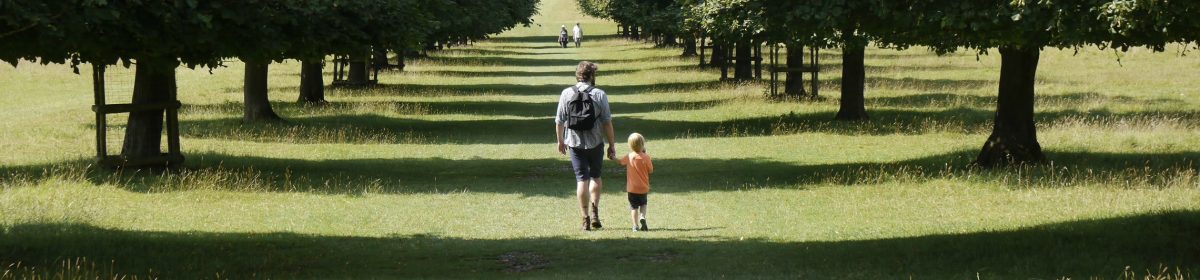
First proper frost of the season

IMG_20191109_072118

I love to wake up like we did today and see white frost on the green outside, but this morning it was especially good to see the excited loop drawn on the grass by a dog released from its lead. Who says a line can’t express joy! It’s no less pleasurable to be prepared for frost, and I say so having not been up to the allotment to look for myself. “Possibly” says my inner pessimist – ” all your seedlings are dead”. “Oh do go away”, I think, “and bother someone else”.

We’ve fleeced and cloched all the vulnerable plants, and garlic especially is supposed to positively relish a few days of hard frost – so bring it on, I think.  On the other hand it’s worth wondering what the balance of good practice might be in relation to sheeting, IMG_20191109_151823fleecing and mulching. Creating a warm dry environment under black plastic sheets is a great help to slugs as well as more friendly pests – (just peel the sheet back and look for yourself), so maybe we should be encouraging foxes (on our plot they don’t need much encouragement), badgers who love a fat slug, and hedgehogs as well as toads who equally don’t mind if they do. Oh and don’t forget the birds. I know that those who sell garden supplies would have us think that only an architect designed and artisan produced bee hotel will be suitable, but insects prefer to choose their own overwintering spots.  Every year at this time we have an invasion of ladybirds who creep into the flat and take up their winter quarters in the corners of our ceilings.  I took this photograph in the hall, ten minutes ago.  I suppose we could  spray them with insecticide, but in the spring we’ll be hoping for them to arrive as the aphids get going.  I prefer to see our guests as free biological control breeding colonies.  I’m not so keen on the frass, but that comes off with a wipe anyway.

A bit of botanical history

In a quick update on my Tutsan research, I checked back on the transcribed edition of Culpeper’s Herbal and found that in the 1649 edition the plant was indeed described as ‘Tustan’, but Culpeper wrote that it was no longer much used. It doesn’t seem to appear at all in Gerard a century earlier.  There’s a clue in the indispensible “Englishman’s Flora” when Grigson states that Tutsan had been mistaken in a medieval herbal for another herb altogether, mentioned by Pliny. He goes on to say that by Gerard’s time the misidentification had been corrected and this must have led to its decline, although Culpeper still lists a number of uses. But the 1649 edition is also full of typos – there are dozens if not hundreds listed at the end of the Project Gutenberg edition so perhaps it was a Friday afternoon in November when a short sighted printer with no botanical knowledge at all dropped two pieces of moveable type into the wrong place in a frame and no-one noticed. Why am I so interested in this? Well I spent half my life grappling with understanding and interpreting ancient texts, and old habits die hard.

Some tougher stuff on herbal medicine

And while I’m on the subject of honest errors, I notice in the newspapers another routine round of attacks by conventional medicine on the dangers of herbal medicines.  Let’s be clear, I’m not a gimlet eyed anti vaxxer and I have more reasons than most to be grateful for modern drugs – I take four different drugs every day and without them there’s a signficant chance I’d be in much poorer health than I am.  I have my annual flu jab and so it goes on.  So thank you to the NHS, I’m a fan.  But in his day, Culpeper battled with the Royal College of Surgeons – he wrote this in 1649 as he translated the (Latin) Pharmacoepia Londinensis into the English common tongue, facing the same challenged as did Myles Coverdale and many others in translating the Bible (in 1535) so that any ploughboy might read it.

” The liberty of our Common Wealth   …… is most infringed by three sorts of men, Priests, Physitians, Lawyers”.

Well he would say that wouldn’t he? – he fought with Cromwell in the English Civil War and was a thoroughgoing Puritan radical. He got a serious chest wound which may have been a subsidiary cause of his death from TB at the age of only 39. He could see that many poor people simply couldn’t afford to pay for credentialed physicians and so he gave them what they needed – reliable access to self care. He was always careful to note where a misidentification could be dangerous, and there’s no sense of anything but close observation and attention to detail in his book – but it was a book written in the 17th century translating another put together in the 16th from manuscripts that went back to the first century and using experience gathered from Egyptian, Roman and Greek sources. It can’t be understood without serious study: which is a long way of saying that attacks on herbal medicine that come from a simple 21st century superficial reading of ancient texts suffer from exactly the same flaws as do the attacks by anti-vaxxers on modern scientific medicine – they’re often fuelled and inflamed by a complete failure to understand what the other is really doing.

Undoubtedly herbal medicine can be dangerous and can cause unexpected interactions with conventional medicines. Undoubtedly we could do with better training and more regulation of expensive raw materials, bearing in mind that fake Viagra and illegal steroids are hardly ‘better’ than fake Ginseng or any other herb. Conventional medicine too has its downside.  I found some research by the Universities of Sheffield, York and Manchester published on 23rd February 2018 on the subject of prescription errors: it found that in the UK there were:

  • 237 million medication errors each year
  • An estimated 712 deaths
  • Were a contributory factor to between 17,000 and 22,000 deaths
  • Cost £98.5 million per year to remedy

I tried to find equivalent data for herbal and oriental medicines but it seems that there is very little detailed research and a lot of untested anecdotal evidence floating around. Could this be a clash of ideologies just like the battles of the 16th and 17th centuries? The only way to find out is to do the comparative research on a level playing field. How many times have I heard it said that “there’s no evidence” that a certain treatment works when the reason there is no evidence is because no-one had ever done any research to find any. That’s a politicians trick!

Meanwhile I’ll continue to pick my sceptical way between the opposing sides and use the best informed opinions when it comes to choosing the right therapy. A few weeks ago we had a meal with a GP and a cancer specialist consultant.  I asked in all innocence (ho ho) whether their patients ever asked them about complementary therapies. “All the time” was the response and the conversation was immediately doused with a bucketful of cold silence.

Please don’t try this at home

MVIMG_20191108_163539

The brain of sparrows being eaten, provokes lust exceedingly

I mentioned a couple of days ago that I’d got hold of a rather disappointing edition of Culpeper’s Herbal.  It wasn’t an absolute stinker, but it had been heavily edited with much of the archaic language translated rather than transcribed, and it was missing hundreds of pages of the kind that I quoted above. It wasn’t that I was particularly searching for aphrodisiacs (well I would say that, I suppose), but that I stumbled on it when a chapter entitled “parts of living things and excrements” caught my eye as I scrolled through.  The edition, by the way, is an online transcription as part of the Gutenberg Project – free and massively useful.

The thing is, Culpeper can only be understood within its own context, and without that – the astrology, the doctrine of signatures, the battles he was having with the authorities – it boils down to a very strange mixture of bad ideas like eating sparrows’ brains.  But within the pages there’s the beginnnings of a revolution.  Just as Luther’s translation of the Bible changed the churches for ever, so the translation of these remedies into the common tongue changed the course of medicine and probably changed the distribution and cultivation of wildflowers for ever. Imagine any cottage garden and it’s a fair bet that some at least of the plants will be the distant offspring of medicinal herbs, and I think I read somewhere recently that something like 40% of our current prescription drugs are derived from plant material. Yet another reason for fighting against unnecessary extinctions, and remember that not all useful drug yielding plants are found in the Amazon rain forest – some are undoubtedly living outside our front doors – if we could but see them.

Plants are wonderful synthesisers of compounds utterly beyond the reach of science, and the clues as to where to look won’t be found within the pages of a translation forged in the culture of the 21st century, but with a sympathetic reading of the way things seemed to the apothecaries of the past within their own culture and at that time. Sadly, for all its great strengths, science tends to lack humility in the face of very old ideas.

Anyway, enough of that. Tonight promises a hard frost and so this afternoon we were up at the allotment with fleece and cloches to protect our vulnerable plants.

As promised – borlotti beans

IMG_20191108_075449

Two days ago I was in the throes of changing my mobile and I wrote that I’d rather be talking about borlotti beans than grappling with passwords and strange operating systems. Then of course it all miraculouly worked and I was so pleased we went out on a photo tour of Bath to test the camera which – I have to say – is extremely clever but a bit baffling a times.

So here, as promised, are the borlotti beans and I think they’re very beautiful.  We’re saving half of them for next year’s seed (they’re open pollinated) just to see how they do. I’m not entirely sure how this could be of any great interest to anyone else, but after decades of listening to other peoples’ stories, I know how fascinating the everyday details of another life can be, and one thing I am completely sure of is that I’m no expert and I’d hate for anyone to take me as an authority on any of the things I write about.

Life is a project and every project contains within it the possibility of failure.

That sounds like a chunk of management speak, I know, but a life without any egg on your face is a dull prospect, and if I sow seeds at the wrong time, or misread a recipe then at least I share my idiocy free of charge and without leading a whole country into bankruptcy.

At this moment, however, I am beguiled by plans for next season. In my typically freely associating way (it’s a useful skill and it helps to have some psychoanalytic experiences) I move like a small stream from yesterday’s joy at finding some lungwort, seeing our Sweet Cicily in flower, to thinking about the Mugwort I’ve got stored in a cupboard next to the Christmas cake.  From there it’s an effortless step to my growing collection of herbals and thence (you know where this is going to go) to a flourishing physic garden  growing somewhere in a corner of my mind.

When I went to theological college there was a fellow student who had experienced a profound religious conversion on the toilet. I have found that the minute detals of conversion experiences tend to figure largely in what’s known in the trade as “testimony”. Anyway, there was more to follow because he also felt compelled to tell us that he had been “deeply involved” with morris dancing which he now understood as being inspired by magic and other devilish practices. Although I found the story hilariously funny at the time, I confess that my own secret policeman is inclined to whisper sweet ‘nothing doings’ in my ear when I stray from the scientific uplands of proper field botany or allotmenteering to the dangerous underground of traditional herbal medicine. “call it a project” I say to myself and feel better at once.

The ‘nature of things’, seen purely from a scientific perspective seems to me to be a rather ‘thin’ reductive description. ‘Lungwort – Pulmonaria officinalis – is a member of the borage family and used to be thought useful in the treatment of lung diseases’  – so says the dictionary, and it’s true but hardly gathers together the rich strands of usage and history, the religious background, the ‘common sense’ of the day and all the multitude of factors that contribute to the ‘thick’ description of Lungwort, and which transform it from a relic of the ignorance of the past, into a portal through which I can access the past, listen in to its gossip, share its hopes, fears and preoccupations.  And so when I walk to a patch of vegetation on the edge of the canal, I greet so much more than just another plant I can name. It becomes the key to thousands of years of communal wisdom, and I learn something about my own fugitive existence on the earth.

There you go – a bit of free association can lead you into all sorts of trouble.  Still, I saw the other day, in one of my books, that a cup of mugwort tea at bedtime can bestow ‘lucid dreams’.  That would make a nice change and I might give it a go one of these days! Meanwhile the physic garden hovers discreetly at the back of my mind except that almost everything I’d put in it is freely available on the paths and in the parks of Bath  – if only I knew what all these plants looked like. Now that looks like a proper project.


Meanwhile, back at the Potwell Inn.

IMG_5682

Twenty years ago I’d have thought this was an unholy mess – purple sprouting broccoli, sweetcorn, courgette and nasturtium all growing through each other in a kind of uncontrolled wilderness.  Today? – well, today it seems the most natural thing in the world. Here are some more glimpses of the allotment, photographed today –

This year we made the policy decision to sow companion plants out of curiosity mainly – would they help?  Would they reduce pest attacks? blah blah blah …… what we realized in the end is that our plants are happier, much happier,  and the whole allotment looks more like a work of art and less like a military display. We’ve had blackfly but it was quickly wiped out by a large population of voracious ladybird larvae.  We’ve seen a few asparagus beetle larvae but, by and large, they haven’t damaged the plants. Cabbage White butterflies haven’t penetrated the brassica netting, flea beetle had a brief munch at the radishes but were not really a problem.  We can only compare our own allotment with the immediate neighbours, and it seems clear that stress – be it through weather or lack of nutrients – seems to weaken plants and so (surprise surprise) the strongest and least stressed plants don’t get attacked.  As for birds, we combined netting the most vulnerable plants like brassicas and the Apiaceae , with providing access to the ones that love to eat grubs slugs and snails and – later in the season – seeds. Because we’ve scattered so many pollinator attractors around the plot, the increase in yield makes up for the extra pests. Tagetes, Nasturtium  and Calendula function as repellants and diversions, beer traps get the slugs the birds and (hopefully hedgehogs) miss, and there are many other speculative flowers spread around the beds.

You can either treat growing food in an allotment as a battle or a party.  Our gamble seems to suggest that nature prefers a party.

As soon as we got back from Cornwall we unloaded the bags, had a cup of tea and went straight out to the allotment.  Our youngest son had watered while we were away and everything looked – cheerful! – we were particularly pleased to see that the tomatoes that had had a pretty bad start in life, were going tremendously well and had their first trusses in flower.  Madame had simply hacked off the straggly tops of a number of bush tomatoes and they too had thrown out side shoots and they too were going well. And so within twenty minutes we’d gathered potatoes, carrots and peas and set off back home.

The peas deserve a paragraph all to themselves. We’ve grown three varieties this year – we overwintered Douce Provence and then sowed Alderman and Kelveden Wonder in the spring.  The Douce Provence were early and perfectly good; the Kelvedon Wonder aren’t quite ready yet but last night we harvested some of the Alderman.  This is a heritage variety and really does better on beansticks as it will grow to over 5 feet. The favour of the Alderman was soooooo good – I don’t think I’ve ever tasted a better fresh pea.  If you’re used to the frozen ones then you would probably think this is a different vegetable in a blind tasting. The pods were long and full of larger peas that were so sweet and tender they only really needed steaming for about a minute. Bliss! – and there are still many more to eat. Our food culture insists that it’s best to have our favourites available the year round (at hideous cost to the environment), but the allotment suggests that the greatest pleasures are the seasonal ones, the asparagus, the new potatoes, the apple off the tree and, of course the peas and beans and all the rest. The fact that it’s a fugitive pleasure seems to make it all the more intense – every dish is a holiday romance on a plate!

Back home then to deal with the Mugwort and the Pellitory of the Wall I’d gathered as medicinal herbs in Cornwall. It seemed to me that the best way to deal with them, given that I know next-to-nothing about how to use them, is to dry them and store them until I am a lot better informed.  Even drying them turned ut to be something of a challenge, and much weariness of the eyes later I decided to dry them at 45C in the oven overnight.  I would be able to see from the results whether they had lost their colour  from overheating.  And so they spent the night in the oven and emerged more or less unscathed at lunchtime today.

IMG_5687

But during our morning session at the allotment today, Madame discovered a pretty well perfect specimen of Greater Plantain in the hotbed and that too will be added to the household pharmacopeia via the oven (and a great deal more study). Needless to say I shall be careful in my consumption of these remedies and not let the gathering of herbs exceed my botanical knowledge.

And so, without wanting to bang on about it too much, the natural world, upon which we rely absolutely, is abundant, glorious and healing.  Shame you couldn’t possibly say that about our politicians.  Were it not for the fact that I’m firmly attached to democracy I might go with the graffiti I saw years ago on a wall –

Don’t vote, it only encourages them!

IMG_5685

Potwell Inn – the return!

img_5654

Sadly our week in Cornwall is almost over. We’ve walked somewhere in the region of thirty miles, identified no end of new plants (to us) including one (subject to the opinion of the County Recorder) that isn’t on the vice-county list. I’ve slept with a bunch of Mugwort next to my nose, in pursuit of lucid dreams – I certainly slept well, but I would need to talk to my analyst about their lucidity.

We’ve found moths, butterflies and birds that we’d not seen before and I managed to keep the blog going without an internet connection at the price of my entire data allowance. Life is good then.

I mentioned the multi sensory nature of field botany previously, but didn’t really explain what I meant by it.

The visual is obviously top of the list because we normally see things before we do anything else. Colours draw our attention as does anything unusually tall.

But touch too is diagnostic- today I was distinguishing between three kinds of Cleavers – Goose Grass or whatever. Proper Cleavers has rough stalks whereas the other two didn’t. Of the others, one was white flowered and the other yellow flowered, so that’s probably Hedge Bedstraw and Lady’s Bedstraw respectively. Square stalks too can point you in the right direction.

Smell – well try Hedge Woundwort for starters. Hemlock has a ‘mousy’ smell, dill, fennel, Ground Ivy, Mint, Elderflower- and many more – all easily identifiable when you crush the leaves or flowers in your fingers and smell them.

Taste – well yes – I’ll often taste things as long as I’m quite sure they’re not poisonous. It’s not always pleasant but you can often place a plant in the right family by taste.

Finally there’s sound. Try Yellow Rattle, for instance. OK after that I’m a bit stumped for sound, but you get my point I hope, identifying plants means pressing all the senses into service.

Why is this important? Well it seems to me we’re in a race to preserve not just rare species but the ordinary everyday ones as well, and unless we can know and name them they’ll slip away and we’ll lose a great chunk of our culture. As Robert Macfarlane argues, if we lose the names, the words, the properties, we lose bits of ourselves and we are impoverished.

Who on earth would actually want to be the last person to see a Barn Owl flying silently, low along a hedge in the twilight? How could you teach Hopkins’ poem ‘Windhover’ to children who had never seen a kestrel? and how ‘Kes’ for that matter. How the novels of Henry Williamson – notwithstanding his abhorrent political views? How Ezra Pound to anyone who has never seen an olive tree (same reservations!).

How Elgar to someone who never heard a lark sing? Now I’m getting emotional!

The New Testament word for “daily bread” is untranslatable because it doesn’t occur anywhere else but I’d argue that ‘epiousios’ means more than bread, however San Francisco and right-on sourdough! Perhaps it means something more like the everyday, around and about us things that give us meaning, nourish us culturally not just by maintaining our body. The plants, the birds, fishes, animals and the weather sustain us in ways we can barely understand. That’s it! end of lecture and back up the M5 to see the allotment in the morning.


Furbelow Mugwort and Pellitory.


One of the best ‘Old School’ solicitors in the country.

– in my inflamed imagination, but in reality just three bits of the day joined up because I love the names so much. Furbelows is a species of seaweed, mugwort I’ll come to in a minute and Pellitory of the wall because I only I/D’d it yesterday and today it was everywhere down the green lane from Gerrans though the Rosteague Estate.


The first photo shows it doing what it’s meant to do according to its name – grow on a wall – but the second photo shows enough of it growing below the wall to provide for the urinary problems of a small village – it is, you see, a medicinal herb, which is a good thing because it would never live by its looks.


So for the first time in my life I gathered a very small quantity of the herb to take home and turn into a healing tea. Then, seeing myself as something of a Gandalf I went mad and gathered a bunch of Mugwort as well. If things go on as they are, hedgerow medicine may be the only show in town if you can’t afford private care.

I had privately determined to try these nostrums first on myself, but Madame has been incredibly supportive. We are surrounded not simply by abstract beauty – whatever that might be – but by meaning. Intensively farmed food has lost much of its nutritional value over the past decades, and yet we are surrounded (where it still survives) by the means of alleviating those deficiencies.

It seems to me that knowing, naming and understanding plants and the natural world is the first step to embracing a new and less exploitative way of living. Today I identified a red bartsia plant. It was there all the time but until I knew it’s name it didn’t exist for me.

As we walked up the lane after an hour on the beach (where I photographed the furbelows – blown onshore by last week’s fierce storm winds) – I was gathering some seeds from alexanders, cow parsley, and hogweed, I’ll post the macro photos when we get back, and I was struck by how little I’d seen before I started to look. They are all absolutely beautiful and absolutely different. To walk down the lane between, say, February and July, you might think nothing had changed and yet even during that brief period three different species had grown, flowered and died. The hedgerow is a highly dynamic and ever changing theatre, free to all. There’s only one word for it and that’s Glory.

_1080792
From left to right – Cow Parsley, Hogweed and Alexanders
img_5645
This is a hoverfly of the genus Syrphus but without a microscope it’s hard to tell which species.


So did we? Or didn’t we?

There are two very different ways of going out after plants. The first is to go for a wander and stop whenever you see something you don’t recognise. The second is to go out after one or two specific plants, which is a strategy that often results in disappointment.

This week has been a sort of field trip in search of medicinal herbs, and so that narrows the field down quite a bit. The Holy Grail – well, that’s overstating it a bit – but the plant I most wanted to find was Stachys officinalis – Betony. It’s a close relative of the Woundworts. Its cousins, Hedge Woundwort and Marsh Woundwort both grow around here. The problem is that the Vice County list doesn’t show Betony as growing in this part of Cornwall, although the floras aren’t nearly so certain it’s not here.

But before we get to that, I have to say that Madame has the most remarkable gift of pointing out promising plants. So today we walked the length of Porth Creek down to the ferry and then back via Bohortha accompanied for part of the way by quite the noisiest couple of walkers we’ve heard in years. They were so noisy I thought they were at least two families with children following us, but no- they were just two women with a lot to catch up on. Generally we walk in silence, for no other reason than the fact that we’re usually immersed in our own thoughts. On the way we found wild strawberries, pale flax which looked wonderful in profusion in a meadow, common mallow (a medicinal herb), sheepsbit, rest-harrow and loads of nipplewort and – of course- all the Stachys I wasn’t looking for. Then just as we were about finished Madame pointed to the one I was looking for down towards the cliff top. img_5629It was much shorter than I had imagined, but the upper leaves were unmistakable. But was it the real deal? – there’s a hybrid but without Stace (the bible) I can’t be sure. Then, just to cap a lovely walk we spotted pellitory of the wall hiding behind a gatepost. That’s another two medicinal biggies and then at the last moment a Silver Y moth on the roadside.

How does a respectable sceptic find a word for blessed except – we’ll – blessed?

And so some photos  – now edited after arriving home


Some old friends

img_5587
Hedge Woundwort – Stachys silvatica
img_5605
Fox and Cubs –


As I wrote on Tuesday, we’re here to see some old friends and these are two of them. Field botany is an odd pursuit because you never forget where you first properly identified something. In my case it’s a bit sadder because I can’t resist the temptation to see if they’re still there.

There is actually a non botanical link between the two plants because I found the second – Pilosella aurantiaca – Fox and Cubs, in search of the first, Stachys sylvatica – Hedge Woundwort about three years ago, when I identified the Woundwort and went back to double check. Naturally I couldn’t find it again but stumbled on Fox and Cubs on the village green in Portscatho as I wandered disconsolately back to the van. Like most of my favourite plants it’s not remotely rare but I’d never seen it before. It’s a lovely flower except when, like today, it’s been mown off by an overzealous person who thinks anything except grass is untidy.

The Hedge Woundwort was my actual quarry today because I was looking specifically for plants used for healing.

So today, without really trying we passed Selfheal, Cleavers, Ribwort Plantain, Dandelion, Blackberry and Foxglove. There were probably many more lurking in the background, but Madame was fixed upon hearing a Curlew again – one of the most lovely sounds on the Percuil River. Sadly none were to be heard but when we got back to the campervan we could hear one calling in the distance. Honour was therefore satisfied.


Still in love with Cornwall

Cornwall’s easy to love and easy to hate as well – overcrowded and over exploited in summer and yet in spring and early summer and again in the autumn it offers more moments of pure joy than any other place I know.

There was a fierce east wind gusting at nearly 60mph overnight, and although it moderated through the day it was one to tie the hat on tight. Curiously the wind was not at all cold, having come up from Southern Europe and taken a turn westwards.

We walked east towards Dodman Point and as ever I was looking out for plants. Is it weird to experience such a leap of the heart when you see something you recognise and can name? So wiping a tear from my eye (I’m exaggerating just a bit) my two plants of the day were wild carrot, looking stunning in pink and white. This plant looks lovely even in death, when the umbels form little dry cages like lobster creels. But the star of the show was undoubtedly the clump of agrimony in full flower on the cliff top. A herb with a history of use in healing, but not something I’ve seen very often. There’s a dilemma in gathering herbs for medicine and that’s the fact that so many of them are disappearing from the landscape. I don’t think I could ever think of gathering agrimony, for instance. But we’re growing some useful herbs in the allotment and I’m quite exited at the prospect of making use of them. It all points to increasing diversity at home in order to build up rather than deplete the wild population.

We felt uniquely privileged to be able to walk along the cliff top today. It’s fifty years since we lived here for a year and fell in love with the place, and I think we both experienced a rather strange sense that the long gap in time had been bridged and in spite of our knackered knees we were in our twenties again.

[and in a late addendum I remembered that we saw two hummingbird hawkmoths working some valerian in Portscatho – never seen one before, but they were unmistakable – we’ll go back tomorrow and try to take a photo.]

img_5581
Agrimony