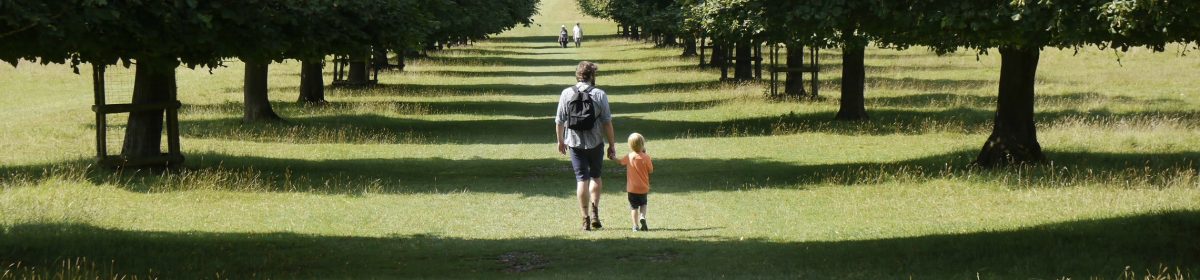


I fell asleep last night clutching a new wildflower book – I would have called it a flora but that would have been misleading since Madame’s name (which is a closely guarded secret) is not Flora. But it’s a sign that the natural world, in the course of a couple of riverside walks, has got me back in her grip. I was lamenting the impossibility of botanising in Cornwall or Wales for weeks, but the last two days on the riverbank have energised me in much the same way – the sheer pleasure of recognising old friends that I never knew grew here in the middle of a small city; here today, wintercress and broomrape growing within a few hundred yards – neither of them rare. The slightly mad abundance of plant life is a telling sign that nature doesn’t need us half as much as we need her. Over the river in the Crest Nicholson gulags they left a wildflower meadow in one corner of a field of hard-wearing perennial ryegrass – no ball games permitted – which struggles in the teeth of the siberian winds generated by the tall buildings. The grounds are maintained by a company with a cunning plan to mow another inch off the meadow with every cut. It will then disappear; the last sop of ecological reparation for the destruction of the old gasometers and abandoned industrial buildings that really were a wildlife haven. But we still have the anarchic, weed infested verges; the real eco-deal thriving under their neglect by the strimmer army – long may their funding be neglected!
 At home, energised by thoughts of weeds, I woke with cheese scones on my mind. I know that sounds like a non-sequitur but there’s nothing quite like baking to calm you down, and so I baked a batch of the ultimate comfort food. I really should have baked a Dundee cake but there wasn’t time because we wanted to go to the allotment to see how our wind and frost preparations had survived. The max and min thermometer in the greenhouse showed that the inside temperature had dropped to 5C during the night, so that meant the outside got down to around 2 or 3C – too close for comfort for the tender plants, so we were pleased that we’d gone to the trouble of wrapping them all up and building new screens. I’m beginning to sound a bit manic here, I know, but life’s too good to waste a minute – even in lockdown.
So everything in the garden was lovely (ish) and we added a new screen attached to the grapevine training wires. The bad news was that thieves had dropped by again and stolen our neighbour’s new shed which was waiting to be assembled and so rather vulnerable. I find it really difficult to connect with a mindset like that – and even if *’hell and heaven and all that religious stuff’ is abolished now, should we keep just a tiny corner of hell going for allotment thieves – just for old times sake?
Coming home we overheard a conversation about roasting rhubarb in the oven. I’m ashamed to say we’d never heard of it, but we promptly roasted half a kilo of our own Victoria, with some light brown sugar, and it’s delicious. We’ve eaten so much rhubarb in the last few weeks I think if you shoved a chimney pot on my head I’d lose weight and turn pink – I’d settle for being tall!
- is a quotation from a rather fun poem by ee cummings
As an addendum, today we found a shop selling bakers flour, rye flour and yeast. The threat of torture wouldn’t induce me to say where it is, but for those in the know, if you flare your nostrils and search out the perfume of patchouli and listen carefully for Joni Mitchell you’ll know where I mean.


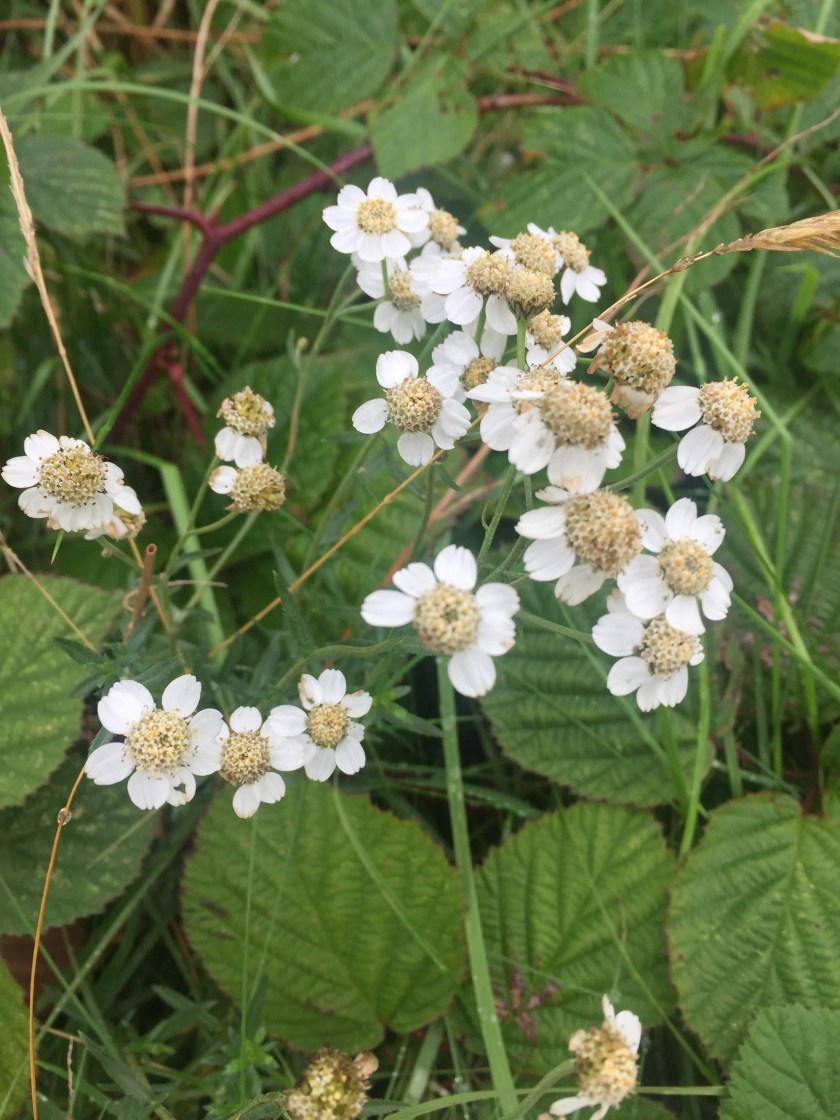


 That’s it for now. The internet connection here is very temperamental, and the phone signal pretty spasmodic too. I snatched a photo of Madame’s drawing in progress and then took another of my notebook – “Rite in the Rain – Model 973T – as previously drooled over, as proof that I actually do write things down. Finally some pictures of yesterday’s finds.


 The road to hell being paved with good intentions I thought I’d make a start with the grasses – principally because I’m not very good at them and since they’re ubiquitous it would immediately up my success rate. This is one everyone will recognise – it’s the grass that you pull the seeds off between thumb and finger when you’re a child, and it’s called False Oat Grass – Arrhenatherum elatius – and when I pulled a bit up because I was curious about how it spreads I discovered these beautiful bulbules at the root. Of course five grasses in and my appetite was well and truly whetted and so I started listing all the plants in the hedge – which brought it up to 32 before Madame threatened to throttle me.


