All tooled up!

Gosh we’ve been busy getting ready for the next trip. I think I’ve finally got the courage to start officially recording some of the plants we hope to find and so it’s been a rush to gather together all the tools and to figure out how to use them. So I hope you’ll forgive me for failing to find a ghost orchid or anything remotely rare but settling on an ubiquitous weed like couch grass simply to check on some ID keys and test out the macro extension lens on the phone; and I’m feeling ever so pleased.

There’s a bit of a knack to taking photographs for plant ID’s because they need to capture as much as possible of the kind of technical information you’ll definitely wish you’d recorded when you get back to base; things like grid references and what kind of soil and light conditions not to mention – in the case of grasses – all manner of obscurities concerning ligules, auricles, lemmas glumes, stolons, rhizomes and spikelets. So while we took a break from planting out broad beans I pulled a lump of the revolting weed out of one of the allotment beds and tried to remember all this stuff as I took the photos. I know it’s all a bit technical but there’s something very lovely about grasses because they hide their differences so completely. Half a millimetre can be important. This reminds me of one of my theology tutors who used to run what he called CAT sessions – close attention to text. We discovered that the really important understandings demanded time, attention and focus. Drill down hard enough and what appears to be a uniform field of grass can become a garden of delights. Don’t knock it if you haven’t tried it!

The other bit of plant recording I’ve had to learn is the software. There’s a mountain of data out there in databases which must have taken millions of voluntary hours of recording and checking. OK I’m a complete nerd but I think I’m happier growing and examining plants than I am frothing at the mouth while I scream at the television. So couch grass became a rehearsal for the really good stuff which I’m so looking forward to finding this season.

Later, just for fun, I dug into the herbals and discovered that however much we gardeners loathe the stuff there are people out their who are prepared to pay £10 for 100 grammes of the offending roots. By all accounts (and lacking any scientific proof as far as I could find out) couch roots have some healing properties. By my reckoning there must be many thousands of pounds worth of herbal remedy underground at the allotment site but the sheer agony of digging it up would need the price to go a lot higher than that. It is, however, the most tremendously vigorous plant. I read later about an experiment where 20 week old couch tillers grew 5 metres – 15 feet in a few weeks while throwing up over 200 buds. Oh to think that it’s an incomer brought in centuries ago. My mum was an inveterate smuggler of purloined cuttings from every garden she ever visited – perhaps it was an ancestor of hers that brought the wretched weed here.

Anyway, the kit is assembled, tested – and we’re ready to rock and roll this season. Fortunately while I crawl around in the dirt in lovely places, Madame will be bingeing on drawing with ink and bamboo pens; inspired by David Hockney’s latest book. In the background I can hear our waterproofs taking an interminable time to dry in low heat after being re-proofed. We’re optimistic but not reckless.

What’s your movie?

The heading at the top is the title of a very good Mose Allison song – “What’s your movie?” – which takes the mickey out of people who build their identities out of film characters. Although I love the song and laugh out loud at it, I’m also aware that none of us is able to escape the temptation to weave a narrative around our lives. The problem is that we don’t need to be even remotely out of the ordinary to be able to weave multiple narratives. So with that caveat, please welcome my first ever botany book – Warne’s Wildflowers of the wayside and woodlands”. I think I must have bought it in my late teens and – truth to tell – it was never that much use. The illustrations were miles away from the plants they depicted and the resolution was so poor that at best they gave an impression of the plant; and fatally – there were no keys at all apart from some line drawings sorted by the colour of the flowers. I had no technical knowledge of plant families and so the only means of naming one was to laboriously turn the pages until I found something that looked like – even vaguely like – the plant I had in front of me. Madame will testify that this made for very slow and exquisitely boring walks on her part. Consequently – much as I’d like to – I’m unable to construct a credible narrative around my career as an amateur field botanist. My movie is more like an inconclusive list of rough drafts and false starts that should never have seen the light of day.

However the passion for observing and naming plants never went away and over the years I’ve accumulated an unholy number of books, most of which were totally beyond my comprehension when I bought them. Over fifty years I sort of caught up with most of them whilst simultaneously throwing myself into the pit of incomprehension by buying yet more.

Yesterday I got lucky and found a copy of the out of print New Atlas of the British & Irish Flora, for £34 on the Oxfam website and it was while I was pondering where I was going to find a space for it that I found my battered old copy of “Wayside and Woodland” languishing behind a row of more prestigious looking volumes. When I opened it, I noticed the long dead vetch flower – brown and flattened – which I must have stuffed in there pending further investigation. In those days I hand no hand lens and no other way of taking it any further. It took several years longer to buy one, and I borrowed my first microscope only two years ago; and still the flower sits reproachfully in the book like a photo from a holiday romance, wagging its finger and asking what took me so long? I was utterly vexed by veronicas and distracted by dandelions and daisies. Any self-taught botanist will tell you it’s a prolonged agony of blind alleys and mazes.

And so I have passed the three consecutive Atlantic storms that squatted on our horizon and tormented us this past week- by mugging up on grasses, gathering my kit together, re-registering on iRecord and assembling my field guides ready for our first proper plant spotting trip down to Cornwall. Cornwall is early and later we’ll move up the West coat of the UK as far as North Wales hopefully catching the same plants several times. Suddenly I’m energised and better prepared than ever before. I watched three of the brilliant BSBI webinars on grasses and then ploughed through the introduction to the BSBI handbook on grasses, looking up all the terms I still don’t fully understand. This is a bit of a grudge match because during a field trip with the Bath Natural History Society, I mentioned to one of its luminaries that I found grasses difficult. “Oh” she said – “Grasses are easy!” She’s a brilliant and normally patient teacher and I’m pretty sure she’d intuited the fact that I can’t resist a direct challenge. Gradually, after three years – two of which were wrecked by COVID – I’ve made a small start – decades after I should have done.

Ironic isn’t it? Just as I’m beginning to get my act as a field botanist together, the proper botanists have retreated to white painted rooms, DNA analysis and electron microscopes. I can’t tell my haploid from my diploid and neither do I have the faintest idea what a palisade variant of non Kranz (C3) anatomy might be (actually I’ve an idea it’s to do with photosynthesis). My dearest wish is just to walk through a flower meadow and greet each of its inhabitants by name. My biggest fear is that I’ll be among the last people to be able to do so.

Hello Eunice

Lizard Point – in 2014

It’s not so much that we’ve never had weather like this before. The big difference is that severe weather is afflicting us more frequently; and so although I could try to support the ‘argument’ that climate change is fake news by citing this photo taken in 2014 and claiming that the weather has always been like this the only fact that matters is that there are many more extreme weather events than we had in the past, and it’s not down to sunspots, 5G telephone masts or Russian hackers it’s down to our profligate use of fossil fuels.

And so yesterday we were up at the allotment trying to make everything as secure as possible and then we went to the campervan to make sure it is as safe as we can make it. It’s parked within a hundred metres of the Severn Beach sea wall which, today , is the subject of red alert weather and flood warnings. Spring tide + force 10 winds always equals a storm surge so we’re paying constant attention to the mobiles for alerts . We once lived at the tidal end of the river Avon when we had the same combination of events combined with a snow melt and I’ve never seen water rise so rapidly, or menacingly. It was eerily silent as it topped the harbour walls and raced across the road towards us. Mercifully it stopped rising just a few inches below the point at which our basement would have flooded. This morning the only damage so far seems to be a flying fence from the Air BnB opposite the flat; and the scratches and dents were confined to the car which was abandoned by a previous tenant who took care to remove the plates before dumping it. At Green Park Station the glass roof – which was already in a precarious state – is shedding panes on to the ground, so probably no farmers’ market tomorrow. Ah well!

This week we’ve had two named storms; the first, Dudley, affected the north of the country but today’s storm Eunice is all over the South West. It kicked off at about 7.00am and built to crescendo during the morning. Apart from the flying fence the only other casualty looks like a smallish tree across the green. These winds growl and search at the windows with a real malignancy. Opposite my window as I write this, there’s a 20′ extractor chimney above a burger joint that’s become semi-detached at the top and is waving around alarmingly. It’s all very scary.

So the question is – how can we live sane, flourishing and fulfilled lives in this insane society – or should we even try to do so? Years ago we were at the much missed Bristol Flower Show when we encountered a man in a wheelchair who’d had both of his legs amputated. He was being pushed by his son who had lovingly attached an ashtray to the arm of the chair with a jubilee clip so that his dad could carry on smoking, having no feet to stub out his dog-ends. Obviously it’s not sensible to be angry or berate either the man or his son for assisting the habit that was so obviously killing him. My reaction was to feel overwhelmed by a strange kind of hopeless compassion for someone who was being slowly killed, not entirely through his own idiocy but through human weakness and a powerful culture created and funded by the tobacco industry.

I don’t want to spend a moment more than necessary being angry. How much time am I prepared to waste on shouting at the television and frothing with indignation – because that too is a killer! Most of us have a role in the decay of this society. We’re all a mixture; somewhere between the son and the father; and so we’re all both victim of climate change as well as being part of the problem. Nothing suits the fossil fuel lobby better than a situation where we all blame and fight against one another; cyclists against motorists, vegetarians and vegans against omnivores, city dwellers against farmers – and so on ad infinitum. In the end we all have to live in each others’ crap so let’s forget the squabbles and go after the real villains and their stooges in the press and in government. It seems to me that one way of changing things is to make sinning as difficult as possible. We should be hitting the fossil fuel corporations where it hurts them most – in the bottom line. We should go after their lobbyists – naming and shaming them for pandering to their employers. Public scorn – as we are seeing at the moment – can really wound the powerful.

But we needn’t be angry – it saps the soul. With the allotment, the campervan and a hand lens in my pocket; and with a copy of the Tao te Ching somewhere to hand – I can live as sane, as flourishing and as fulfilled a life as is granted to me. Who could ask for more?

Postscript

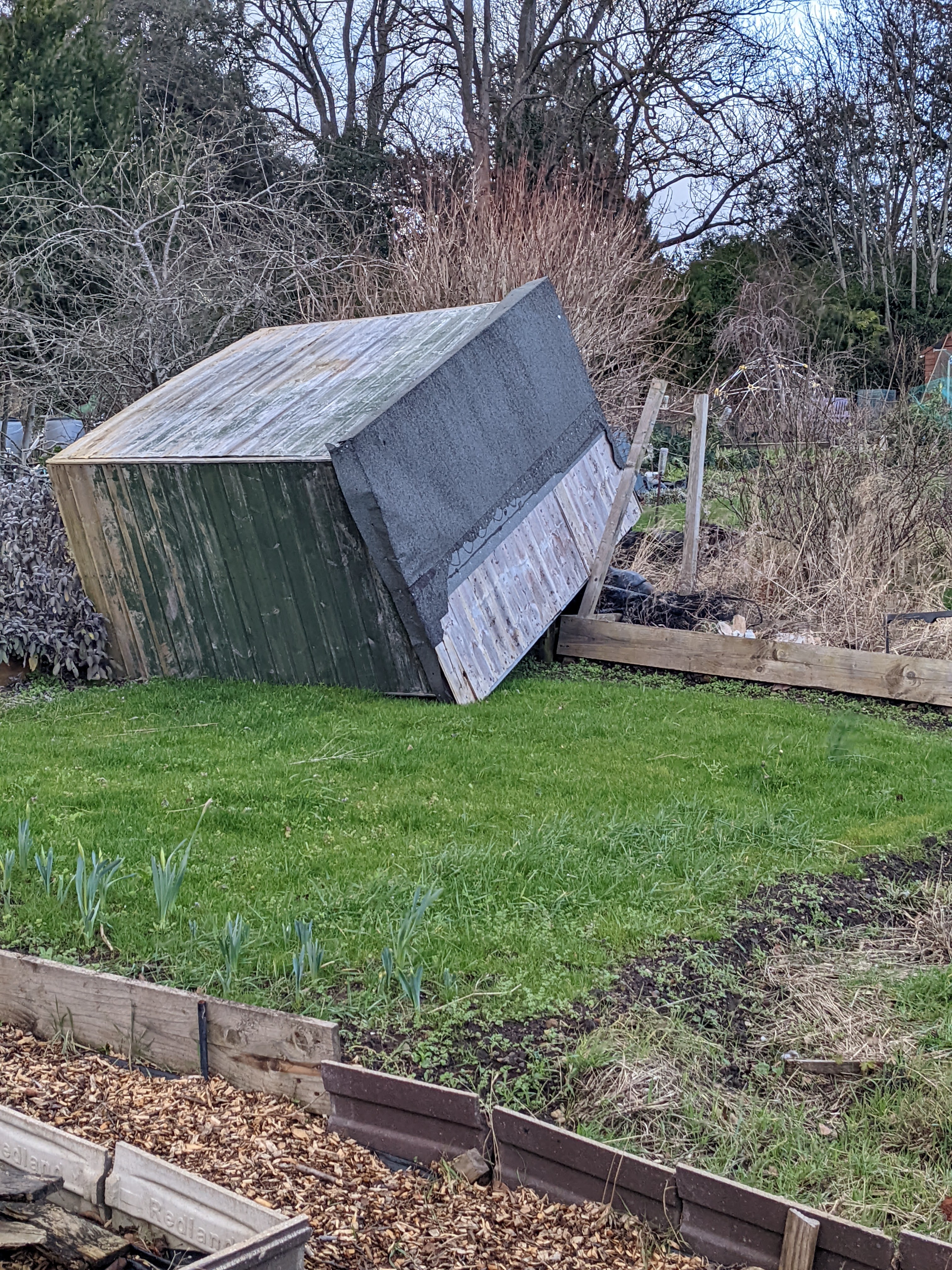
Once the red alert had dropped to amber we went to look at the allotment and noticed a number of roof tiles near the entrance to the back door of the block where we live – any of them would have killed someone walking below. The allotment was completely hammered, with overturned sheds and broken greenhouses. Lots of glass flying about obviously. Our plot was mercifully intact but others were a sorry sight. The flood alert affecting the campervan site continues until tomorrow but we’re hoping with less wind and a smaller tidal surge we’ll be OK.

I’m no expert!

Well let’s be clear, I’m not an expert – not in any of the subjects that I write about in these posts. All 624,378 words – if strung together – would probably not represent enough expertise to grow a hyacinth in one of those glass thingamajigs. In fact the whole idea of being regarded as some kind of guru fills me with horror. This blog isn’t about sharing expertise, it’s about the endlessly puzzling business of being conscious and trying to make some kind of sense of it. My best hope is that I can share some of the little epiphanies that unexpectedly arrive in the course of gardening, cooking, baking, pickling and fermenting , walking and botanising; oh – and loving of course.

The photo is of the asparagus bed – covered for the winter; the garlic which I finished planting out from November pots yesterday and the new strawberry bed (the longer of the two) which I dug out entirely and added four barrow loads of wood chip; then replaced the soil and a layer of compost. Wood chip makes a good substrate when there’s not enough soil to raise a bed; but it rots down quite fast so needs replacing every year or so. I know that the experts say wood chip can acidify the soil but we use it for paths, mulch and raising beds with no discernable ill effects. The strawberries – which are all offsets from the original six special offer plants, have overwintered in the polytunnel.

The smaller of the wooden raised bed is the old hotbed which we’re not heating this year because of fears of persistent vermicides in the stable manure we used to use. So it’s got four foot of first class topsoil in which we have grown lovely carrots but to rotate this season it’ll be cucumbers or squashes. I’ve now got a tremendous backache!

Velvet Bottom again

Hazel catkins in Longwood Valley – spring is on the way!!!

After a couple of weeks when we spent half our time catching up with old friends face to face – at last – and most of the rest preparing the campervan for a new season; we finally got out for a decent walk today on the Mendips, beginning at Charterhouse and walking down Velvet Bottom and then following the West Mendip way up and along the top of the Longwood valley – passing several nature reserves before completing the circuit back at Charterhouse.

It’s a bit early for any of the flowering plants to show themselves – there are some really quite rare plants up there – but we left the flat thinking about the implications of a recently published paper by Belgian scientists that demonstrated how dogs – and more particularly their faeces and urine – add potentially dangerous amounts of phosphates and nitrates which would be illegal if produced by farms. We’re very used to notices imploring dog owners to keep their animals on leads on farms, and it’s true that some careful owners pick up the poo and dispose of it properly, but the urine stays put. The point is that the finest shows of rare wildflowers need poor soil to flourish – that’s why we sow yellow rattle, a parasitic plant on grasses, on potential wildflower meadows, and remove the hay when they’re cut. The Mendips are rich in these sorts of habitats, and you have to wonder whether the sheer quantities of dog poo alongside and on the tracks, presents a threat to rare plants.

Apart from all that pooch flop (I thank the late Richard Boston for that one!) the absence of flowers focuses the eyes on much smaller targets; the bryophytes – mosses and liverworts and the lichens – none of which I know a great deal about. I did lash out on the ultimate field guide, published by the British Bryological Society a couple of years ago; but it’s so densely packed with identical looking plants, my heart sank and today it still smelt like a new book. We have a couple of real experts in the Bath Nats, and it’s always a pleasure to go on field trips with them, but bryophytes demand a bit of an apprenticeship. I should really try harder because unlike wildflowers, most of them are available for head scratching and book banging the year round. Occasionally the Google Lens app on my phone gives a useful steer for identifying all sorts of plants, but that’s my secret vice! I slipped in the wild thyme on the right because there’s a lot growing here and it’s a food plant, in a complicated sort of way, for the large blue butterfly which has been reintroduced in Somerset. The association is down to the fact that the larva are parasitic on the grubs of a species of red ant that associates with wild thyme. Who knows? the large blue may be breeding here already! The other photos show common polypody on the left, a thick mat of unidentified bryophytes in second place, and a lovely maidenhair spleenwort in third place. Honestly, the walk was brimming with interest

Lonk sheep? I’m no expert – does anyone know?

Further walking found a field full of what I think were either pure Lonk sheep or a crossbred variety; perfectly suited to this high country. They looked as if they were all in lamb, but there were a couple of tups still in the field and glowing with a liberal coating of luminous green spray. Later as we walked towards the road down away from Tynings Farm we saw someone making a lovely job of laying a hedge. Further along the way we saw he’d been busy in other places as well. I took several photographs of his work because hedge laying was one of my favourite jobs when I was working as a groundman and it’s a highly skilled and rewarding job; it’s brilliant for wildlife and it could provide work for many people who’d much rather lay hedges than work in call centres! Just to emphasise my point I also photographed a typical stretch of mechanically flailed hedge which offers none of those benefits; looks horrible and barely functions in keeping stock in the right place.